Serving Snellville, GA & nearby
(770) 230-5953
Snellville, GA

What Actually Happens During a Garage Door Service Call

A breakdown of what happens when Snellville Garage Door Pros comes to your house, what we check first, and why 1960s-70s builds need a different look than newer ones.

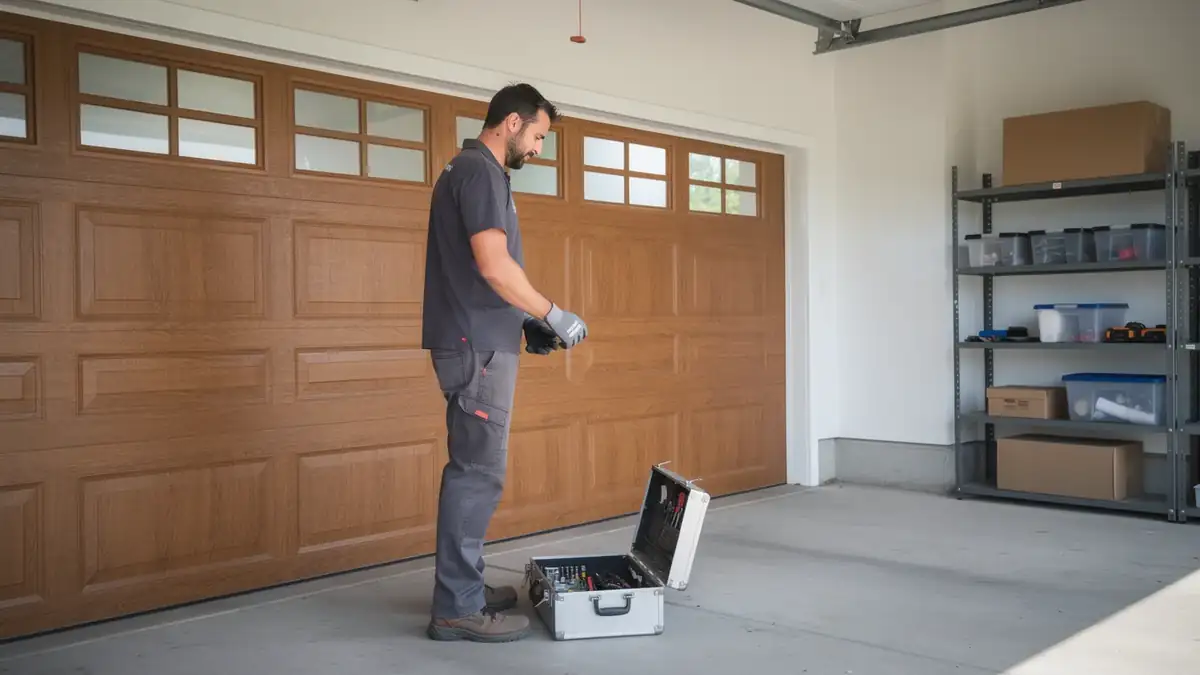
A technician stands in a garage with an open toolbox and a brown garage door.

When to Call Someone

Call when the door won't open, won't close all the way, or makes a sound it didn't make last week. Grinding, a loud bang, a door that reverses halfway up, a door that's suddenly heavy to lift by hand - these aren't wait-and-see problems. A spring under tension that's starting to fail can let go without much warning, and on a double door that's 150-200 pounds of panel with nothing holding it up.

Across the service area we've got 27,333 owner-occupied houses, a lot of them built when the median year here was 1978, which means a good share of the original hardware on those doors is past its expected life whether or not it's making noise yet. If your door is from that era and you haven't had anyone look at the spring, cable, or drums in a while, that's reason enough to call even without a dramatic symptom.

What we don't do on a first call: guess over the phone. A description of a noise tells us something, but spring wind count, cable fray, and drum wear all need eyes on the hardware before we quote a fix.

The Problem

Most service calls in Snellville and the surrounding areas - Grayson four miles out, Mountain Park at seven, Stone Mountain and Dacula around ten - trace back to the same thing: original hardware aging out on a housing stock that runs mostly 1960s and 70s construction, with the wider service area spanning builds from 1951 up through 2012.

A door installed when the house was built in, say, 1972 was matched to specs from that decade. Torsion springs have a wind count rated for a certain number of open-close cycles, usually somewhere around 10,000. A door used twice a day for fifty years has gone through that cycle count several times over, even if it's never been replaced. The spring doesn't announce it's near the end - it just gets a little weaker each month until one day it doesn't catch the weight.

Tracks and rollers on houses from that same era were often galvanized steel, not the nylon or sealed-bearing rollers common now, so they wear differently and louder. None of this is damage from one bad day. It's accumulated cycles on hardware that was never meant to last this long without a look.

Checking It Yourself

  1. Before you call, there's a short list worth checking

    Especially if your house falls into that 1960s-70s stock common across the area.

  2. Look at the spring above the door

    If it's one solid coil with a visible gap or separation, stop using the door and call. Don't try to wind or unwind it yourself. Next, pull the emergency release cord with the door closed and lift by hand. It should feel balanced, roughly even weight the whole way up. If it's heavy near the bottom or top, that's a spring tension issue, not an opener issue.

  3. Check the cables on either side of the bottom bracket for fraying

    Thin wire strands poking out means replacement, not patching. And listen for where the sound is coming from: rollers in the track versus the opener motor versus the spring itself point to different repairs.

  4. What you shouldn't do

    Adjust the torsion spring yourself, or keep forcing the opener if the door catches partway. That's how a minor repair turns into a trip to the ER. If any of this checklist turns up something, that's what the service call is for - we bring the bar and the cones, you don't need to own them.

How Local Conditions Play In

Snellville falls in a moderate-cold climate band, not the deep freeze further north, but still enough seasonal swing that steel hardware expands and contracts across the year. A spring that's been fine all summer can feel stiffer and behave differently on a cold January morning - not because it broke overnight, but because cold steel has less give, and a spring already near the end of its cycle life is more likely to show it in winter than July.

Humidity here also matters for anything exposed, non-insulated steel: tracks, hinges, and bottom brackets on older doors that haven't been replaced or resealed can pick up surface rust over the decades, especially on houses from the 1960s-70s build era that make up a lot of this area's stock. Rust on a roller or hinge doesn't mean the door is unsafe, but it does mean more friction, more wear on the opener motor, and a shorter window before something that's merely noisy becomes something that's stuck.

We don't treat every call the same because of this - a door on a newer build closer to 2012 gets checked differently than one from the 1978 median era, because the hardware generation is different.
How it works

From “it’s stuck” to “it’s fixed”

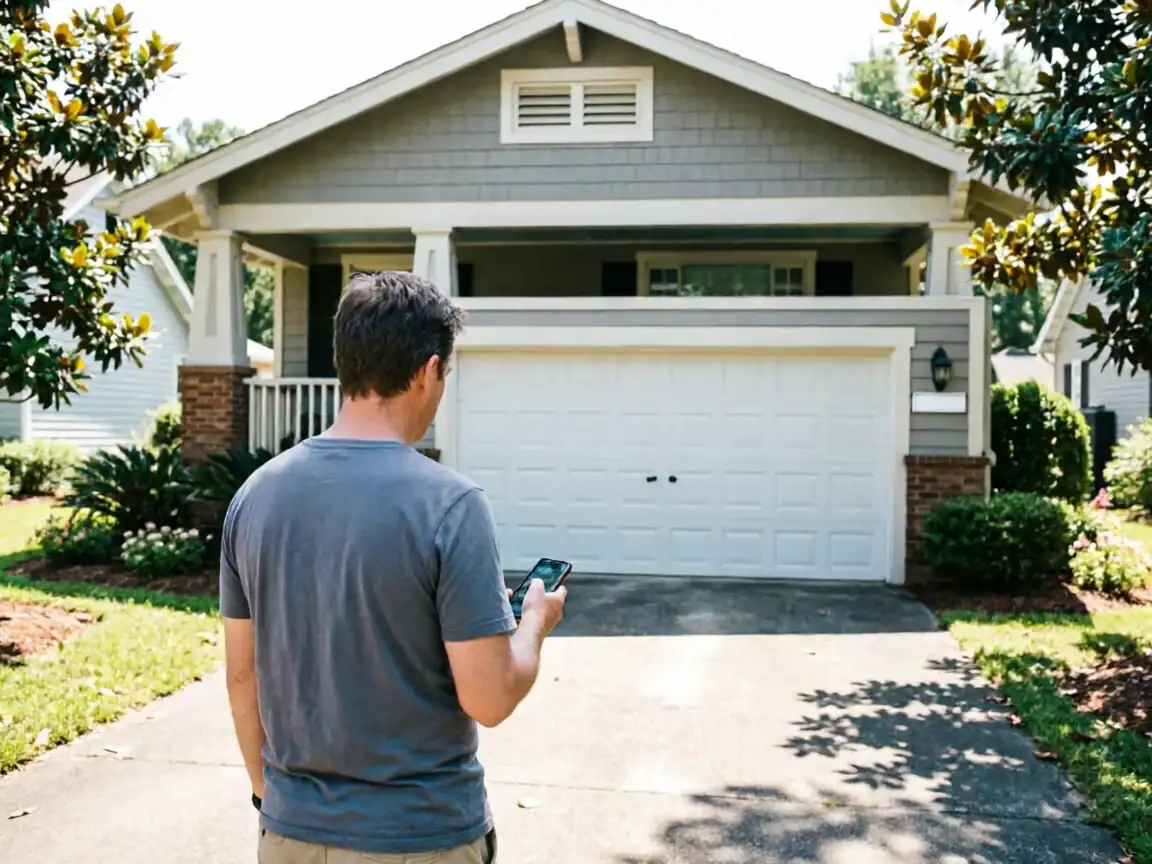
A man stands in a driveway holding a phone, facing a white garage door.

Tell us what’s wrong

Describe the symptom - won’t open, loud bang, opener runs but the door won’t move.

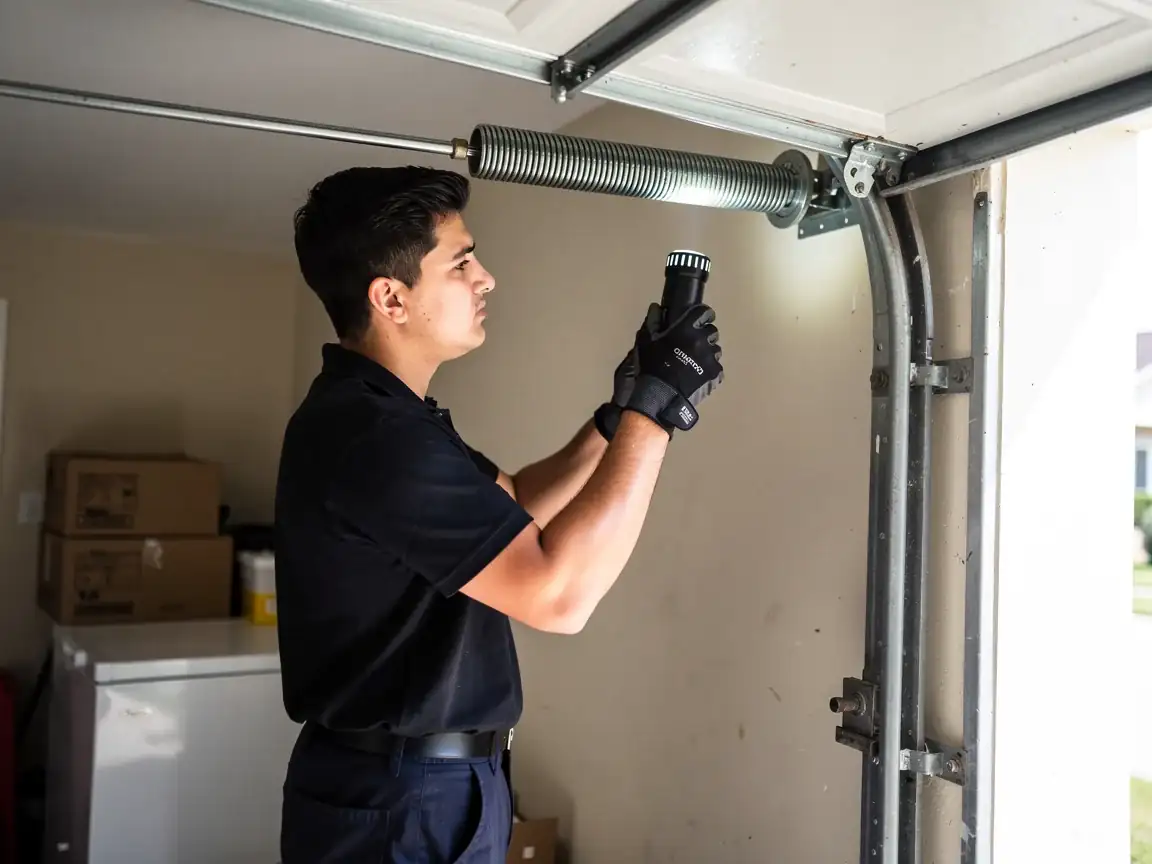
A technician shines a flashlight on a garage door torsion spring.

On-site diagnosis

A technician tests the door under power and by hand and finds what actually failed.

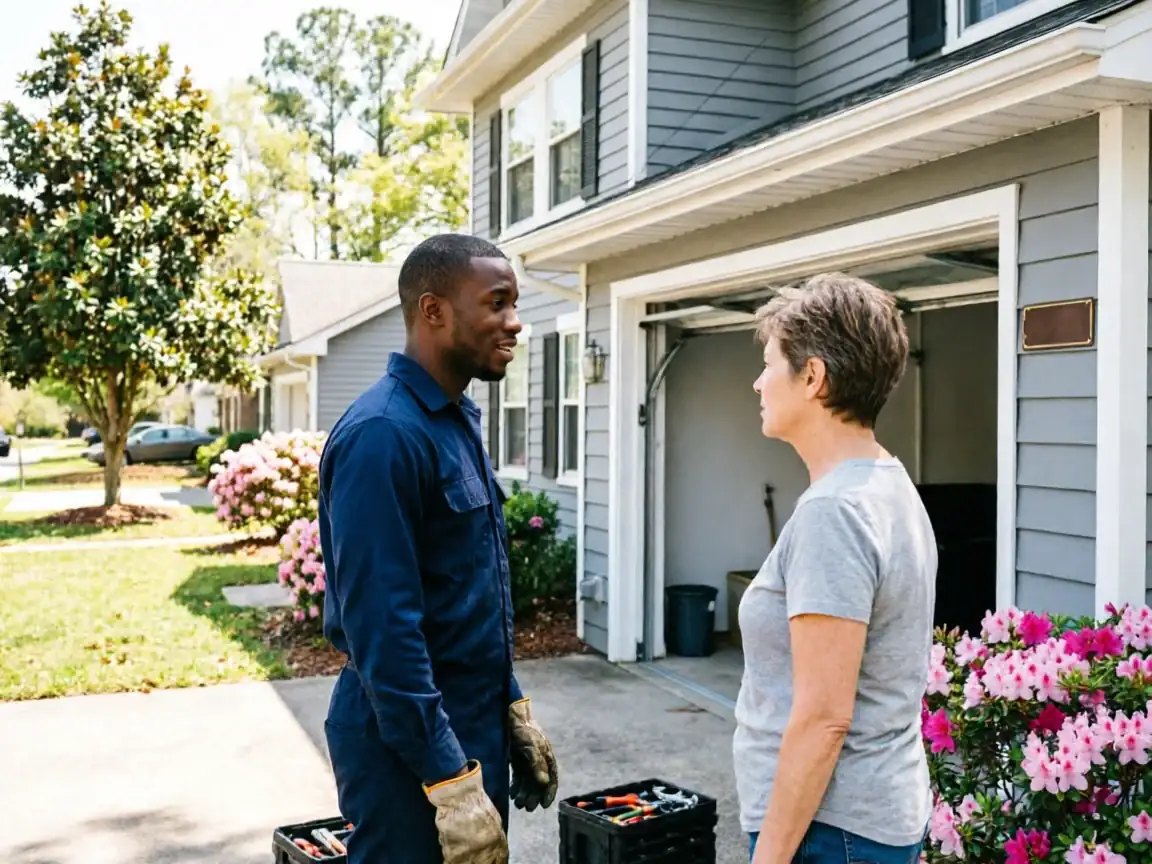
A technician in a blue uniform talks to a woman in front of a garage.

Clear, up-front plan

You get the fix that’s needed and what drives the cost - before any work starts.

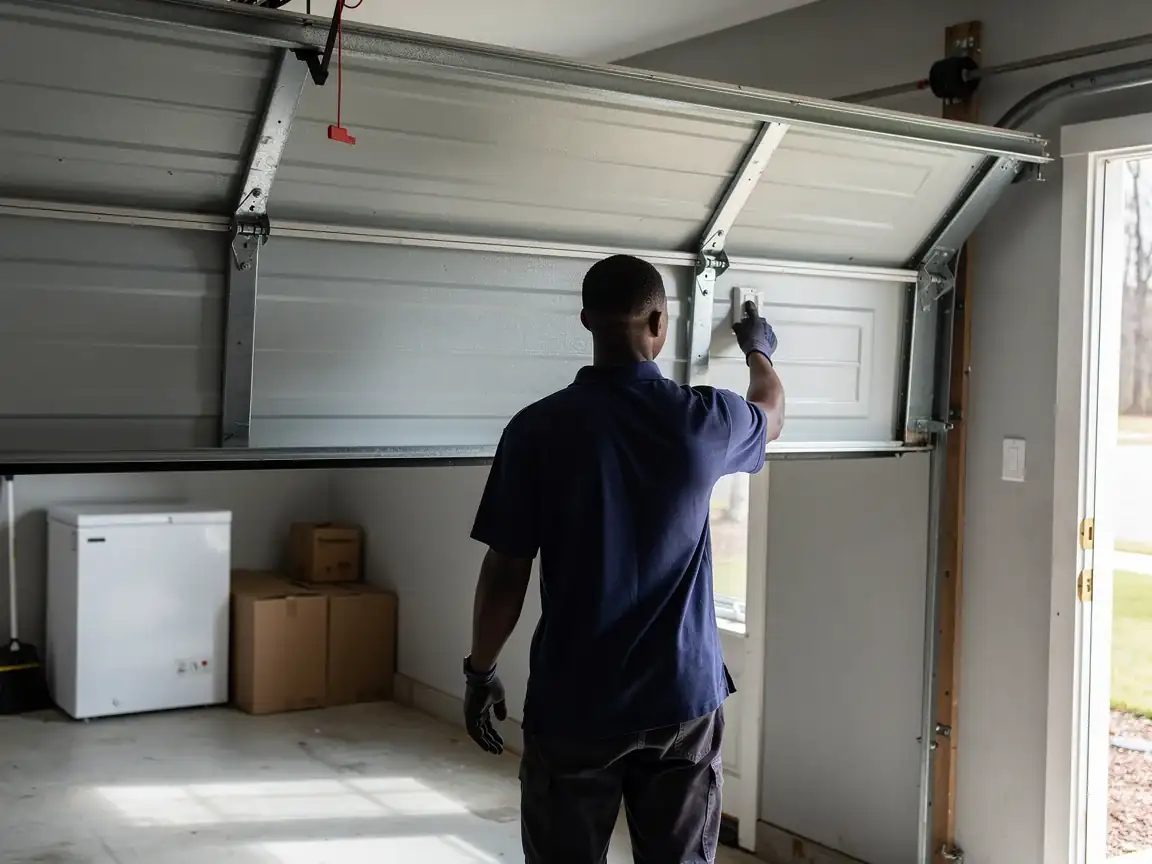
A technician in gloves is working on the inside of a garage door.

Repaired & tested

The repair is done, the door is set true and tested, and the work area left clean.

Not sure which repair your door needs in Snellville, GA? Describe what it’s doing - every job starts with a diagnosis.

How we work

What to expect

Diagnosis firstEvery visit starts by finding what actually failed - not a pre-written parts list.
The right part for the doorSprings and openers matched to the door’s weight and age, so the fix holds up.
Straight answersWhen a repair makes more sense than a replacement - or the reverse - you hear it plainly.
Clean, careful workTension released safely, hardware set true, the door tested under power before we leave.
What we do

Garage Door Services

Repair and installation work for Snellville homes and businesses.

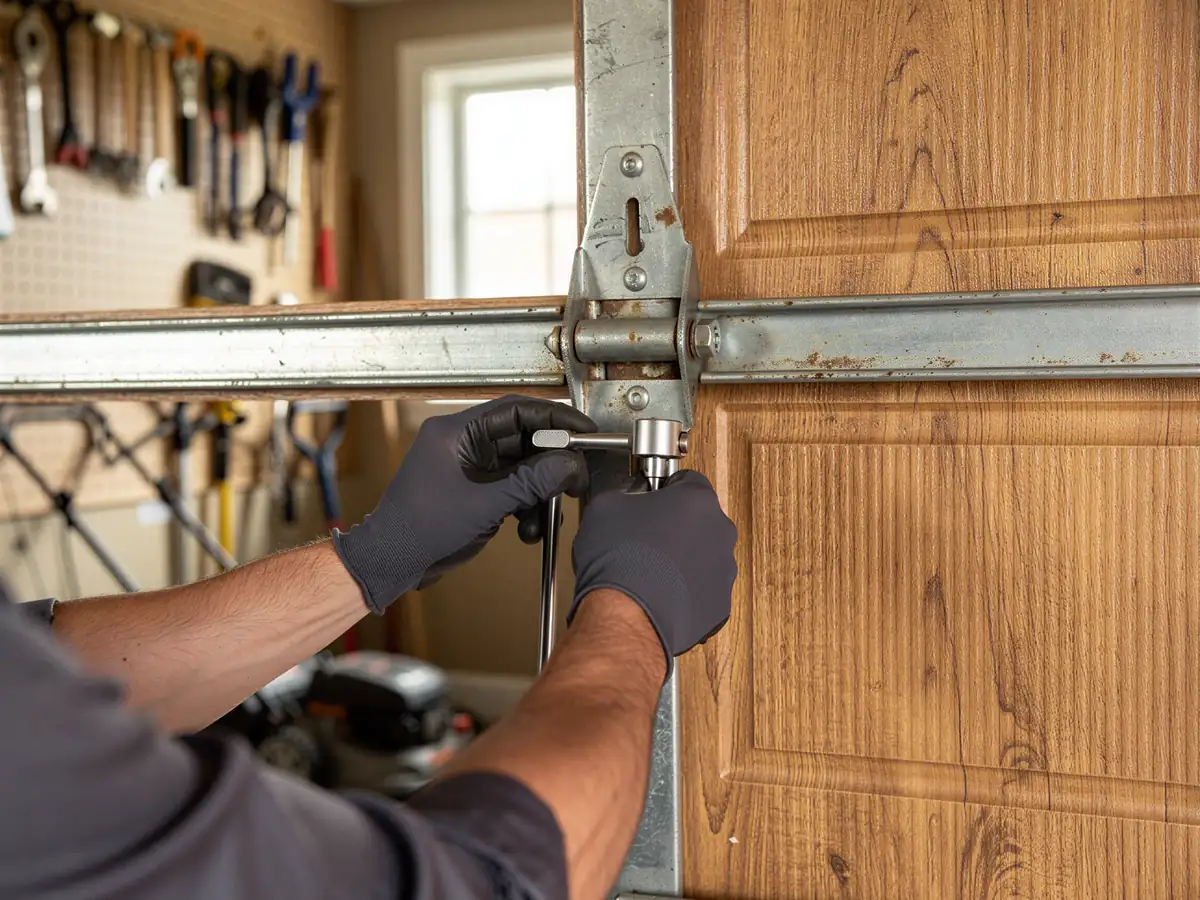
A technician in black gloves adjusts a garage door hinge with a wrench.

Garage Door Repair

Garage door repair in Snellville, GA for homes built from the 1960s to the 2000s, where cold snaps and aging torsion springs cause most of the calls we get.

Learn more
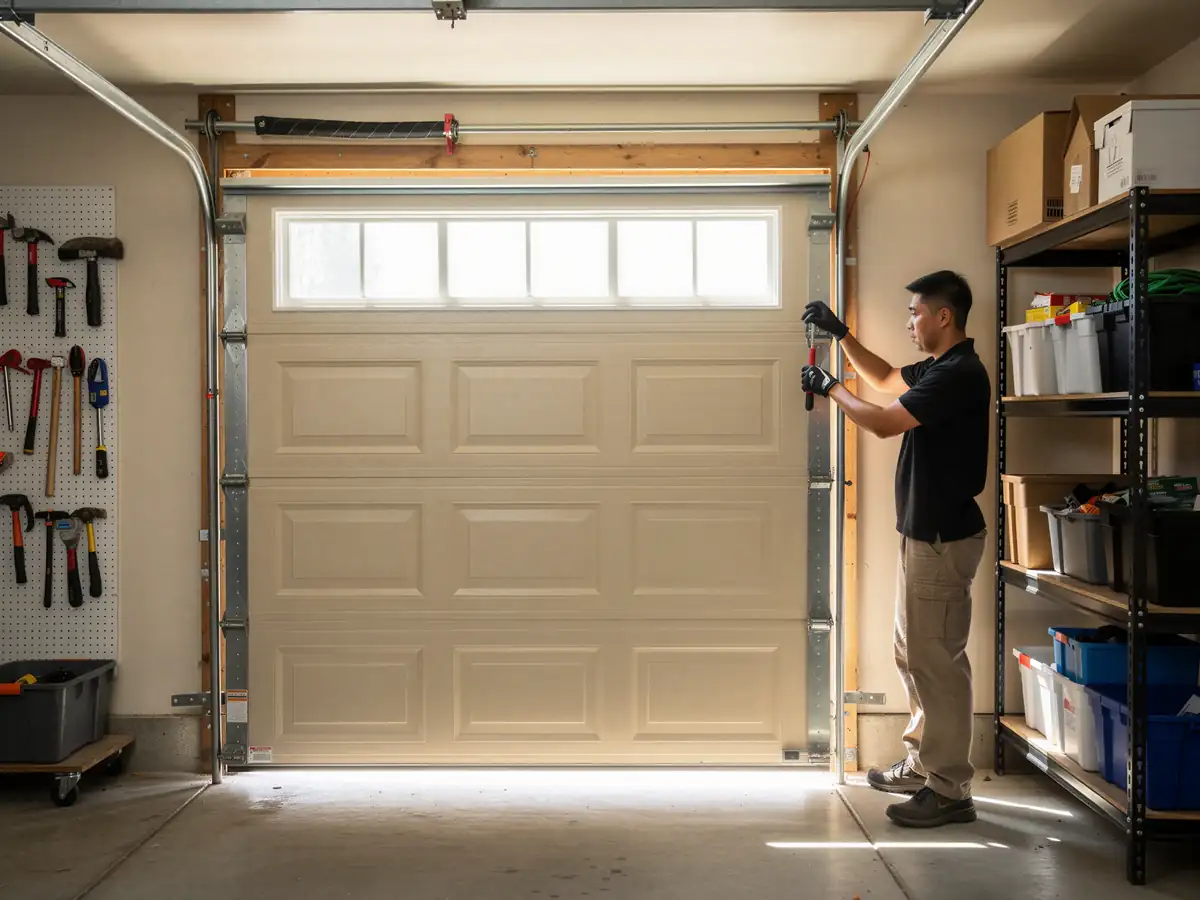
A technician in black gloves adjusts a beige garage door with windows.

Garage Door Installation

Garage door installation for Snellville homes built 1951-2012, matched to the track, header, and opener setups common in this area's housing stock.

Learn more
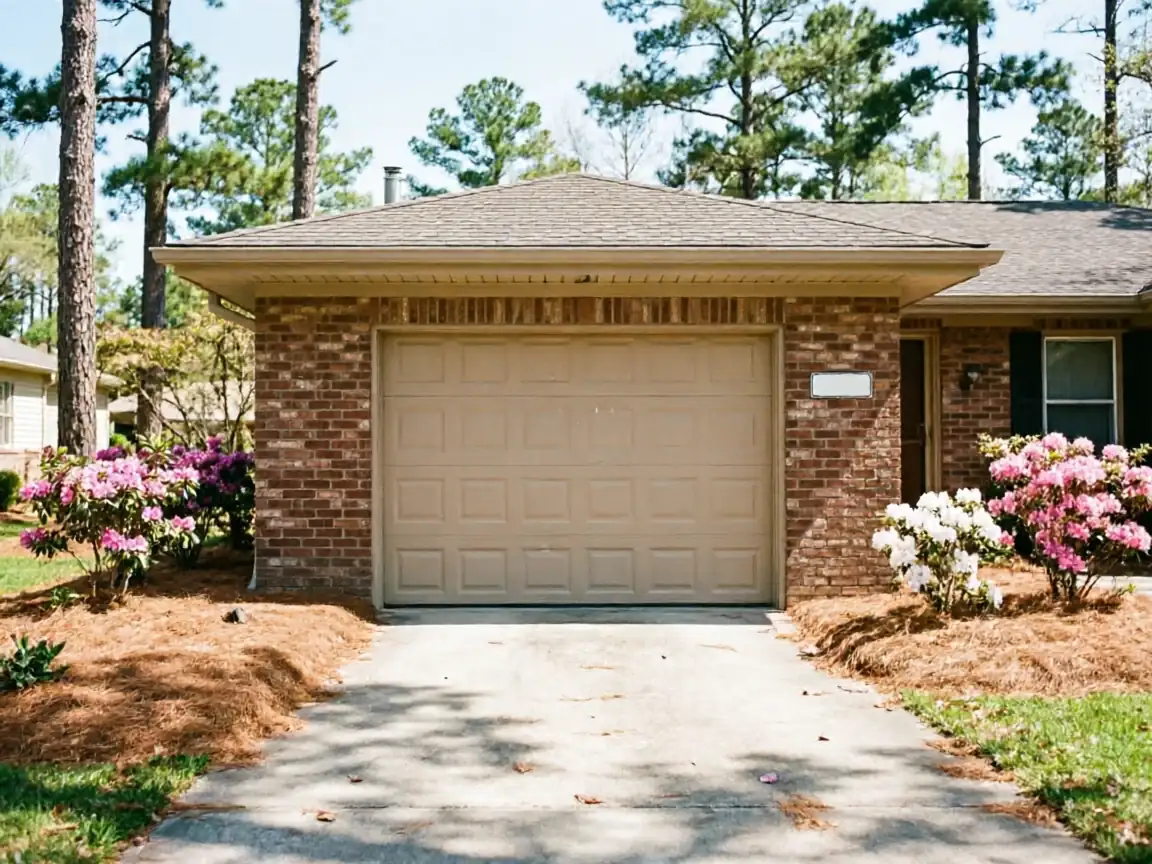
A tan garage door is on a brick house with a driveway and landscaping.

Garage Door Service

Snellville homeowners with 1960s-70s torsion spring doors: why DIY fixes on original hardware fail, and how a cold snap turns a loose spring into a dead door fast.

Learn more
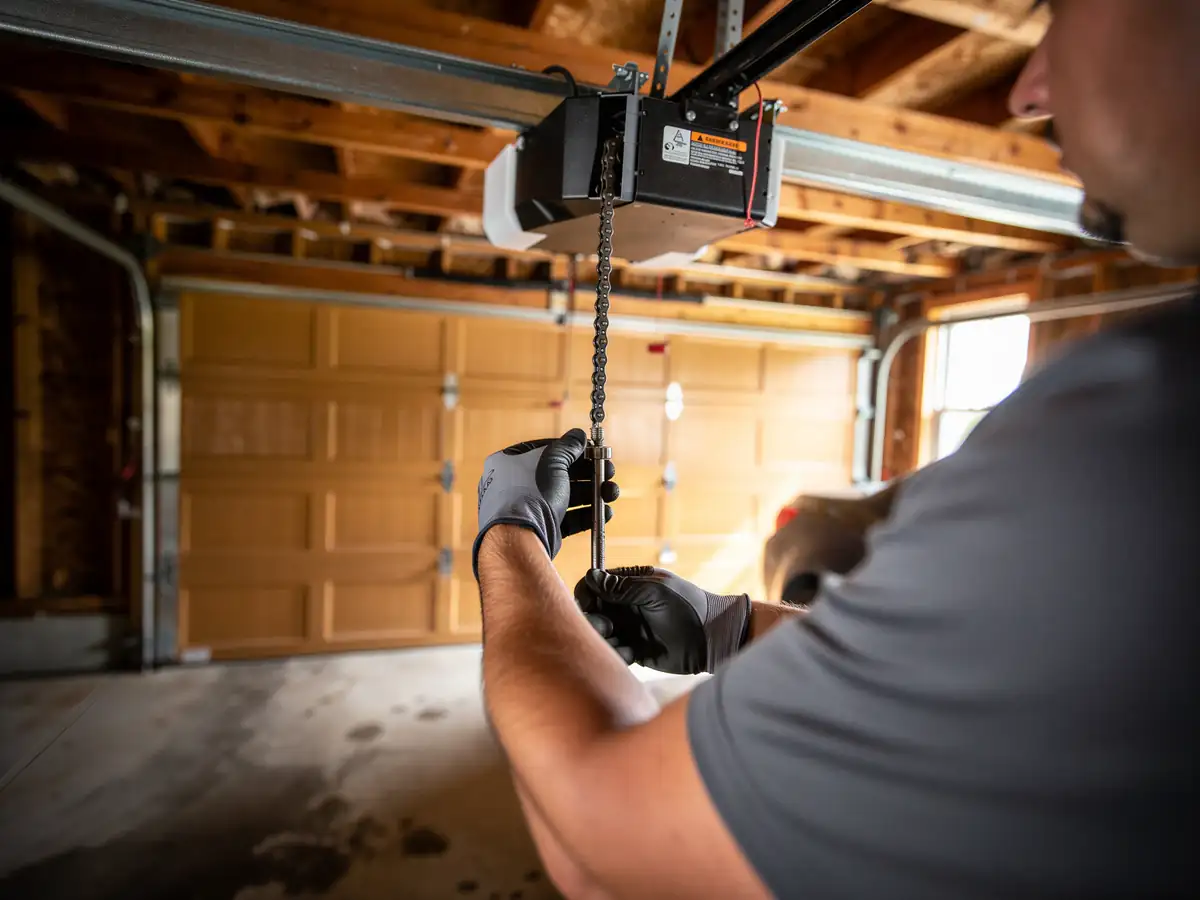
A technician in gloves adjusts the chain on a garage door opener.

Opener Repair

Opener grinding, reversing, or dead on a house built between 1951 and 2012? We fix chain, belt, and screw-drive openers across the Snellville service area.

Learn more
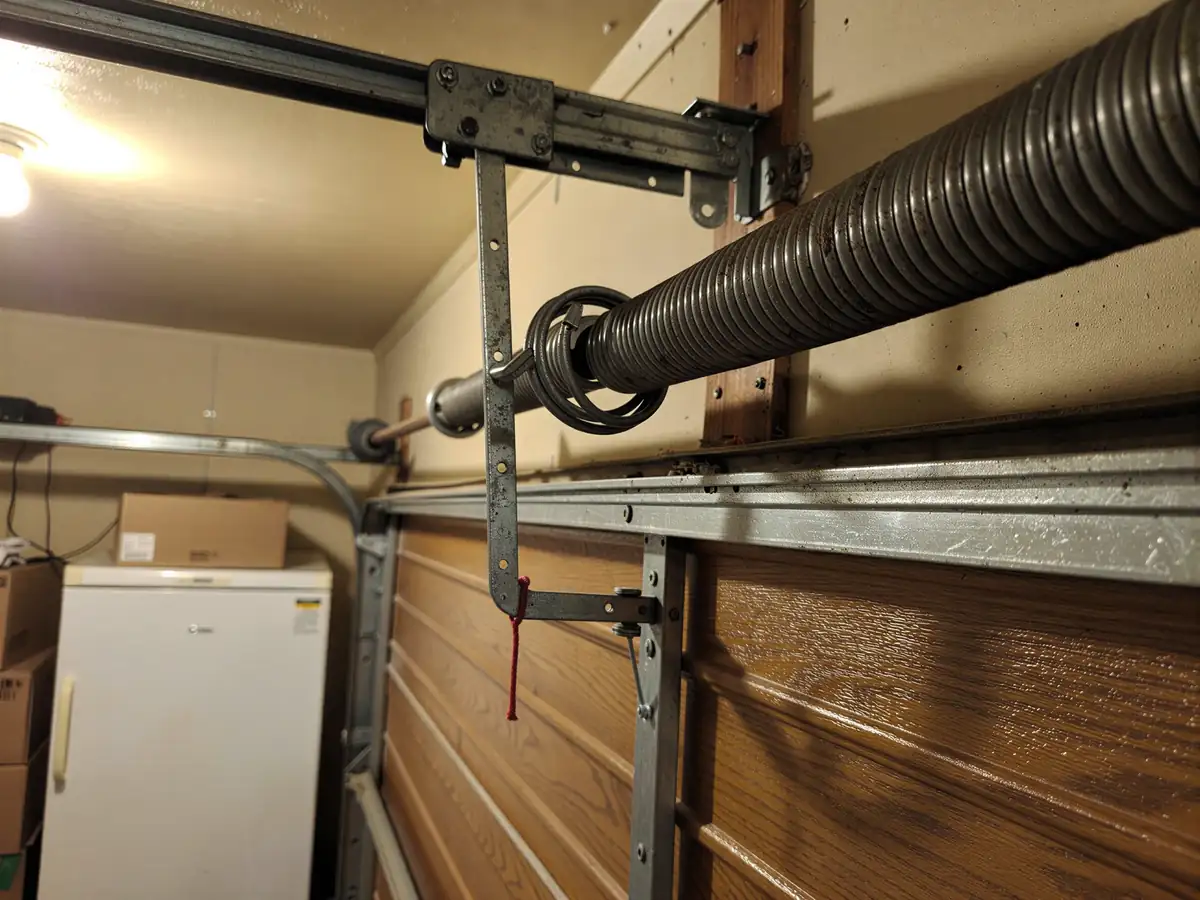
The torsion spring is mounted above a wooden garage door.

Spring Repair

Snellville's 1960s-70s housing stock runs original torsion springs most owners don't recognize as a two-part counterweight system. Here's why DIY spring repair fails here.

Learn more
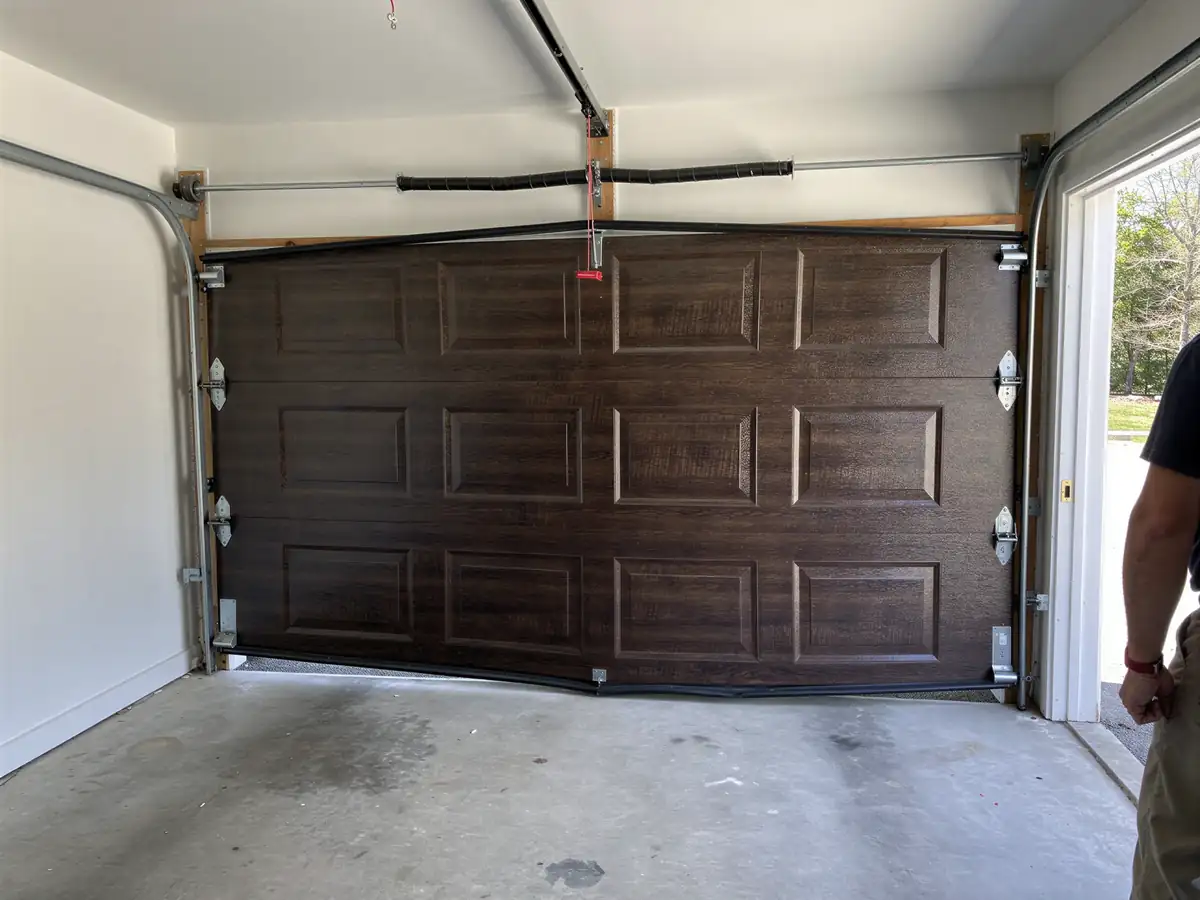
A dark brown garage door is off its tracks and partially open.

Off-Track Repair

Snellville homes built from the 1960s through the 1990s share the same track and roller setups that slip off alignment. Here's why, and what fixing it right actually takes.

Learn more
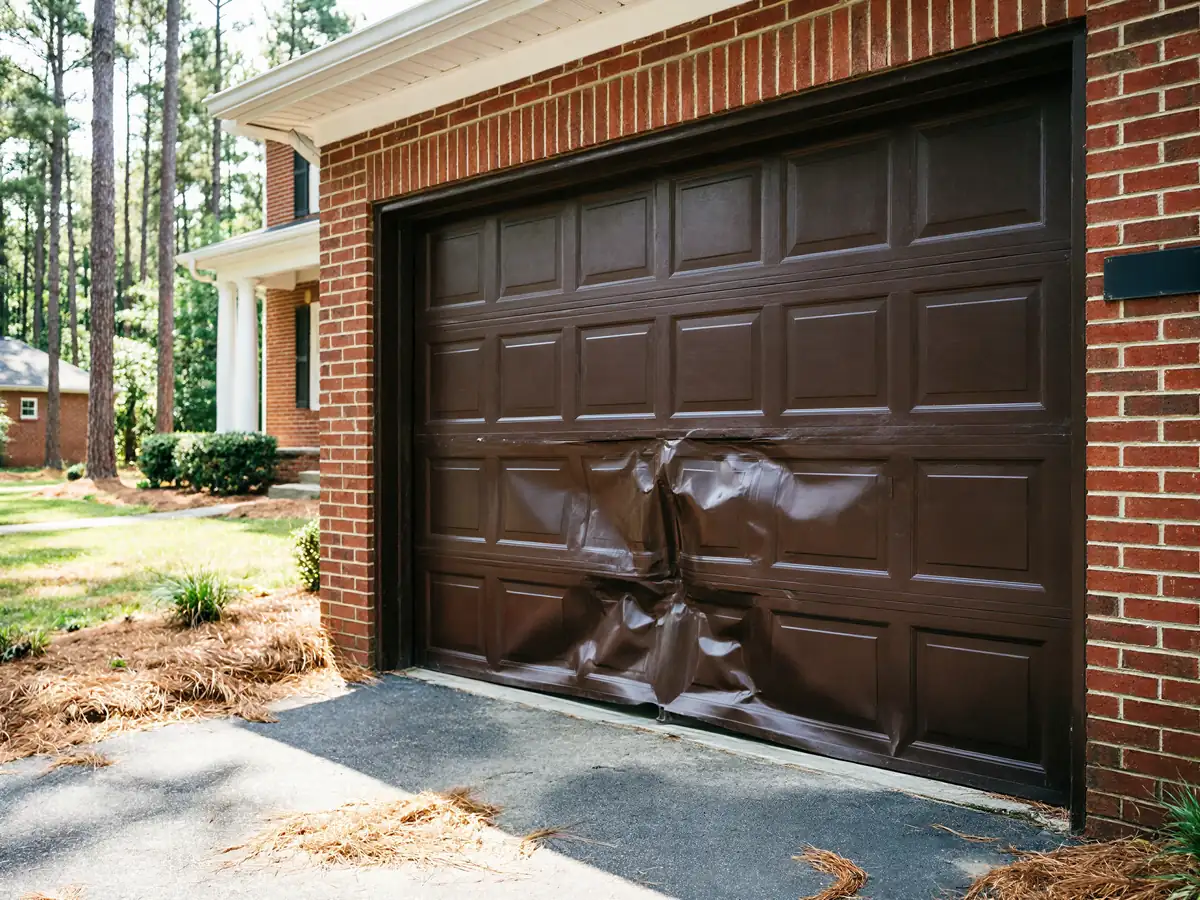
A brown garage door on a brick house is severely dented.

Panel Replacement

Panel replacement for Snellville garage doors built in the 1960s-70s housing boom: how cold-weather cycling cracks and dents steel sections, and when to replace vs. patch.

Learn more
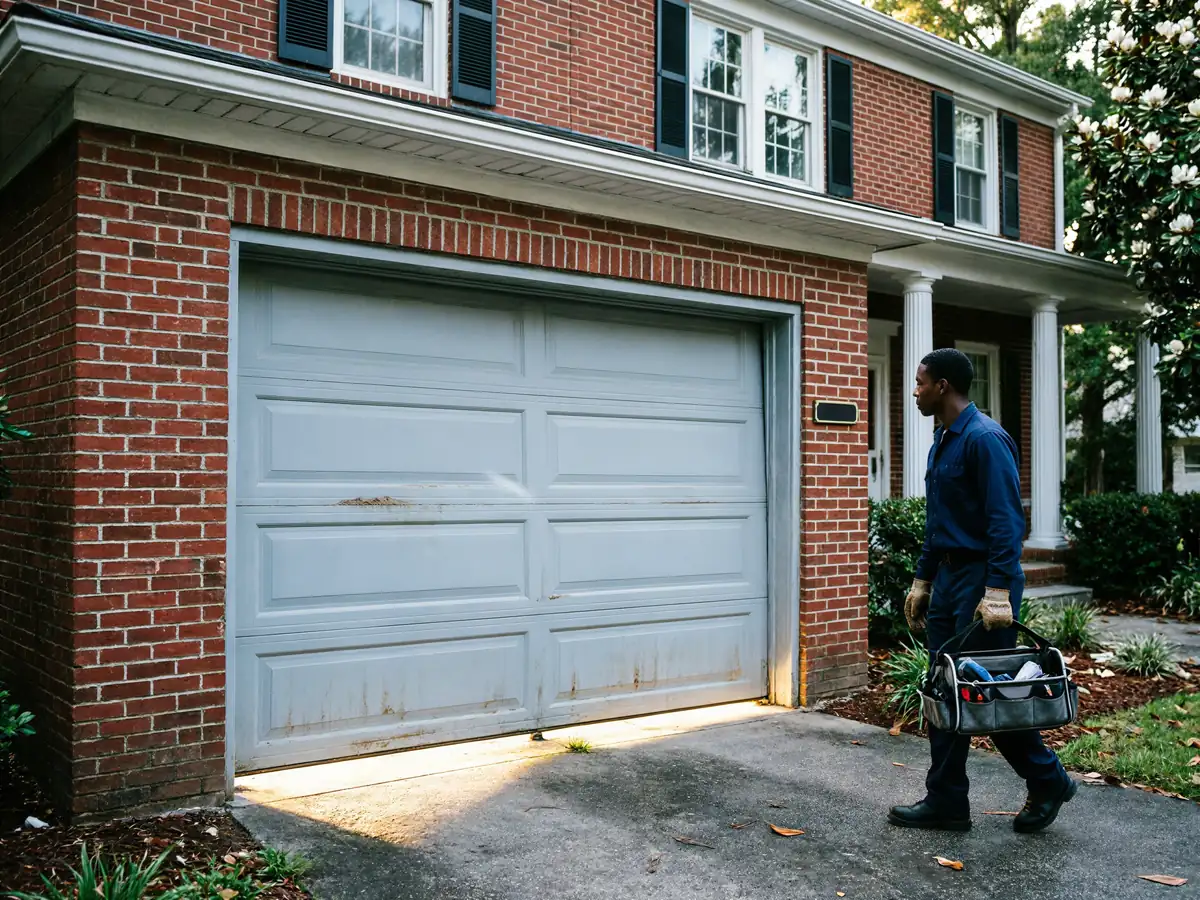
A technician carries a toolbox past a gray garage door on a brick house.

Emergency Garage Door Repair

Spring snapped, door stuck shut, opener dead at the worst time. Snellville Garage Door Pros covers emergency repair across the service area, day or night.

Learn more
Questions

Frequently asked

Straight answers about garage door repair in Snellville. Still unsure? Ask us directly.

How much does a service call cost?

That's not something we can state without a current rate sheet in front of us, and pricing depends on what the door needs once we're there. Call for a quote specific to your door and symptoms.

Is it normal for an older garage door spring to still work after decades?

It can still work, but working isn't the same as safe. Springs are rated by cycle count, not calendar years. A door from the 1960s-70s era common in this area may have gone through several rated lifespans of cycles even if it's never failed outright.

Can I just replace the spring myself?

We'd rather you didn't. A torsion spring under tension can cause serious injury if it releases while you're working on it. This is one repair where the service call covers both the part and the safe handling of it.

Does cold weather actually affect garage doors here?

Snellville sits in a moderate-cold band, not extreme cold, but steel hardware still stiffens in winter. If a door that was fine in summer starts acting up in January, that's often the cold exposing wear that was already there, not new damage.

Ready to get your garage door sorted?

Tell us what it’s doing and where you are in Snellville - we’ll take it from there.

Request a QuoteCall