Serving Snellville, GA & nearby
(770) 230-5953
Snellville, GA

Why Your Garage Door Keeps Jumping the Track

A look at why garage doors slip off track in Snellville homes, tied to the area's 1960s-70s housing stock and cold-moderate winters, plus what to check before you call.

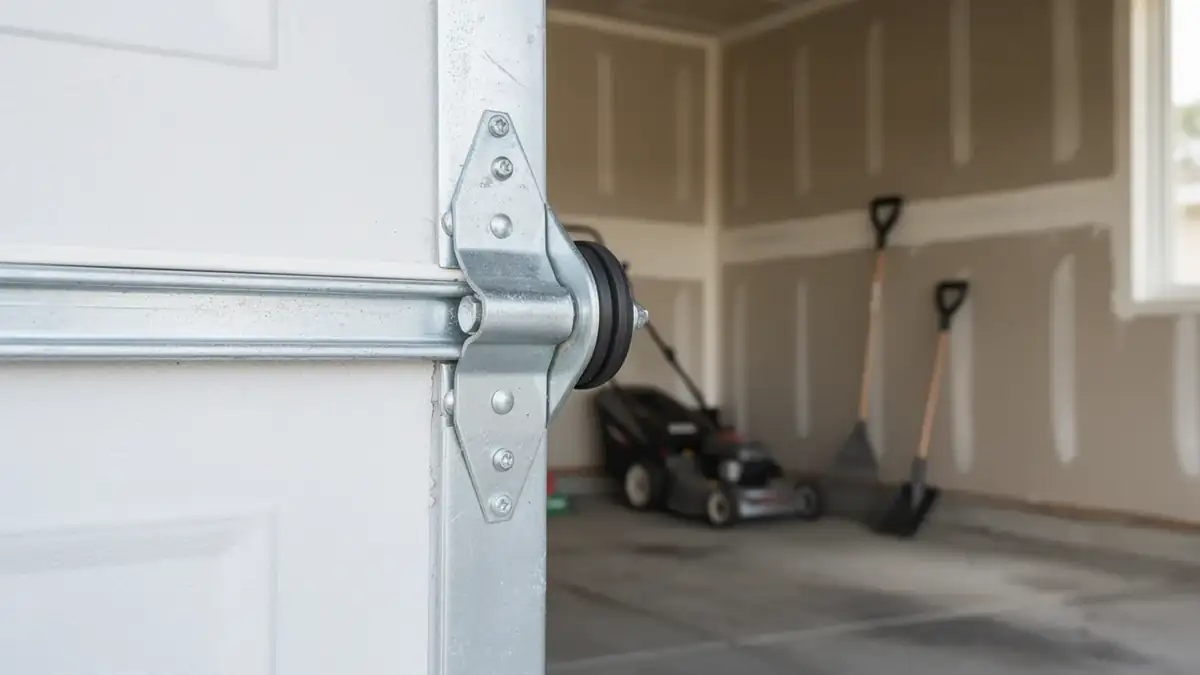
A white garage door hinge and roller are visible, with a garage interior in the background.

When to Call Someone

If the door has actually come off the track - you can see a roller sitting outside the rail instead of inside it - stop working the opener and call. Forcing it with the opener bends the track further and can snap a cable under tension. The same goes for a door that's cocked at an angle in the opening, hanging lower on one side. That's not a track problem you fix with a rubber mallet; it's usually a cable or a bent track section that needs a torsion bar released under control.

A lot of the houses on this side of Snellville went up in the 1960s and 70s (part of the broader 1951 to 2012 range across the area), which means the track brackets are original steel, lag-bolted into jamb framing that's had fifty-plus years to shift slightly. When a bracket has pulled loose from that old framing, re-tightening it yourself without knowing what's holding and what's stripped is how a 150-pound door comes down on a hand. That's a call, not a weekend project.

The Problem

A door goes off track almost always because something changed the alignment between the roller and the rail - not because the track itself failed first. On the older housing stock common across this area's 22 named neighborhoods, the usual culprit is a roller or roller stem worn thin after decades of use, letting the wheel wobble sideways until it climbs the rail edge. The second most common cause here is a bent track section, often from a car bumper tap or from a bracket working loose at the stud.

Houses built in the 1960s and 70s generally used lighter-gauge track than what goes in today, and after fifty years of seasonal expansion and contraction, that gauge doesn't hold its shape as well as newer stock. A track that's slightly bowed won't throw the door off every time - just on the one cold morning when the metal has contracted enough to change the roller's angle of entry by a few degrees. That's usually when homeowners notice it for the first time, even though the wear built up for years before that.

Checking It Yourself

  1. Before you call, you can rule a few things out safely from the ground

    With the door closed and the opener disconnected. Look down the length of each track - sight along it like a rifle barrel. A track that's true will show a straight line; a bent one will show a visible kink or gap where it pulls away from the rail. Second, check the brackets where the horizontal track meets the vertical track near the top - this is a known weak point on the 1960s-70s builds common here, and a loose bolt there lets the whole rail flex sideways under load.

  2. You can also roll a flashlight beam along the bottom few feet of track

    Where road salt and winter moisture do the most corrosion damage over the years. Surface rust is cosmetic; rust that's pitted the rail or eaten through a bracket is not something to patch. What you shouldn't do is loosen cables, remove the roller, or try to pry the door back onto the track yourself - a door under spring tension is not a DIY hardware fix, even if the diagnosis is simple.

How Local Conditions Play In

Snellville sits in a cold-moderate climate band, not the deep-freeze winters of the upper Midwest, but still enough seasonal swing to matter. Steel track contracts in cold weather and expands again once temperatures climb, and on hardware that's already fifty-plus years old - common across much of this area's housing - that cycle slowly works screws loose and widens the tolerance between roller and rail. It's rarely one dramatic failure; it's a slow drift that finally crosses the line on a cold snap.

Moisture matters too. Garages here aren't usually climate controlled, and a track mounted near an unsealed slab edge picks up ground moisture that speeds corrosion at the lowest bracket points - exactly where the door takes the most load when it's closing. None of this means every door needs replacing. A track that's just loose at the brackets is a tightening job, not a tear-out. But a track that's rusted through at the base or bent from impact is past the point where re-aligning it is worth the labor, and that's the honest call to make rather than patching something that'll just slip again.
How it works

From “it’s stuck” to “it’s fixed”

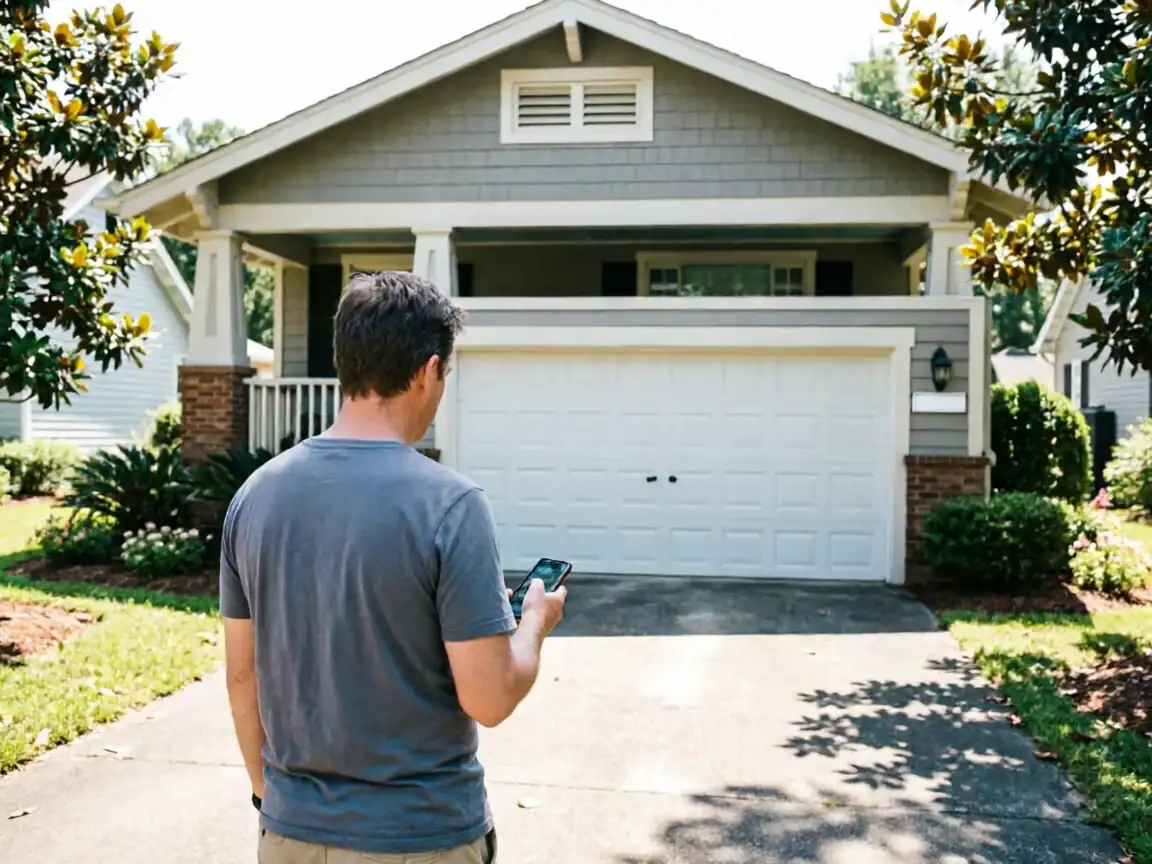
A man stands in a driveway holding a phone, facing a white garage door.

Tell us what’s wrong

Describe the symptom - won’t open, loud bang, opener runs but the door won’t move.

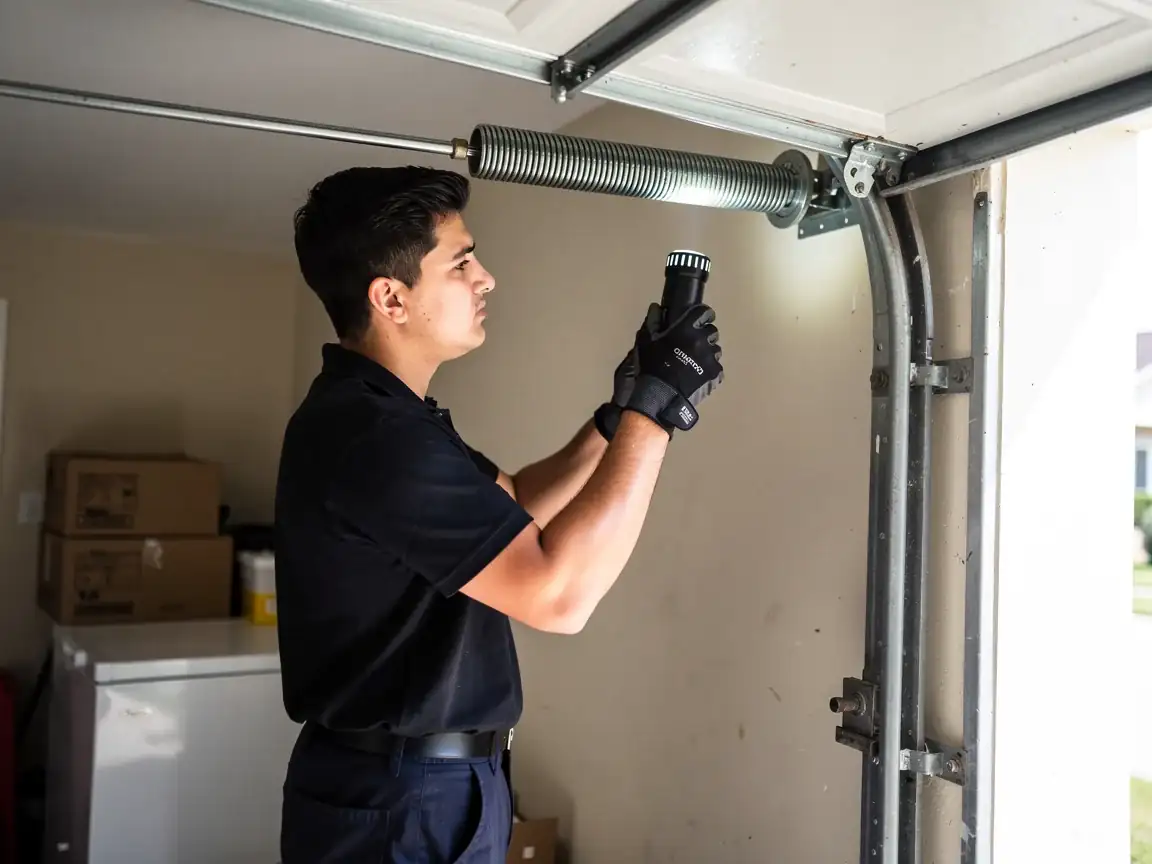
A technician shines a flashlight on a garage door torsion spring.

On-site diagnosis

A technician tests the door under power and by hand and finds what actually failed.

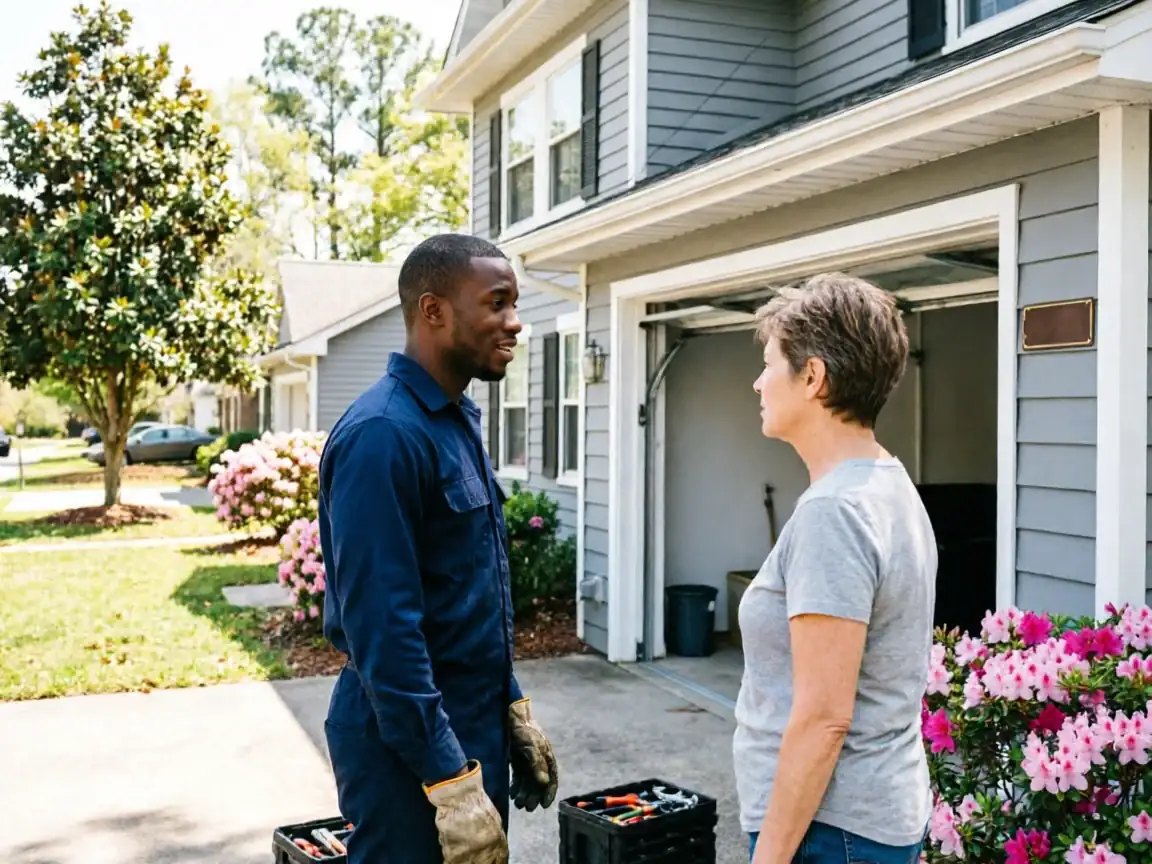
A technician in a blue uniform talks to a woman in front of a garage.

Clear, up-front plan

You get the fix that’s needed and what drives the cost - before any work starts.

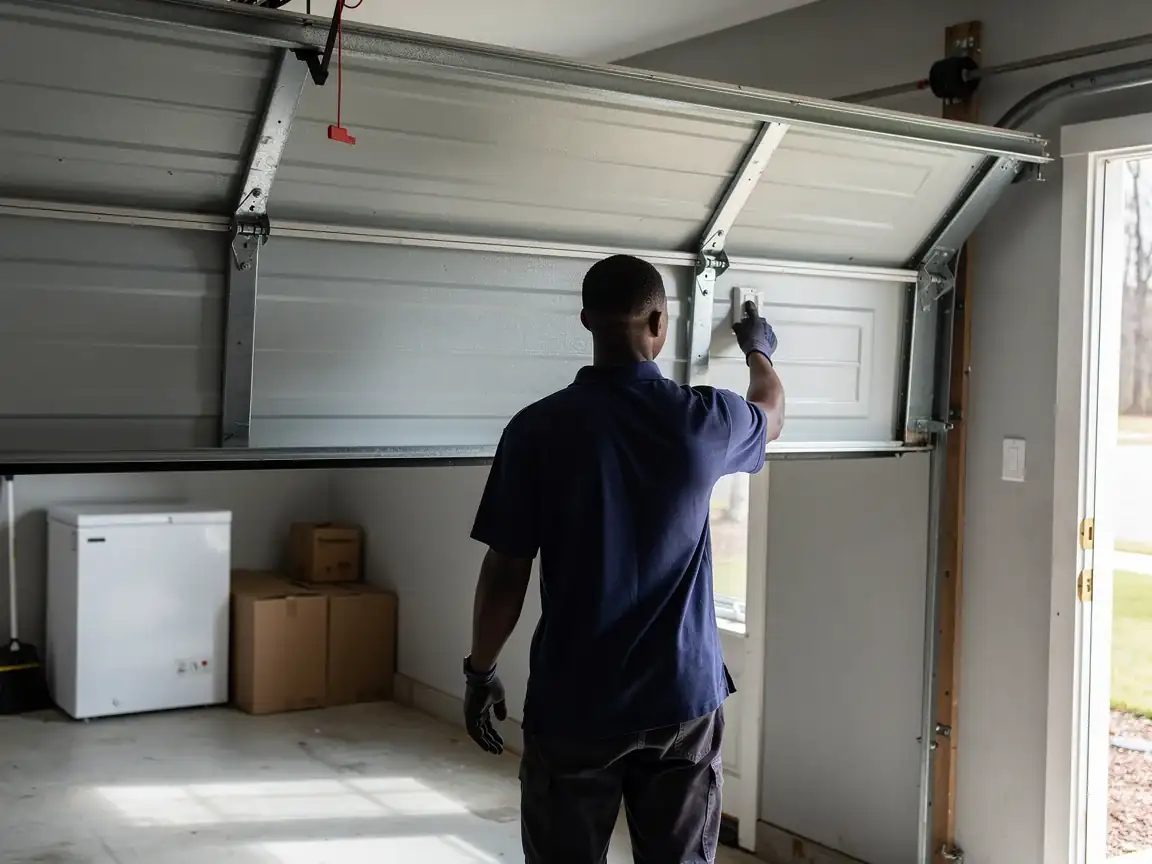
A technician in gloves is working on the inside of a garage door.

Repaired & tested

The repair is done, the door is set true and tested, and the work area left clean.

Not sure which repair your door needs in Snellville, GA? Describe what it’s doing - every job starts with a diagnosis.

How we work

What to expect

Diagnosis firstEvery visit starts by finding what actually failed - not a pre-written parts list.
The right part for the doorSprings and openers matched to the door’s weight and age, so the fix holds up.
Straight answersWhen a repair makes more sense than a replacement - or the reverse - you hear it plainly.
Clean, careful workTension released safely, hardware set true, the door tested under power before we leave.
What we do

Garage Door Services

Repair and installation work for Snellville homes and businesses.

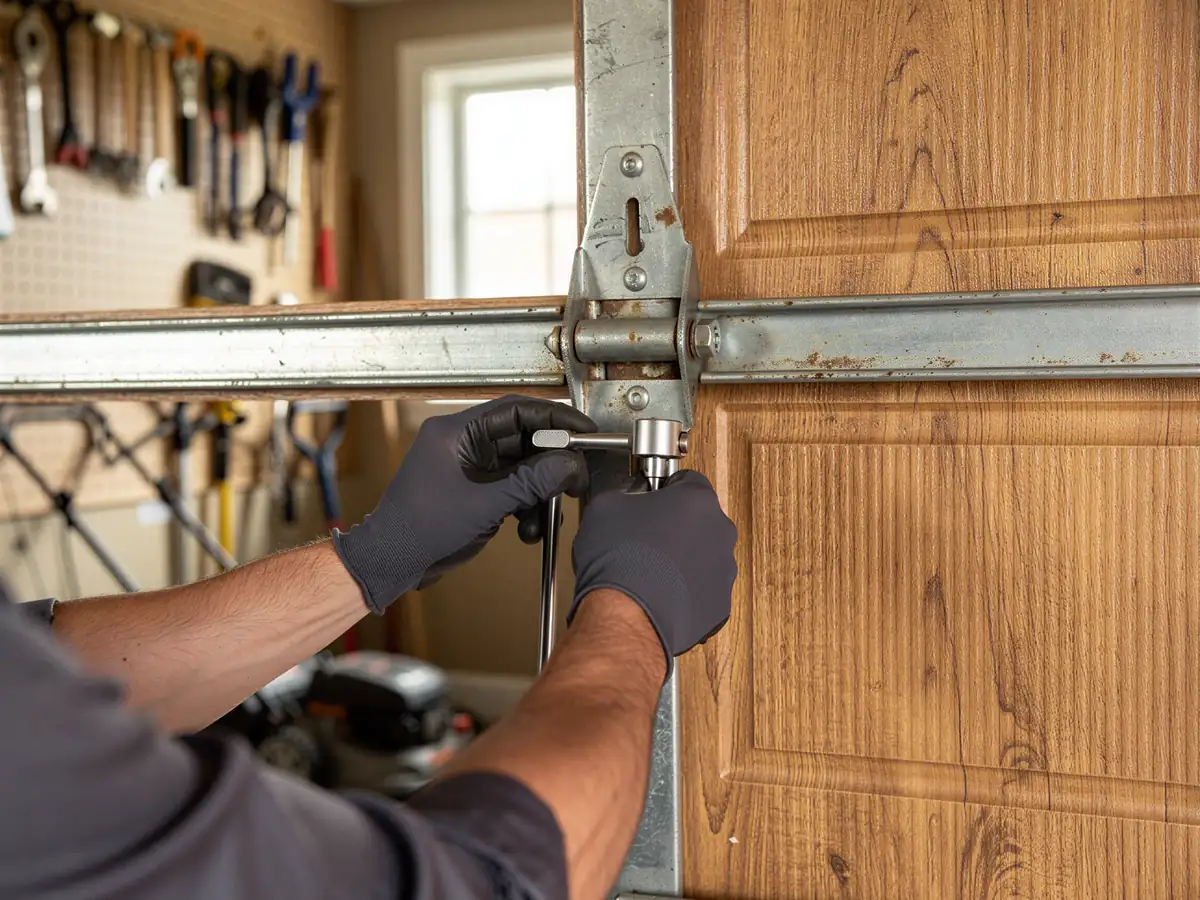
A technician in black gloves adjusts a garage door hinge with a wrench.

Garage Door Repair

Garage door repair in Snellville, GA for homes built from the 1960s to the 2000s, where cold snaps and aging torsion springs cause most of the calls we get.

Learn more
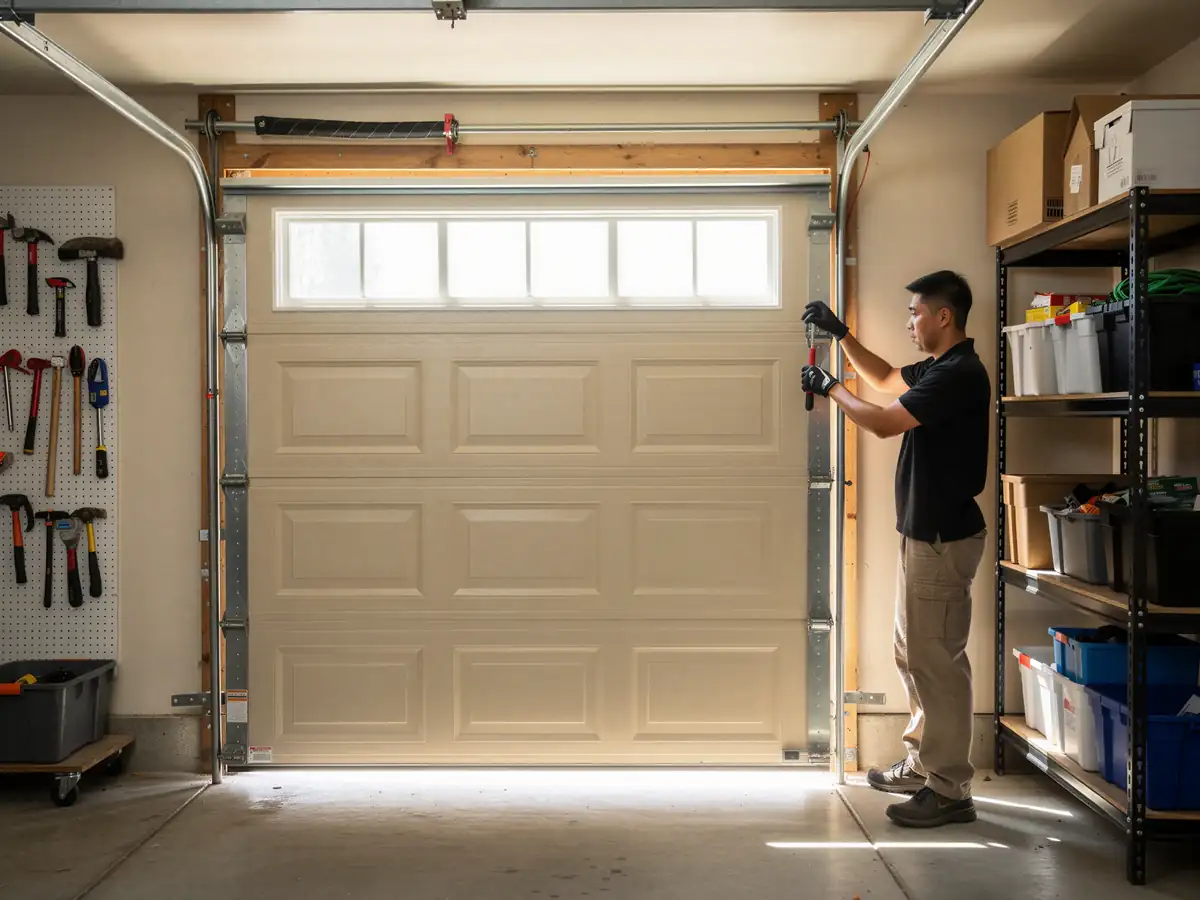
A technician in black gloves adjusts a beige garage door with windows.

Garage Door Installation

Garage door installation for Snellville homes built 1951-2012, matched to the track, header, and opener setups common in this area's housing stock.

Learn more
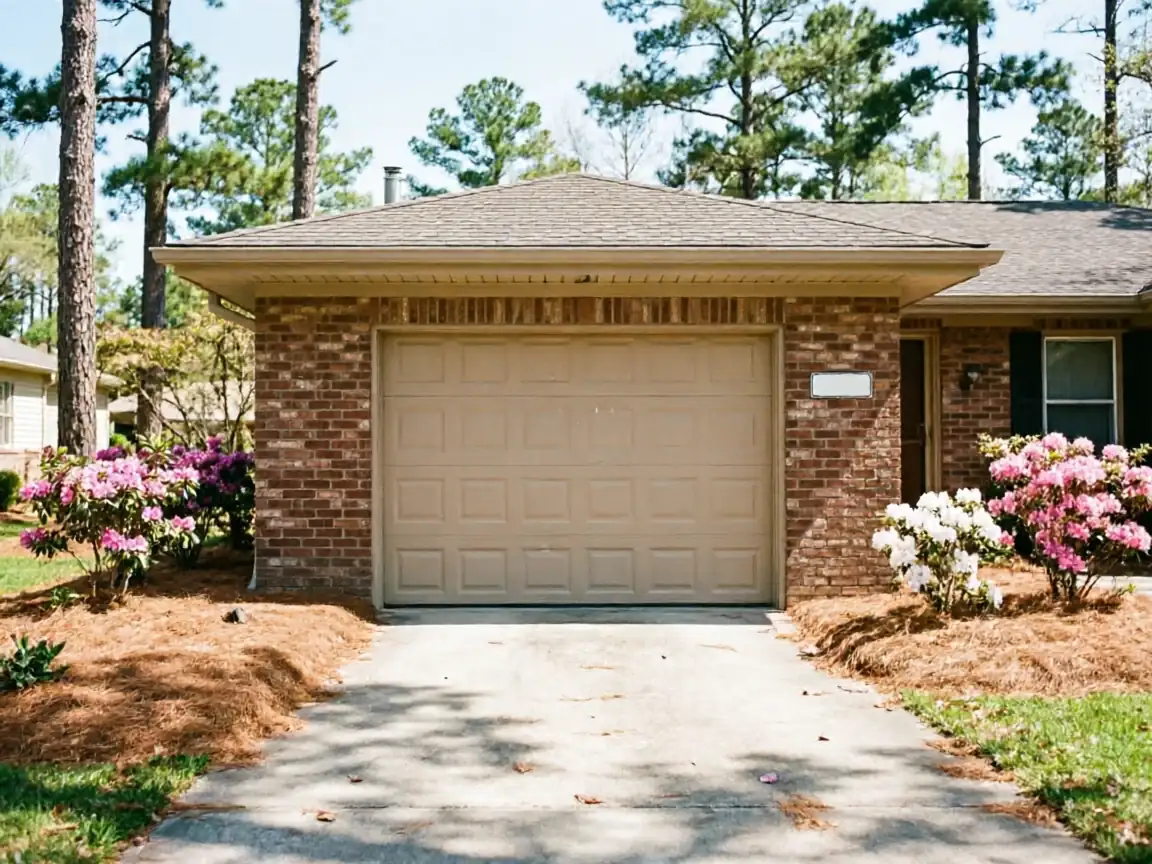
A tan garage door is on a brick house with a driveway and landscaping.

Garage Door Service

Snellville homeowners with 1960s-70s torsion spring doors: why DIY fixes on original hardware fail, and how a cold snap turns a loose spring into a dead door fast.

Learn more
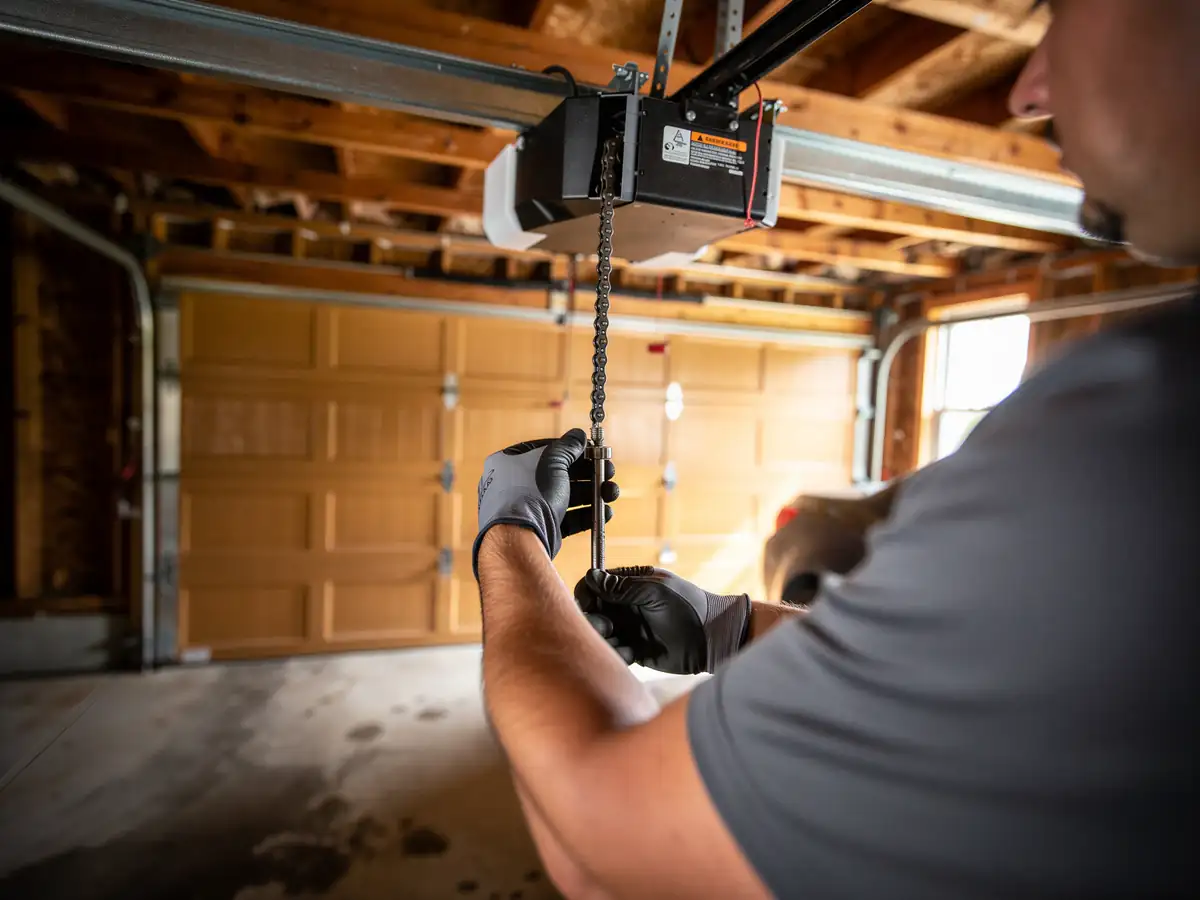
A technician in gloves adjusts the chain on a garage door opener.

Opener Repair

Opener grinding, reversing, or dead on a house built between 1951 and 2012? We fix chain, belt, and screw-drive openers across the Snellville service area.

Learn more
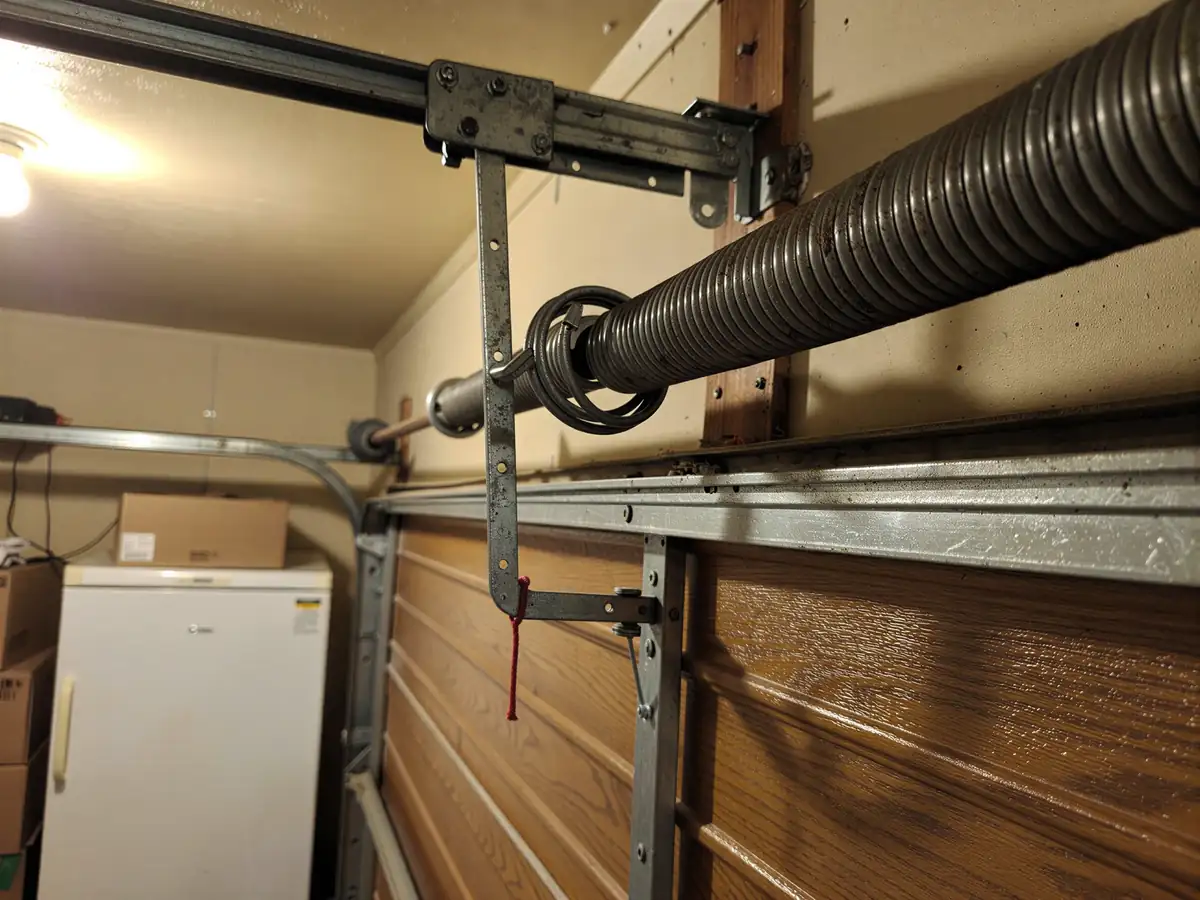
The torsion spring is mounted above a wooden garage door.

Spring Repair

Snellville's 1960s-70s housing stock runs original torsion springs most owners don't recognize as a two-part counterweight system. Here's why DIY spring repair fails here.

Learn more
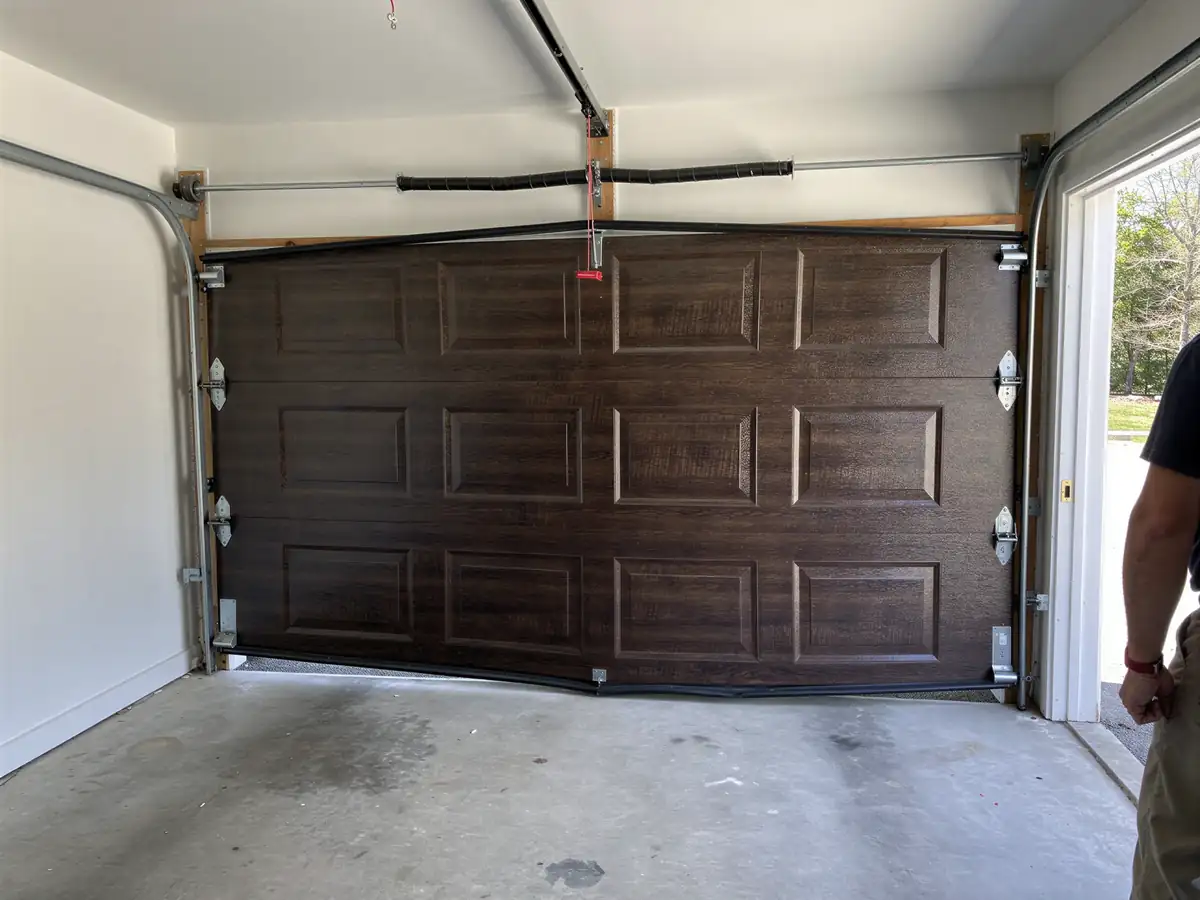
A dark brown garage door is off its tracks and partially open.

Off-Track Repair

Snellville homes built from the 1960s through the 1990s share the same track and roller setups that slip off alignment. Here's why, and what fixing it right actually takes.

Learn more
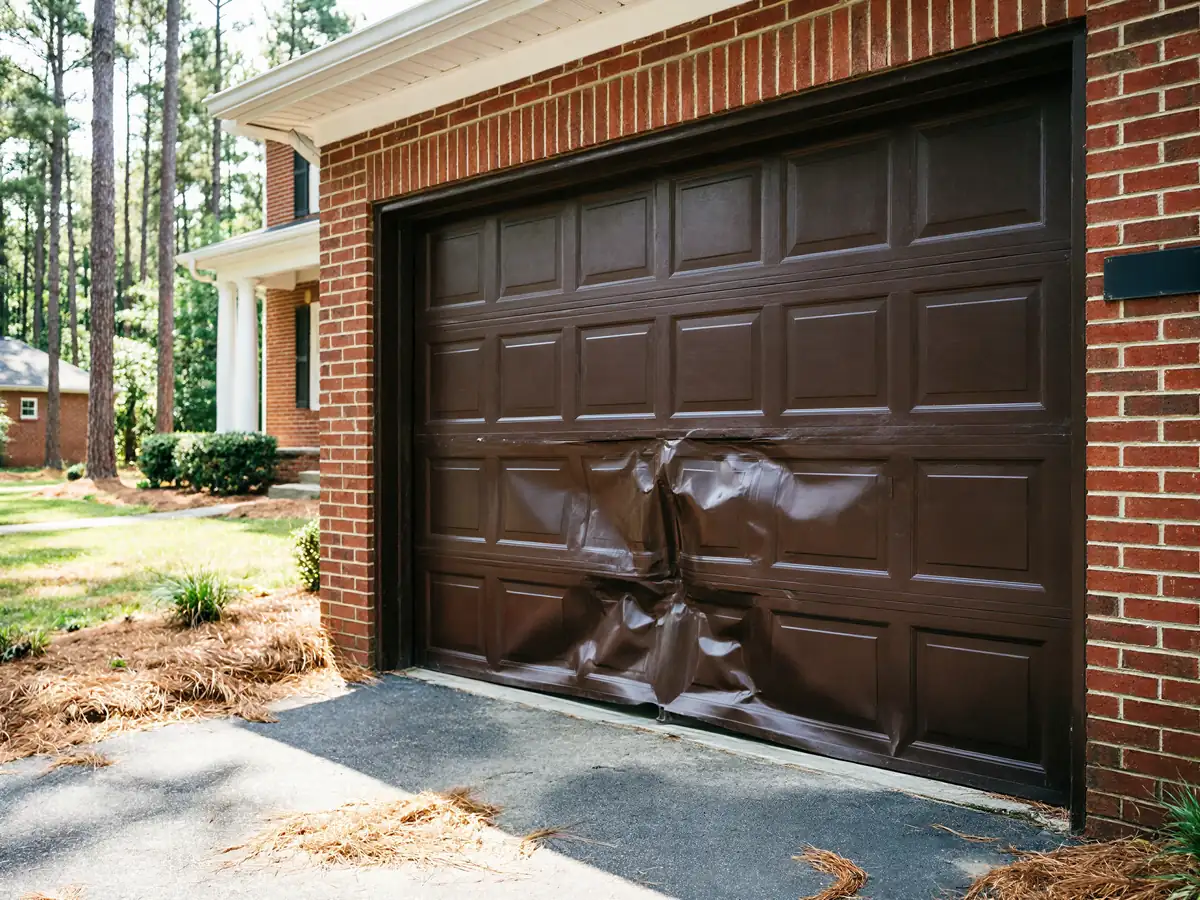
A brown garage door on a brick house is severely dented.

Panel Replacement

Panel replacement for Snellville garage doors built in the 1960s-70s housing boom: how cold-weather cycling cracks and dents steel sections, and when to replace vs. patch.

Learn more
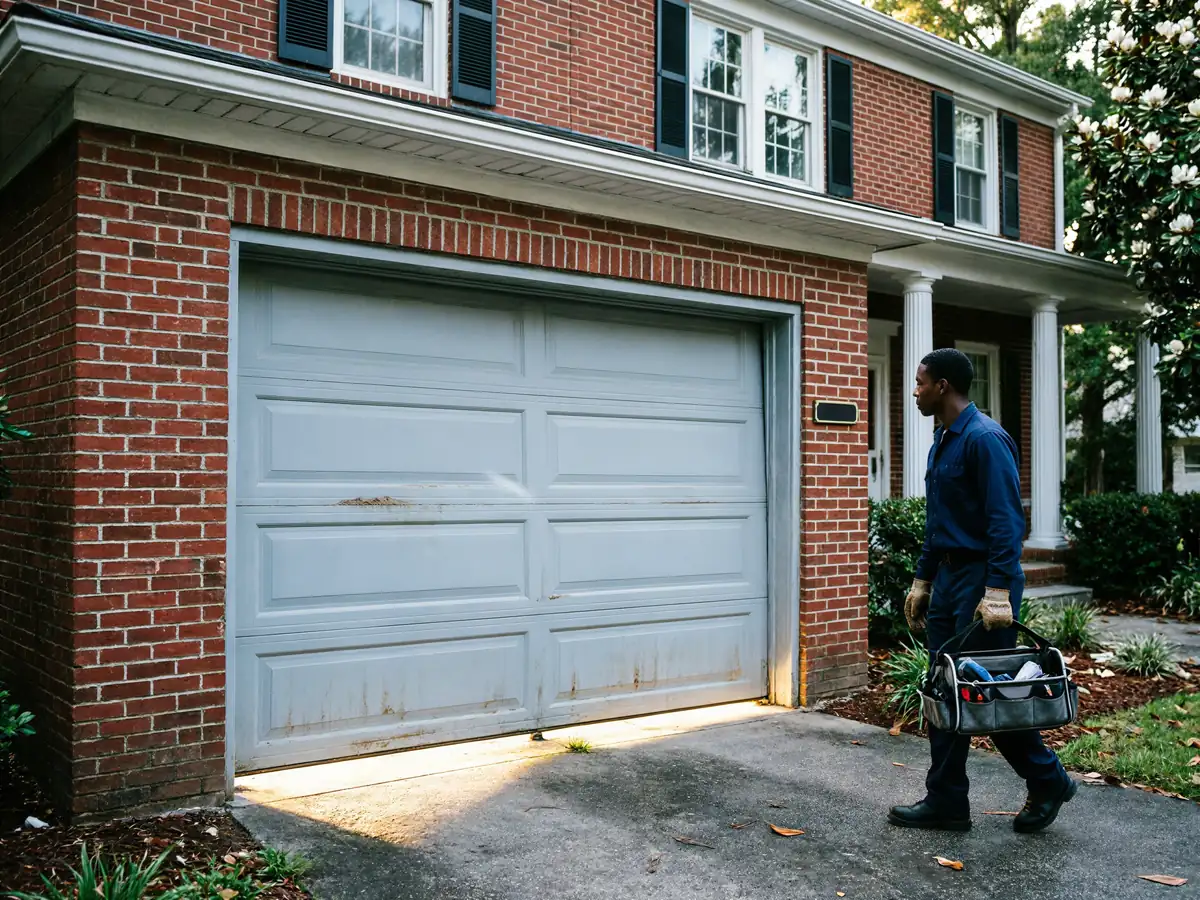
A technician carries a toolbox past a gray garage door on a brick house.

Emergency Garage Door Repair

Spring snapped, door stuck shut, opener dead at the worst time. Snellville Garage Door Pros covers emergency repair across the service area, day or night.

Learn more
Questions

Frequently asked

Straight answers about garage door repair in Snellville. Still unsure? Ask us directly.

Can I push the door back onto the track myself?

No. Garage doors run under spring tension, and a door off its track can drop or snap a cable if you try to force it back in. Disconnect the opener, don't touch the door, and call someone who can release the tension safely before touching the rail.

Why does my door only go off track in winter?

Cold weather contracts the steel track and tightens tolerances that are already loose from age. On older hardware common across this area's 1960s-70s housing stock, that seasonal shrink is often enough to push a worn roller past the rail edge for the first time.

Is a bent track worth repairing or should I replace it?

A track that's just loose at the brackets usually just needs re-tightening. A section that's visibly bent or corroded through at the base is past the point of a clean fix - re-aligning bent steel rarely holds, so replacing that section is the more honest answer.

Ready to get your garage door sorted?

Tell us what it’s doing and where you are in Snellville - we’ll take it from there.

Request a QuoteCall