How Long You Are Without the Door
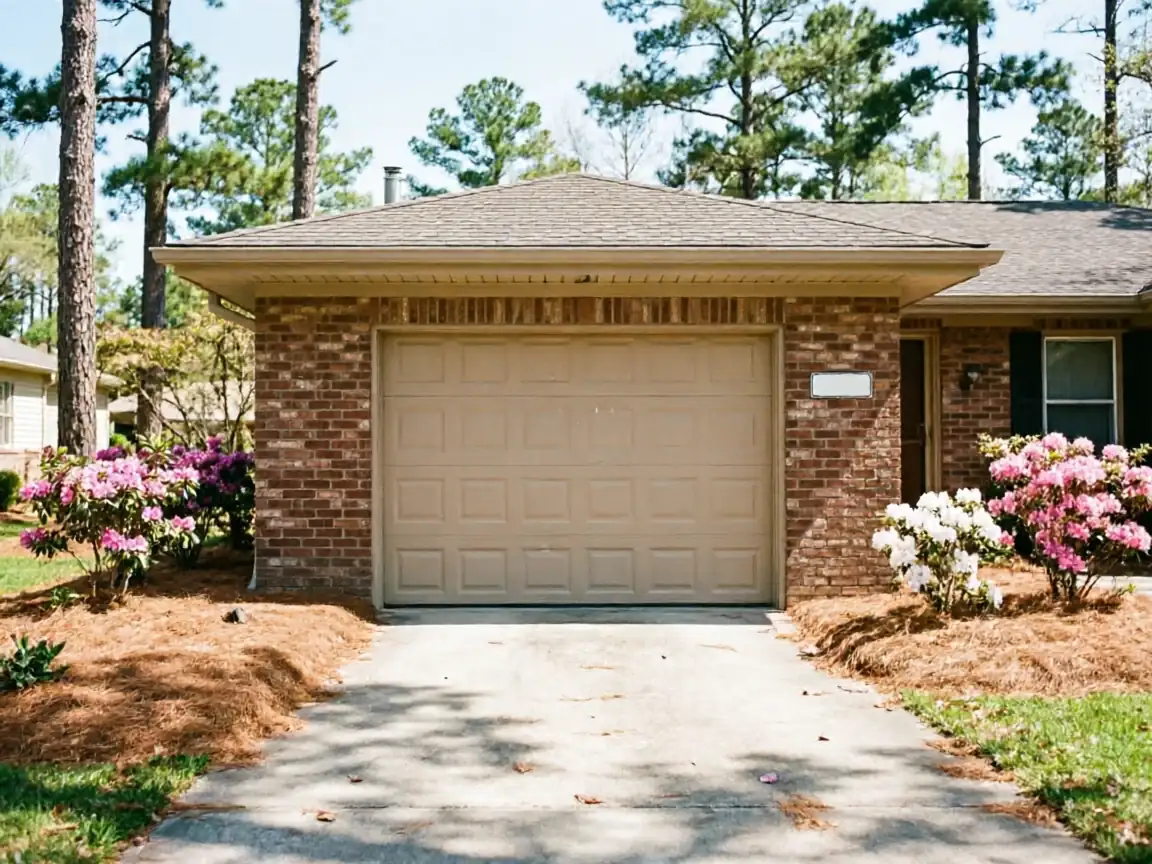
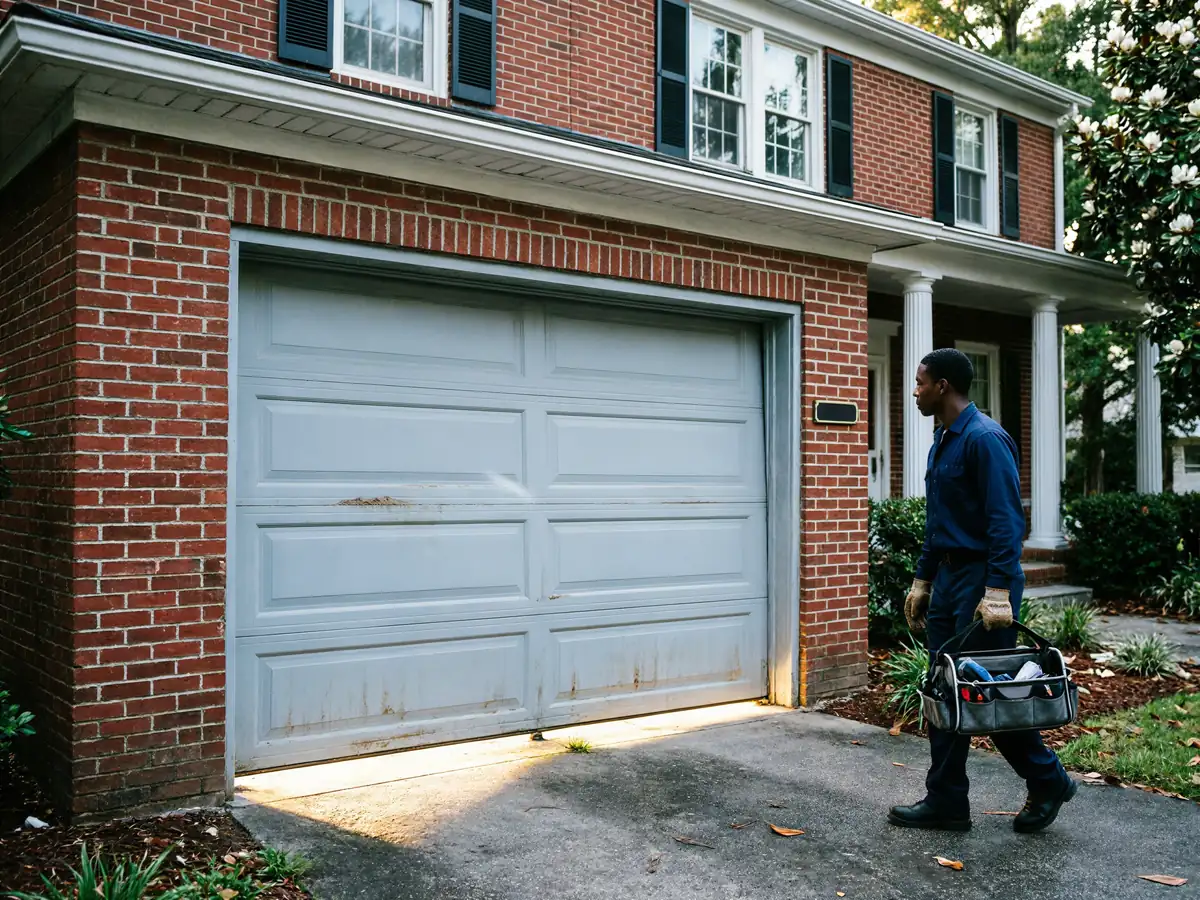
Candler-McAfee sits roughly 18 miles from our shop in Snellville, and that distance is the first thing to plan around when a door jams shut or a spring snaps. We don't have a branch out here - every emergency call means a truck leaving Snellville and crossing that 18 miles, so tell us up front whether the car is trapped inside or the opening is stuck wide open. Those are different problems and we triage them differently on the phone before we even load the truck.
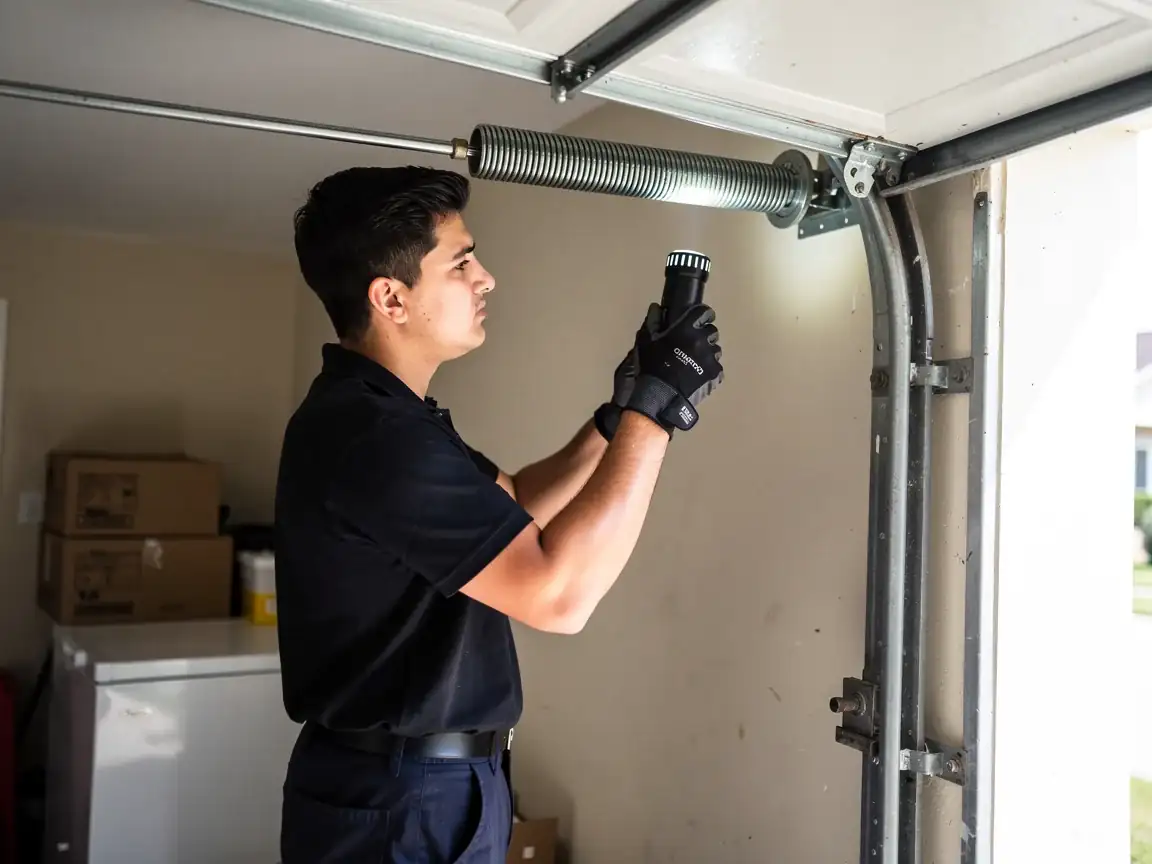
With most houses in this part of Candler-McAfee built around 1963, the failure you're describing is often predictable before we arrive: a torsion spring that's been carrying the same load since the Johnson administration, or a cable that's frayed through on a drum nobody's touched since the door went in. Knowing the build era lets us bring the right spring size and cable gauge on the first trip instead of a second one. That's the real cost of distance out here - not the drive itself, but a wasted drive for the wrong part.
Doing It Yourself
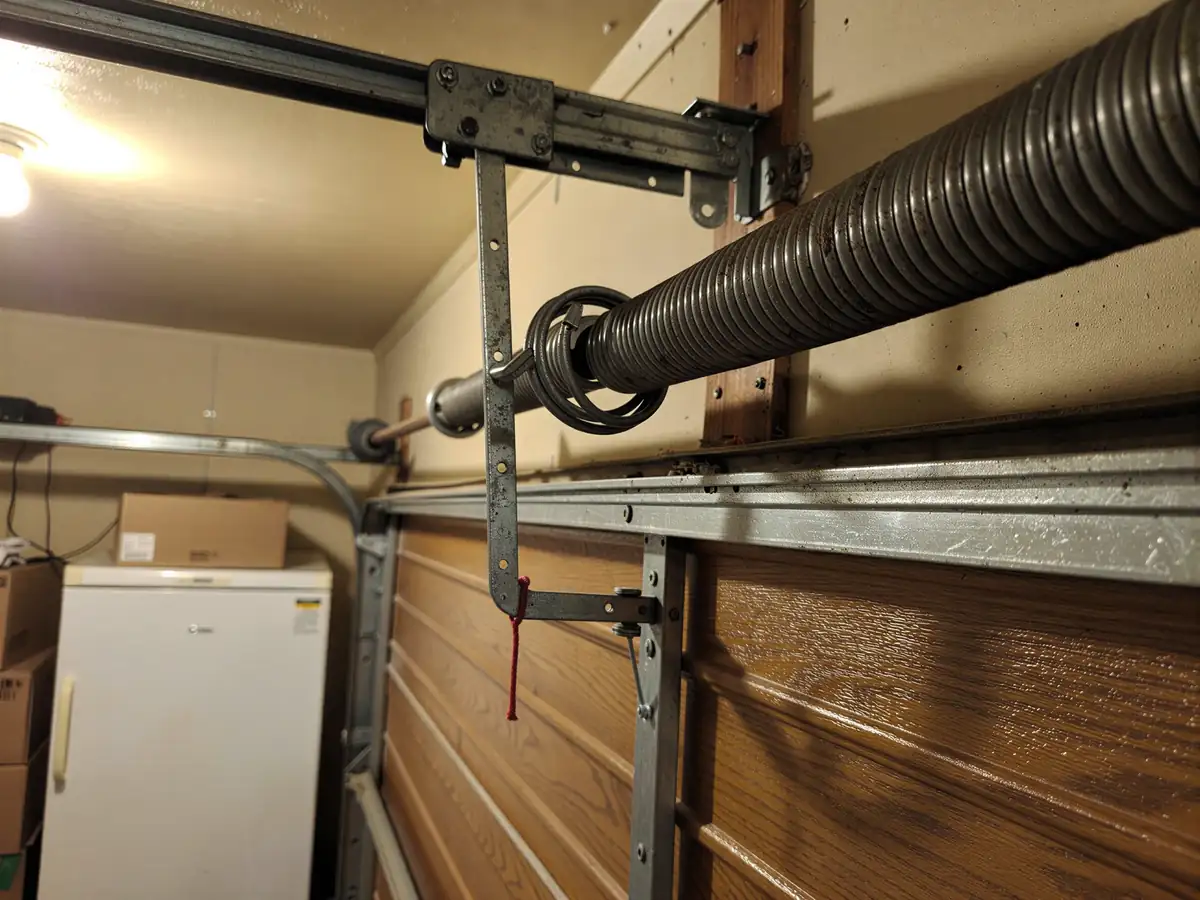
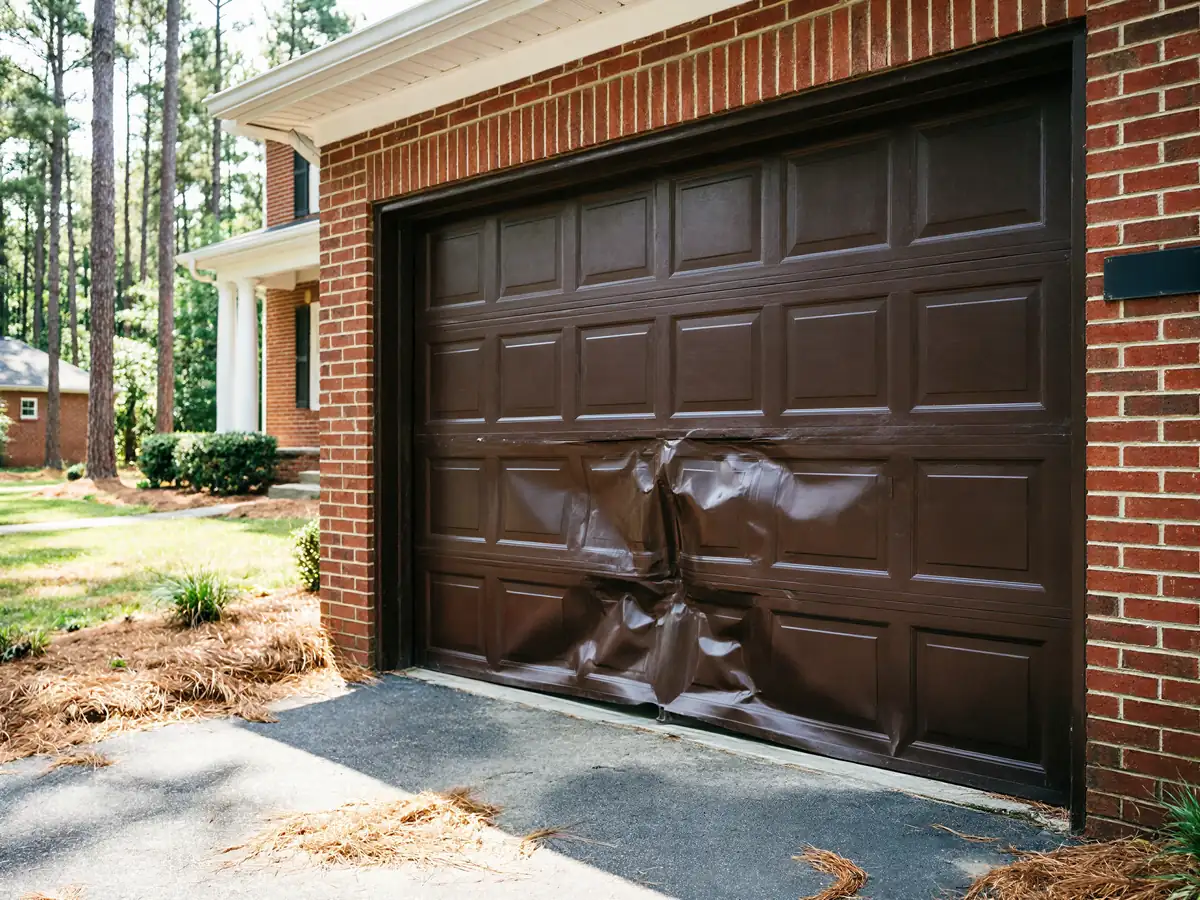
If the door won't open and the spring looks coiled wrong or snapped clean through, leave it. A torsion spring under tension on a door this old can let go hard enough to break fingers, and the winding cones on original 1963-era hardware are often rusted enough that they don't release the way a newer unit would.
What you can safely check: the photo-eye sensors near the floor on each track (knock them out of alignment and the opener refuses to close), and whether the manual disconnect cord got pulled by accident - a kid, a ladder, a box shoved too close. Both are five-minute fixes with no tools and no risk.
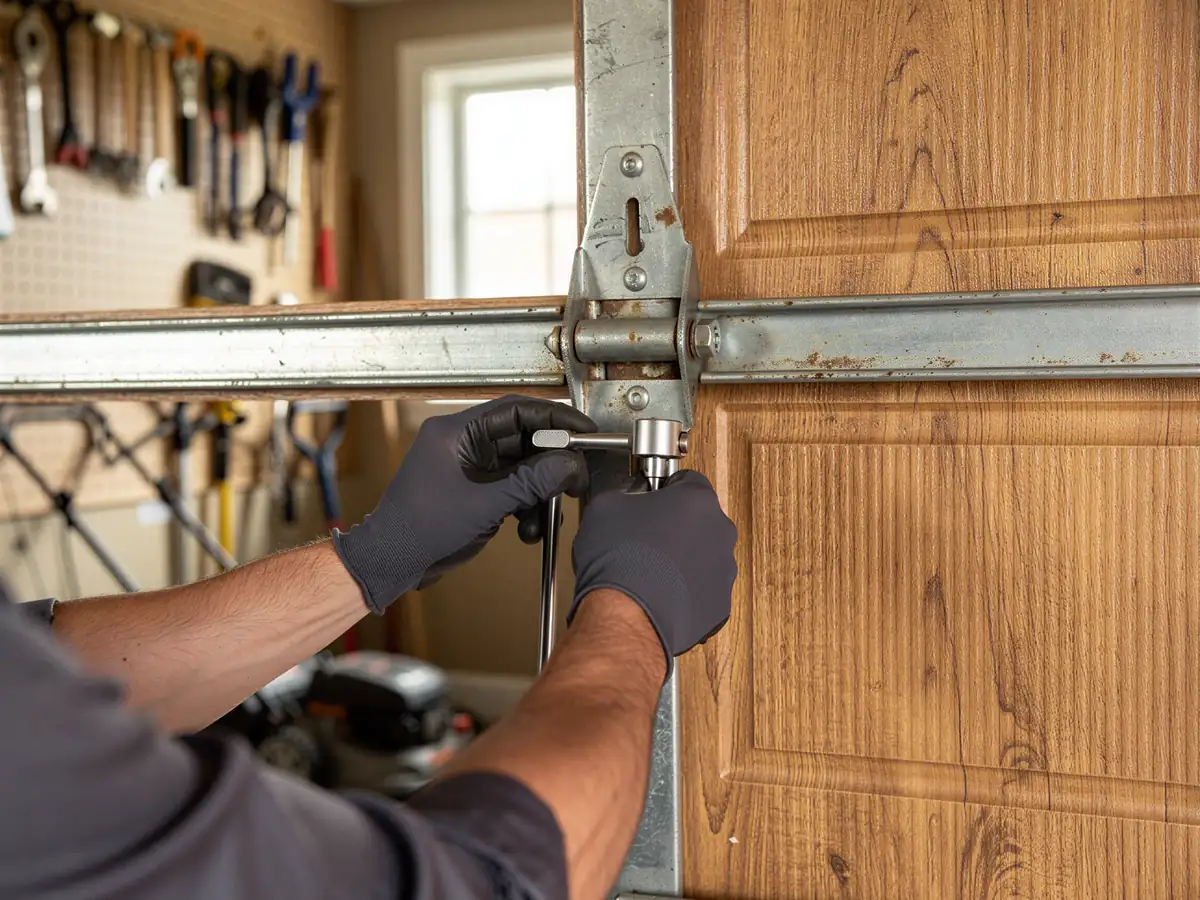
What you shouldn't touch: the drums, the cables, or anything bolted to the header above the door. On a house this age the mounting hardware itself may be original, and a lag bolt that looks tight can be stripped out of wood that's held it since before most modern torsion-spring doors existed. We'd rather you wait for us than add a trip to the ER to the day's problems.
Parts We Carry
Because Candler-McAfee's housing stock clusters tightly around 1963, we stock the spring sizes, roller styles, and cable gauges that fit that era's doors as standard inventory on the truck - not special-order
That covers the common torsion spring breaks, worn nylon or steel rollers, and frayed lift cables you'll see on a door that old.
Where we run into trouble: original wood jambs and track brackets that were never updated
If a bracket's rusted through or the track itself is bent out of true, we can usually rebuild the mounting rather than replace the whole frame, but a genuinely custom-width opening from that period can mean a short wait on a cut-to-size part. We'll tell you on site if that's the case rather than promise same-day when it isn't true.
We don't carry smart-opener retrofit kits or decorative overlay panels as stock items
Those get ordered to spec once we've measured, not pulled off the truck.
Booking a Visit
Call it in and describe what you're seeing - door won't budge, loud bang then nothing, opener running but door not moving. That tells us which parts to load before the 18-mile drive out from Snellville. For routine service, inspection, or a replacement quote rather than a true emergency, our general garage door service page for Candler-McAfee is the better starting point.
If you're closer to Snellville itself or want to see how we handle emergency calls across the wider area, the Snellville emergency repair page covers that side of the service area in more depth. This page is specifically about what breaks, and what we bring, for the 1963-era housing that makes up most of Candler-McAfee.
Where This Job Goes Sideways
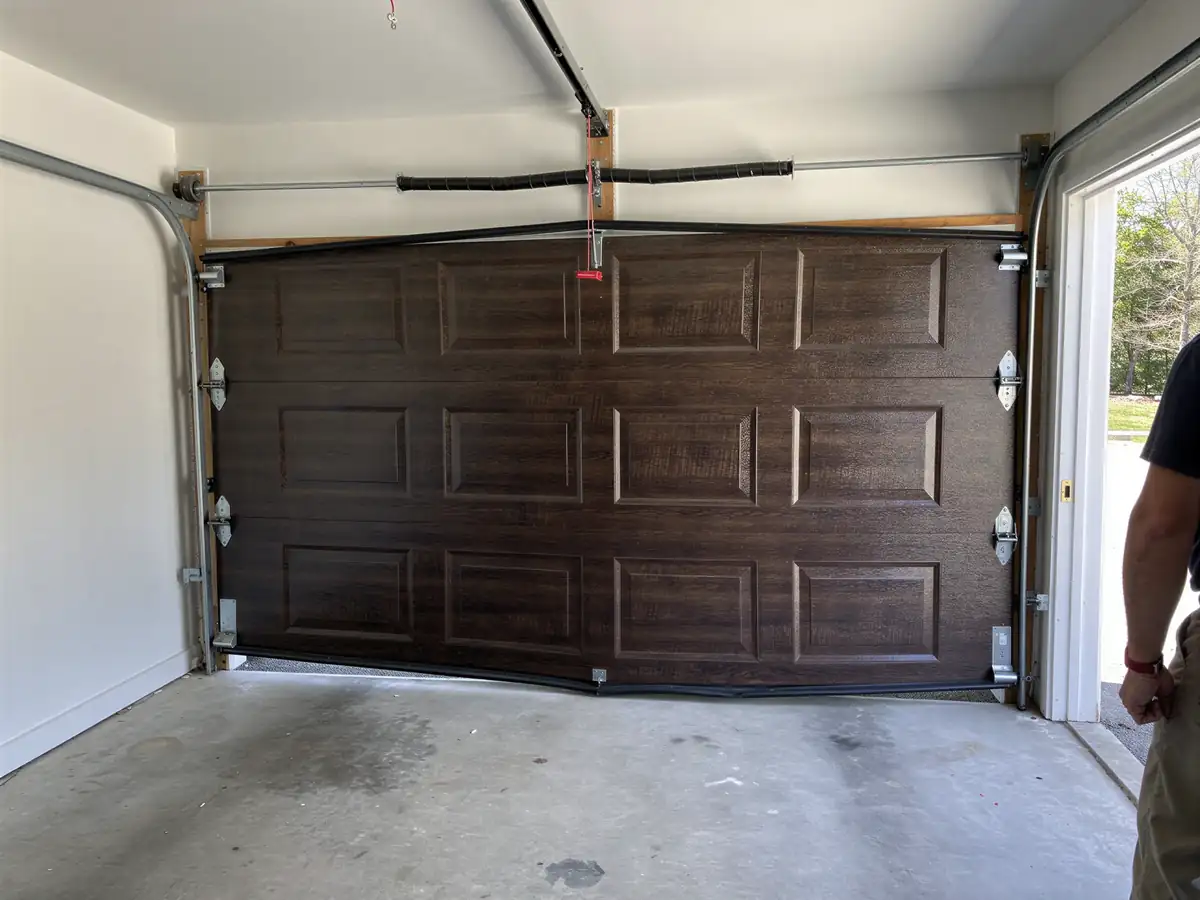
The job goes sideways when a homeowner has already tried to force the door open or closed before calling. On original hardware from the 1960s, forcing a jammed track can bend it badly enough that we're straightening steel instead of just replacing a roller - a bigger job, done on an emergency timeline, which is the worst combination.
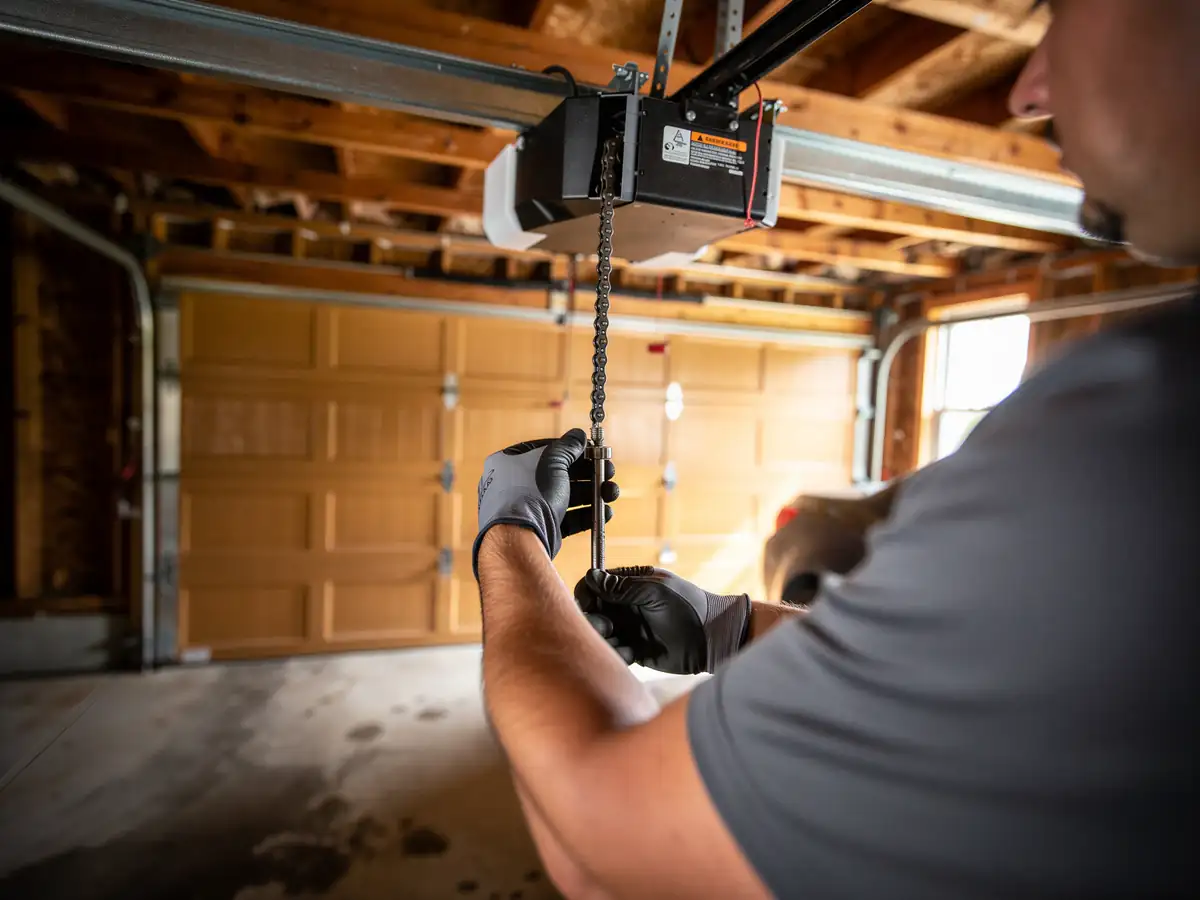
It also goes sideways when the opener is newer than the door. A lot of homes here got a replacement opener at some point without touching the original springs or track, so the motor is rated for forces the old hardware was never built to handle under daily cycling. When that setup fails, it's rarely just the part that failed - it's the mismatch finally catching up. We'll flag that when we see it, because patching the symptom without addressing the mismatch just moves the next failure a few months down the road.
Why This Fails Locally
This area sits in a cold-moderate climate band
Which over sixty winters means repeated contraction and expansion in steel springs and cables that were never rated for a replacement cycle this long. Combined with a median build year of 1963, a lot of what's failing right now in Candler-McAfee is original equipment simply running out of fatigue life at the same time across the neighborhood - not a batch of coincidences, but one generation of hardware aging out together.
The median household income here is $62,299, noticeably below the $70,625 average across the wider service area
And that number matters for the repair-versus-replace conversation. A full door replacement is a bigger expense to justify on this budget than a spring and cable repair that gets another decade out of equipment that's already proven itself. We'll always tell you honestly which side of that line your door is on rather than defaulting to the bigger job.