How Long You Are Without the Door
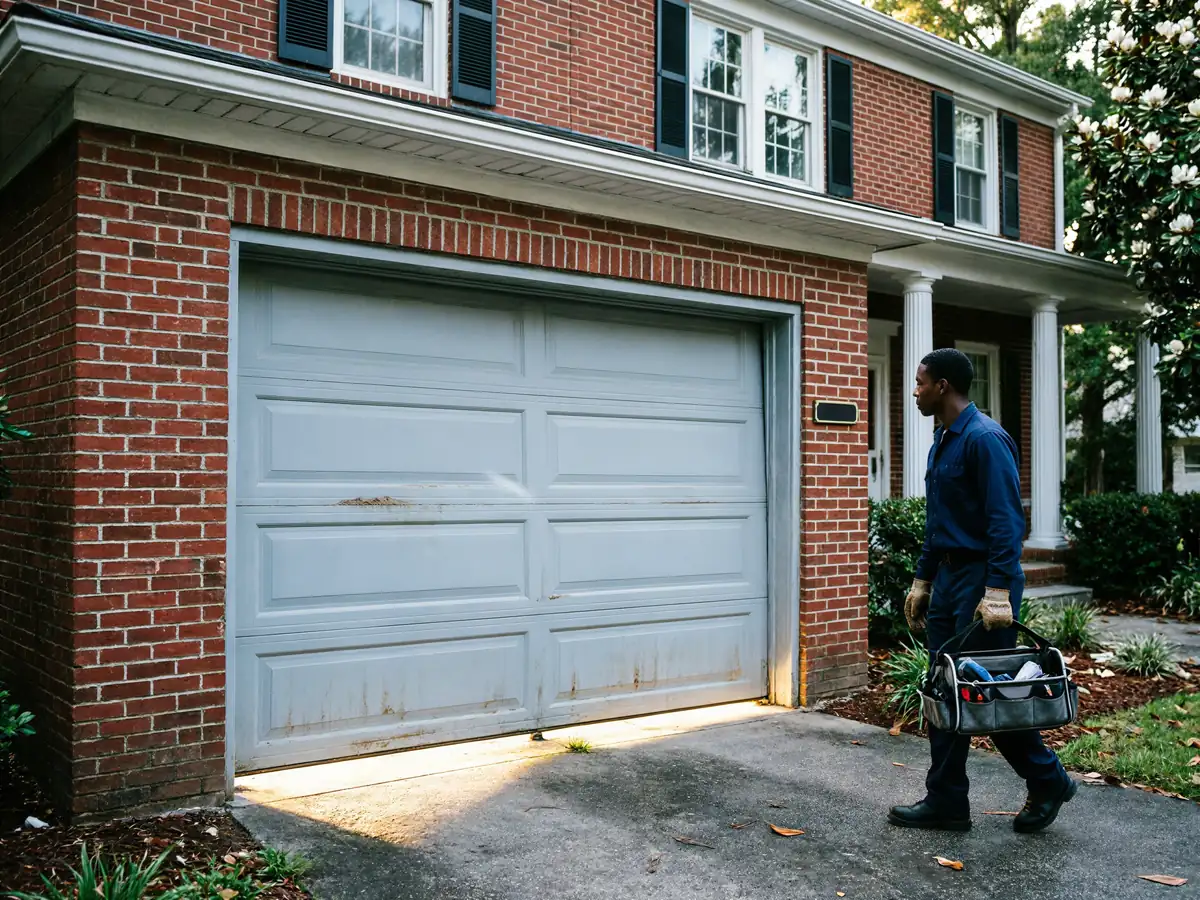
The fault we see most in Candler-McAfee isn't a broken spring - it's a door that was never sized right for the opening in the first place. Houses here have a median build year of 1963, which puts a lot of this neighborhood ahead of the 1970s wave that shaped most of the wider Snellville service area. That earlier construction means narrower garage openings and shorter headroom than what newer doors and track kits assume as standard.
We come from Snellville, 18 miles out, so we don't keep a crew sitting in Candler-McAfee waiting on calls. When we schedule a new install, we build the trip around having the right-width door and track hardware already on the truck, because a 1963-era opening that's two or three inches narrower than today's standard sizes isn't something you discover on site and fix in an afternoon. If the opening needs reframing, that adds a second trip, and we'll tell you that up front rather than guess.
Doing It Yourself
A new door install looks like a kit job until you're standing in front of a 1963 opening that doesn't match the box dimensions on the carton. Stock doors are cut for modern rough openings. Older Candler-McAfee garages often run narrower, and some have jamb framing that was never meant to carry a heavier insulated door.
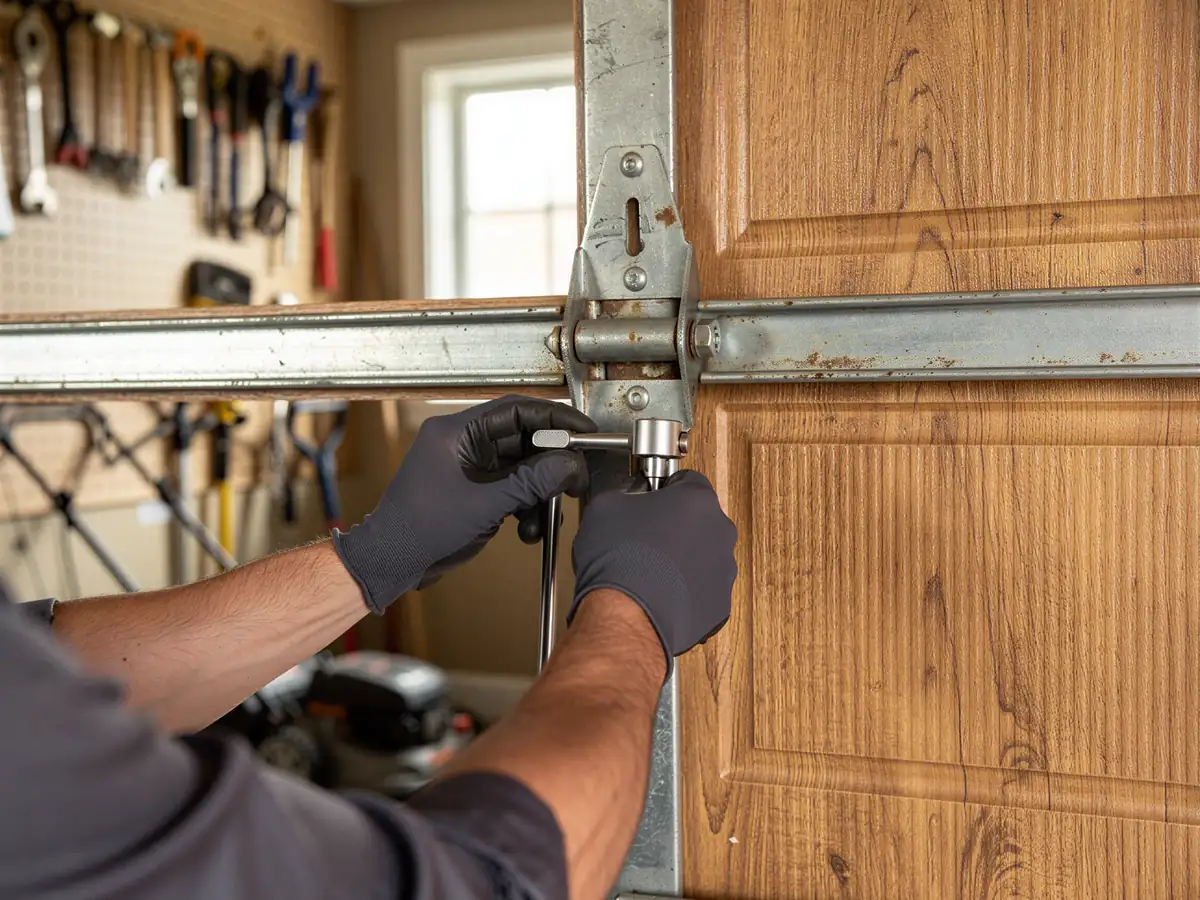
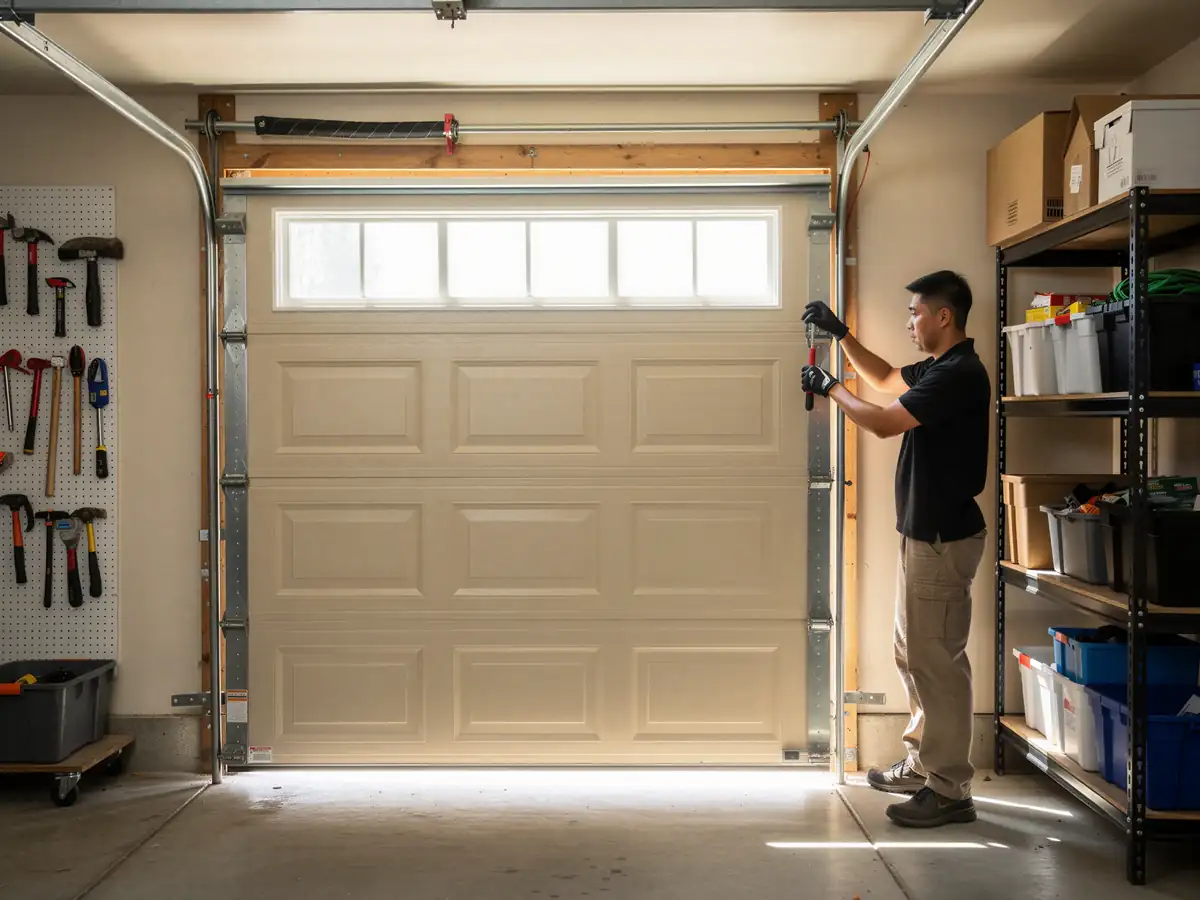
You can hang a door yourself if the opening is standard and you're comfortable with torsion spring tension, but torsion springs under load are the one place where a mistake doesn't just cost you a return trip - it can put you in the hospital. We're not going to tell you it can't be done. We're telling you that on a house this age, the measuring is the hard part, not the hanging, and a wrong measurement means a door that binds in the track within a season.
Parts We Carry
For Candler-McAfee jobs we carry narrow-opening track kits and jamb brackets sized for the shorter headroom common in 1960s construction
Since standard-width hardware often doesn't clear. We also stock insulated steel panel doors rated for the cold-moderate climate band this area sits in - winters here get cold enough that an uninsulated door on an attached garage shows up as a draft in the house, not just a cold garage.
What we don't carry on the truck is custom millwork or anything built to a nonstandard width beyond our stock range
If a 1963 opening has been altered oddly over the decades - extended, narrowed, bricked in partway - that's a special-order door, and special orders run on their own lead time, not ours. We'll size the opening on the first visit and tell you straight whether it's a stock job or a wait.
Booking a Visit
Because we're routing from Snellville, 18 miles away, we book Candler-McAfee installs as a dedicated trip rather than a drop-in between closer jobs. That means we ask for the opening width and age of the house up front, so the door and hardware are loaded before the truck leaves.
If you already know your garage dates to the early 1960s like most of the block, say so when you call - it changes which track kit goes on the truck and saves a second visit. We'd rather ask an extra question on the phone than show up with the wrong width door for a house that's 60 years old.
Where This Job Goes Sideways
The jobs that go long in Candler-McAfee almost always trace back to the framing, not the door. A 1963 opening that's been painted over and never remeasured can be an inch or two off from what the tape says, and that inch is the difference between a clean install and a door that rubs the track on one side.
The other thing that bites people here: older jamb studs that have shifted slightly over sixty years don't always sit plumb, even when the opening looks square from the driveway. We check plumb and level before we commit to a door, because forcing a new door into an out-of-square opening just moves the problem from today to six months from now, when the rollers start eating the track.
Why This Fails Locally
Candler-McAfee sits in a cold-moderate climate band
Which means winter temperature swings work on a garage door seal and panel every year, not just in a bad season. Combined with a housing stock built mostly in the early-to-mid 1960s, a lot of doors in this part of the service area are original replacements from decades ago - doors that were a reasonable match for the house then but don't carry the insulation or seal standards expected now.
With roughly 7,676 households in the area and a median income of $62,299
We size recommendations to what actually makes sense for a house this age rather than upselling features nobody asked for. An insulated steel door with a decent bottom seal solves the draft problem that shows up on a cold-moderate winter here; it doesn't need to be more than that.
- 7,676 households
- $62,299 median household income