Doing It Yourself
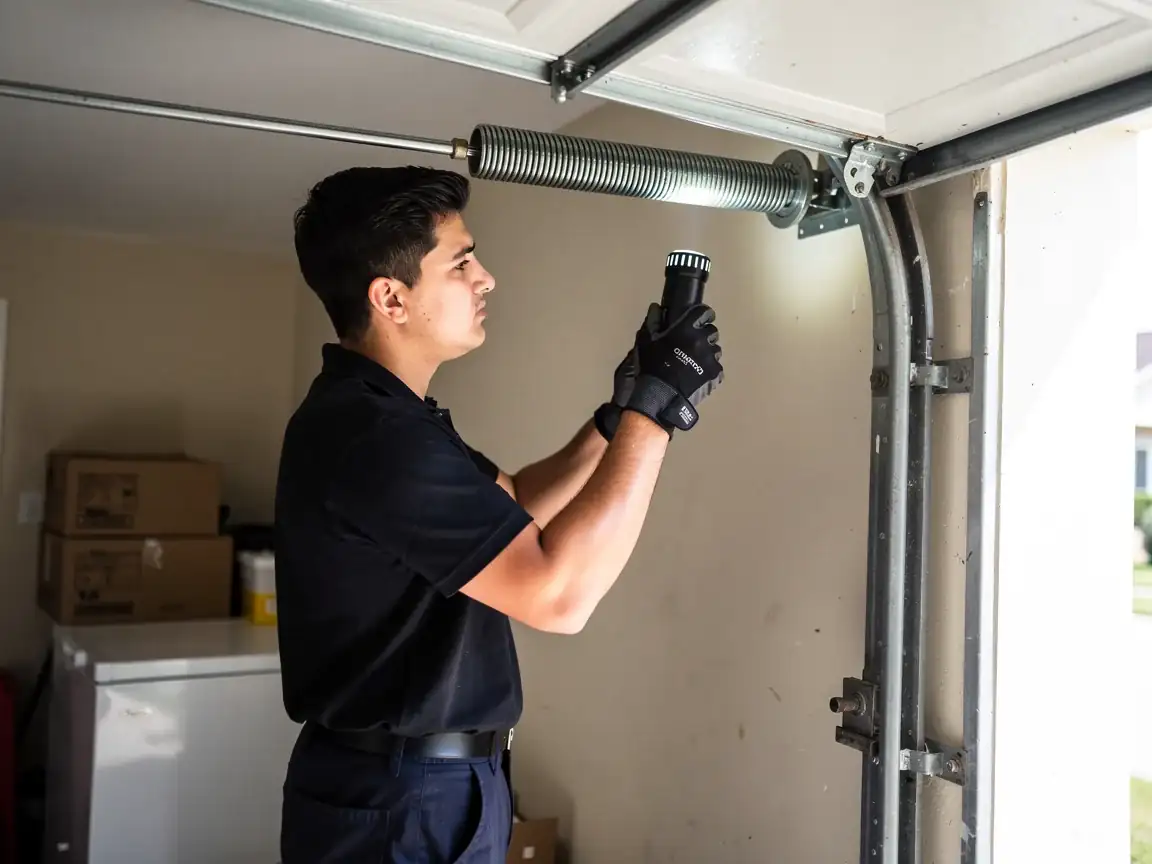
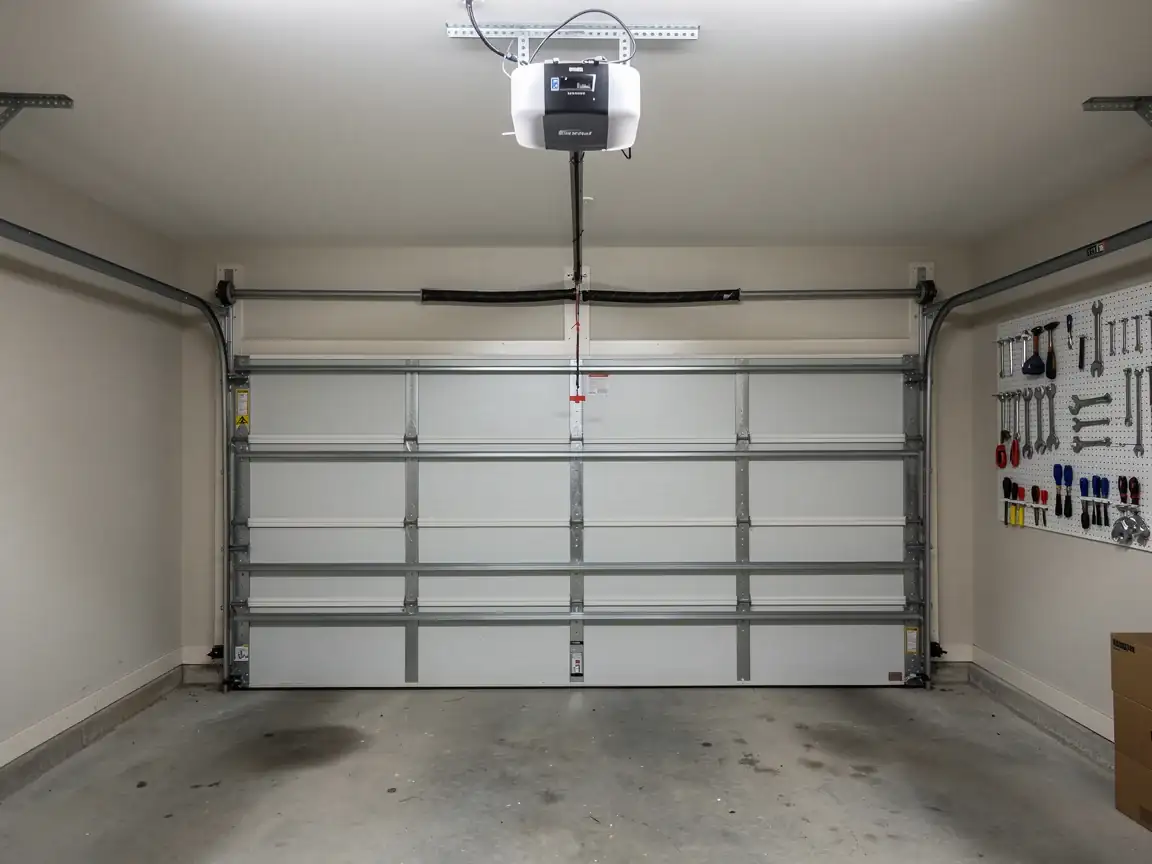
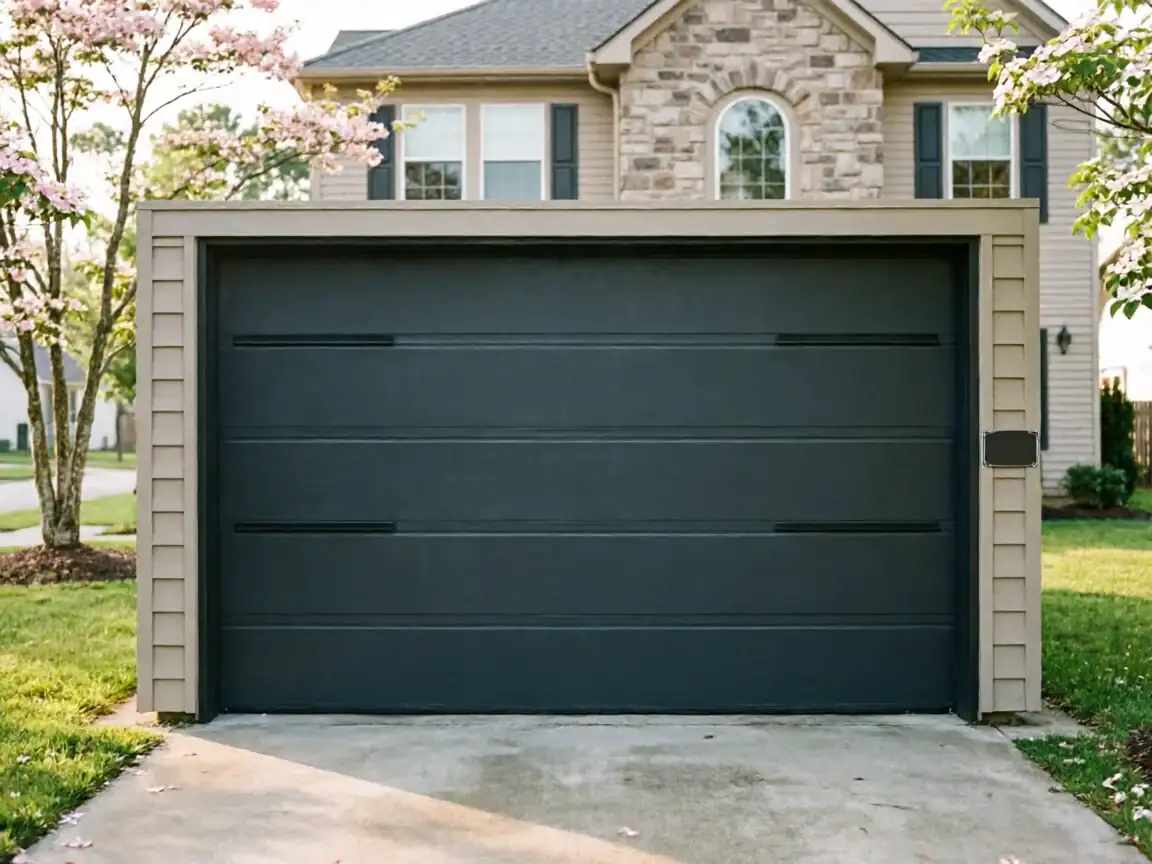
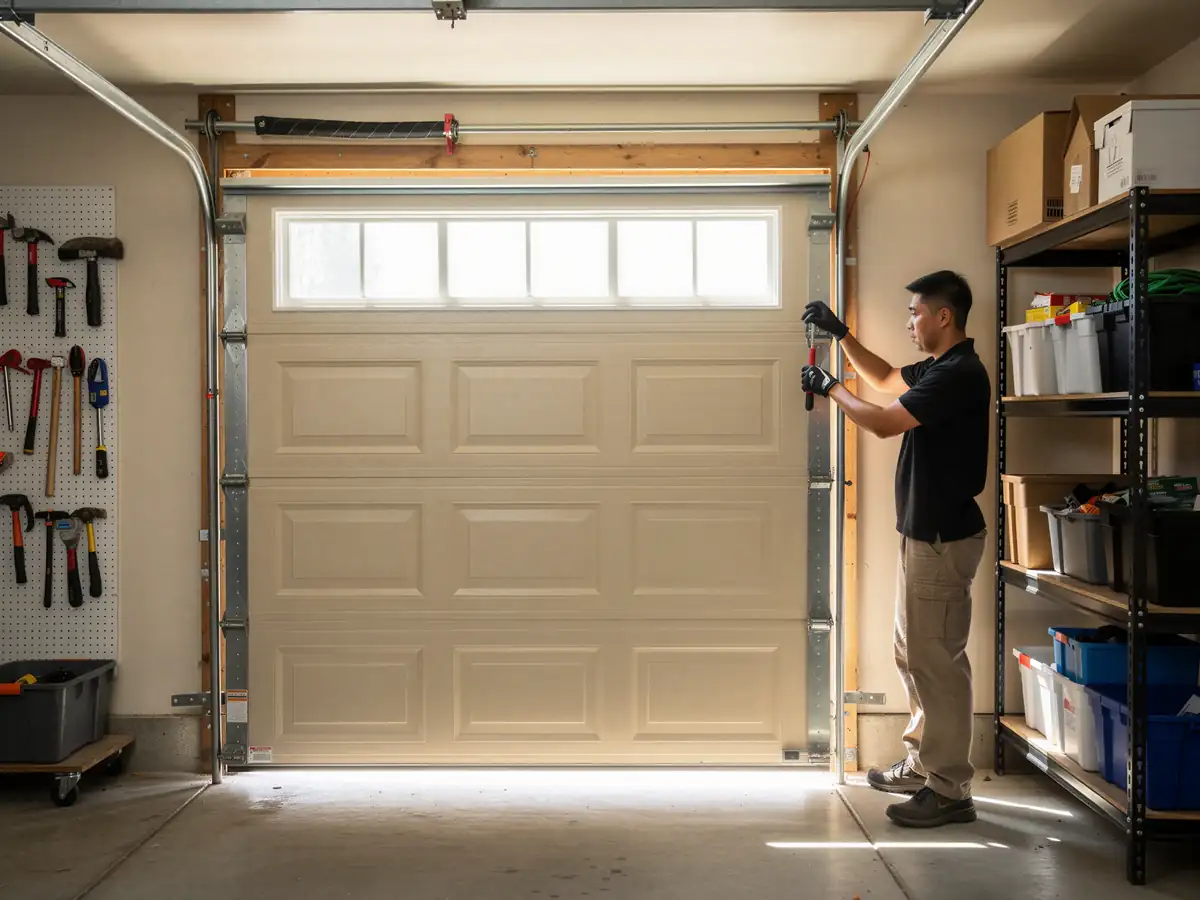
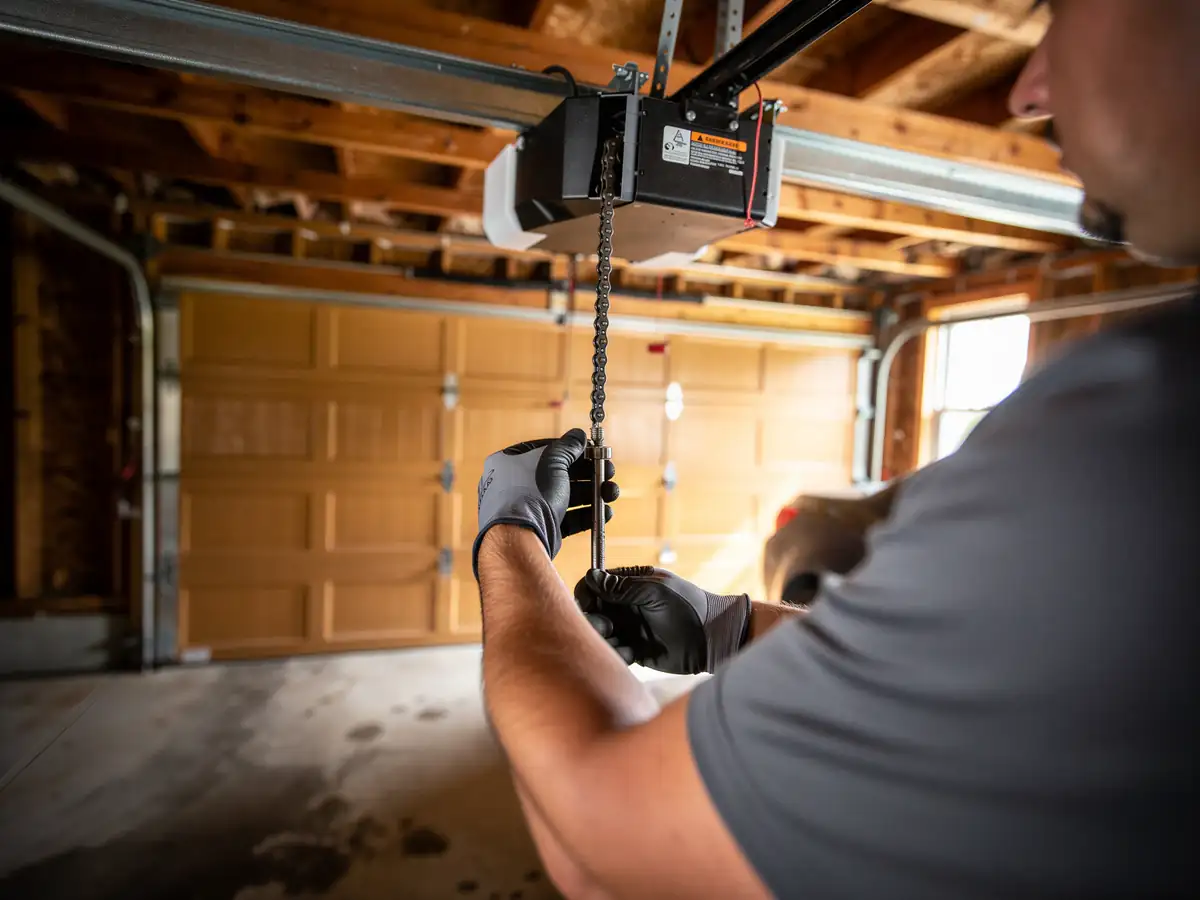
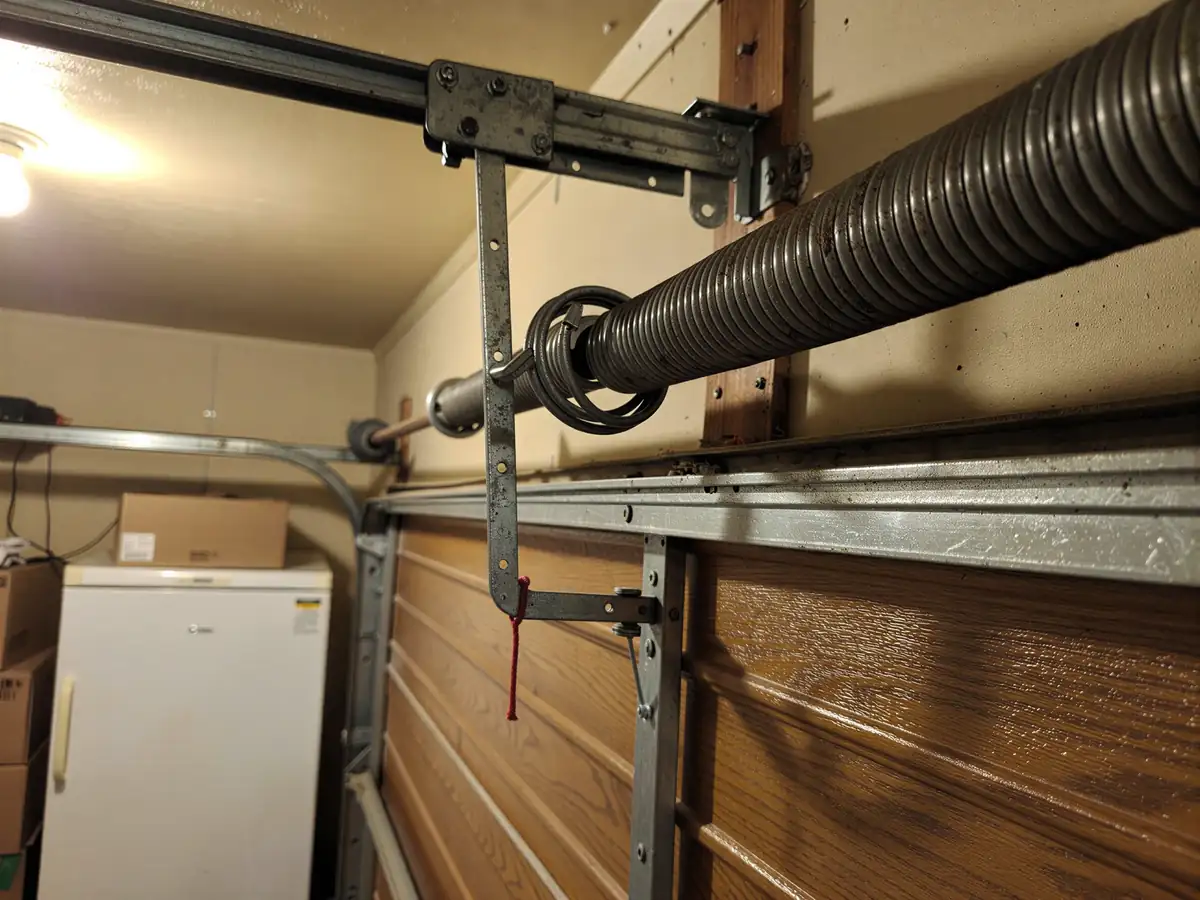
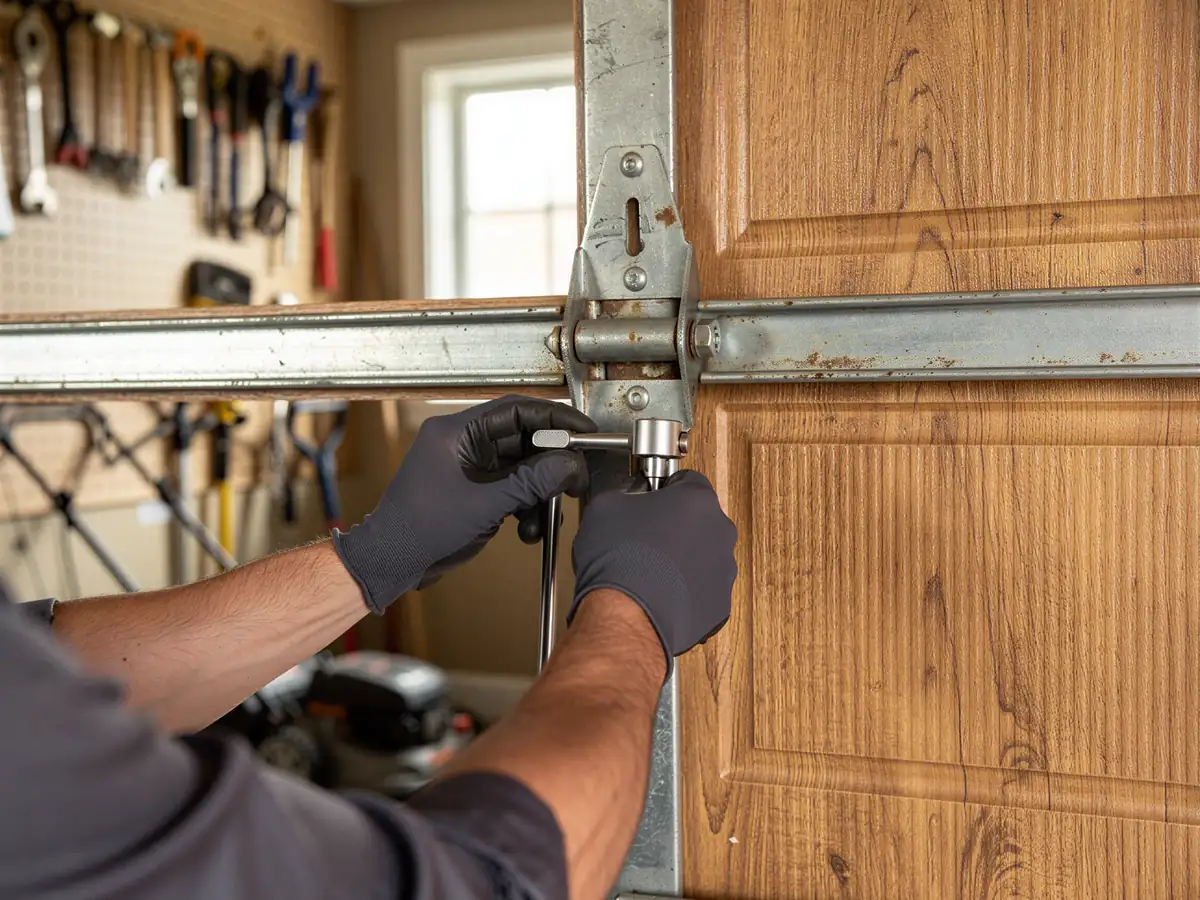
Most garages in Druid Hills went up around 1964, a good decade before the median build year across the rest of the territory we cover. That matters because a door from that era almost never has a torsion spring mounted over the opening. It's running one or two stretched extension springs bolted along the tracks, with or without a safety cable through the coil. You can safely check a few things yourself: make sure the track bolts are snug, wipe old grease off the rollers, and look for a frayed cable before it snaps under tension. What you should not do is unhook or adjust an extension spring yourself - those store enough energy to put someone in the hospital, and we don't recommend it as a DIY job regardless of how simple it looks. If the door is slamming the last foot of travel or drifting back open after you close it, that's spring tension, not something a can of lubricant fixes. We're honest about this one: if your opener is also original to the house, replacing a single spring sometimes just shifts the strain to a motor that was never built for a heavier door, and you end up calling again in a year.
How It Shows Up
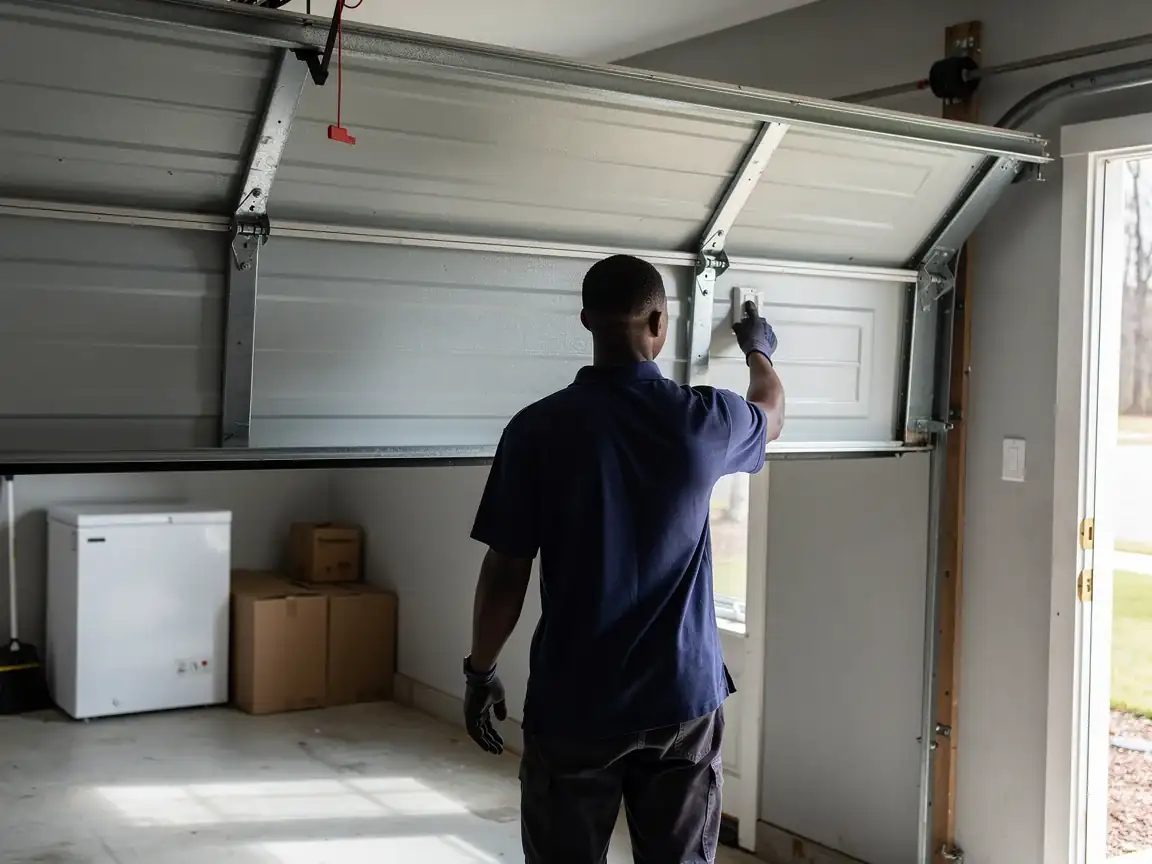
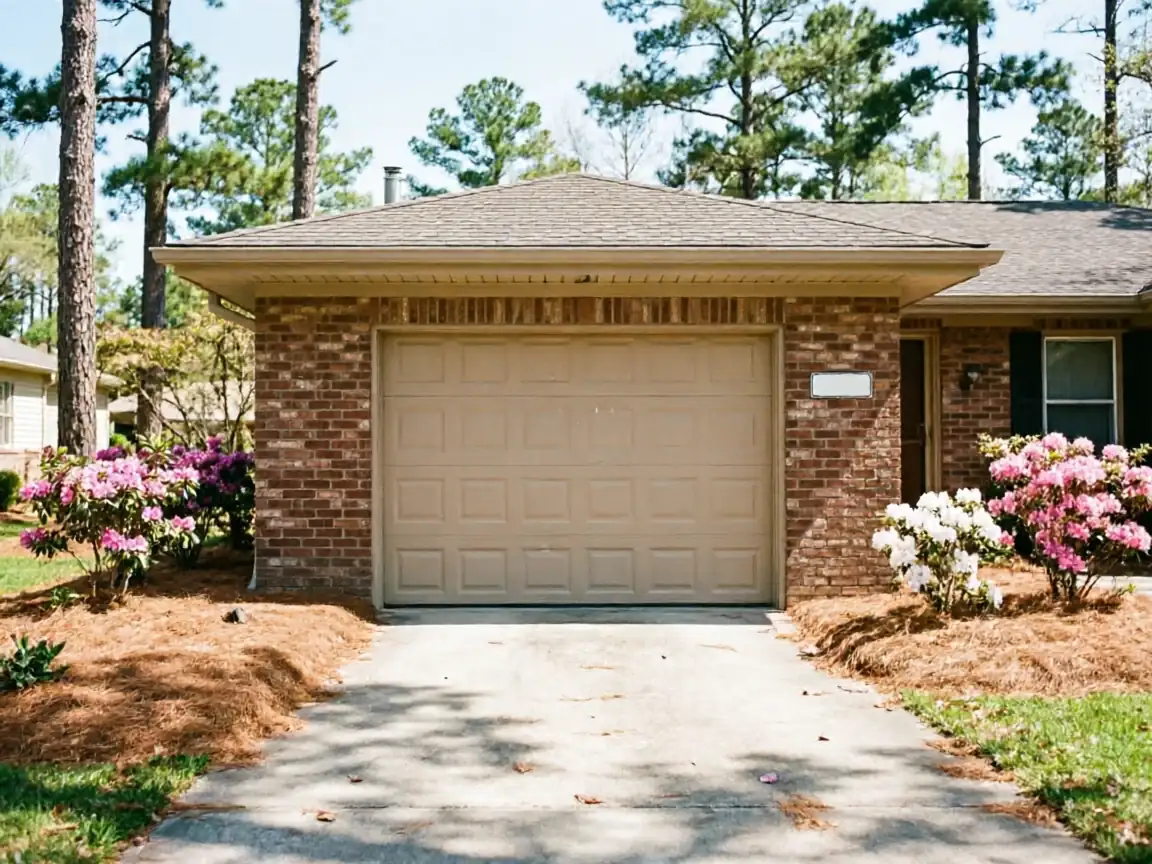
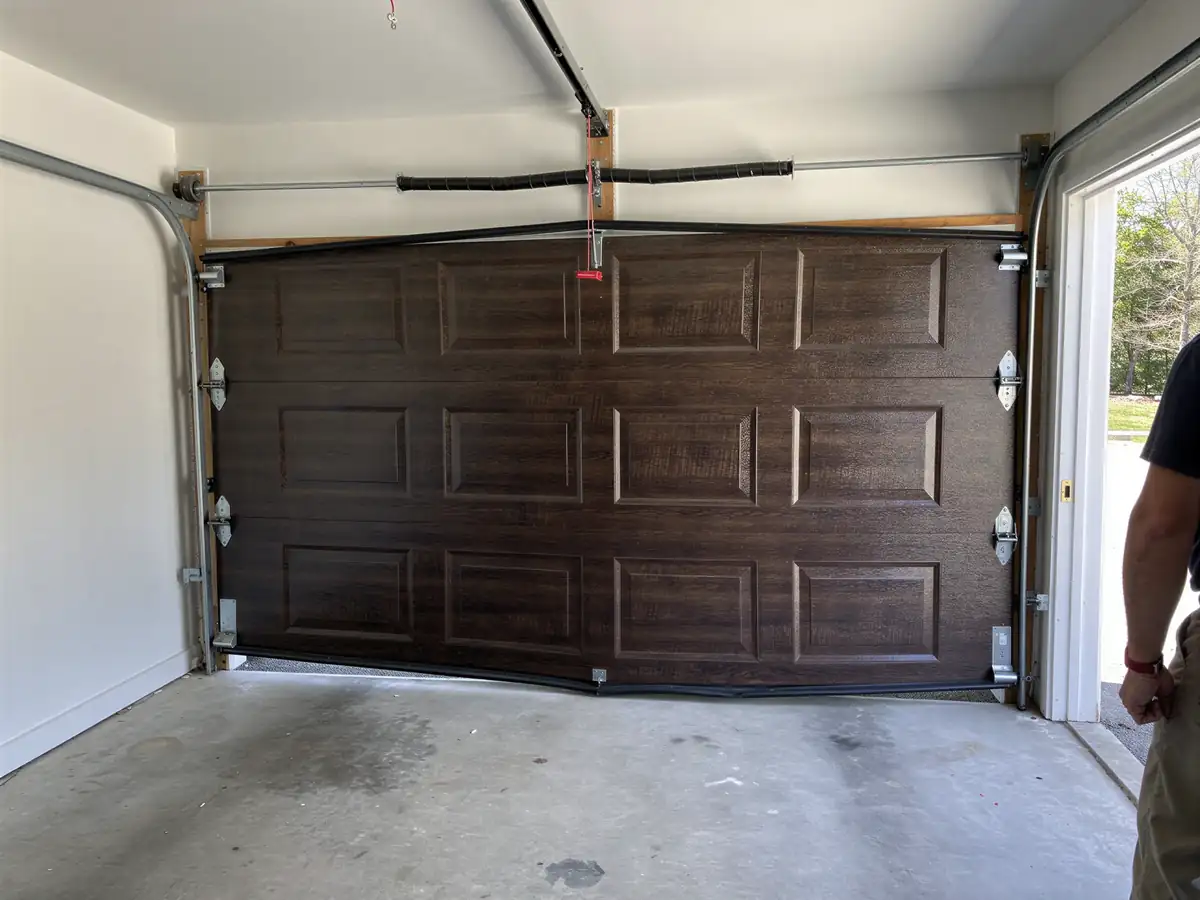
On a house built in 1964, the failure usually announces itself as a door that feels heavier on one side than the other, or an opener that strains and clicks before it finally lifts. With original extension springs, one side stretches out before the other, so the door racks sideways in the track instead of lifting flat. You'll notice it as a shudder, a scrape against the track rail, or the door stopping a few inches up and refusing to go further. In the cold-moderate climate this area sits in, steel contracts enough over winter that a roller riding right on the edge of failure will start grinding weeks before it seizes outright. Households here tend to notice this sooner than most - with a median income around $140,466, well above the roughly $70,625 median across the wider service area, more owners call for a full look at the hardware rather than live with a noisy door for another season. That's a reasonable call on a house this age: the steel gauge and springs original to a 1964 build are past the point where patching makes financial sense most of the time.
How Long You Are Without the Door
For a 1964-era extension-spring door, a straightforward spring or cable replacement is usually a same-visit fix once the truck is on site - we carry common spring sizes. Where you'll wait is parts that aren't common anymore: original hardware brackets, specific panel sections, or an opener drive gear that matches a motor from that build year. Those sometimes have to be sourced, and we won't pretend otherwise. The cold-moderate climate here doesn't freeze things solid the way further north does, but it does mean grease thickens and springs lose a little tension range over a hard winter stretch, which is often what tips a weak spring into a failed one. If the springs are original to a 1964 install, replacing both at once rather than just the broken side is usually the call - the other one is close behind it, and a second truck trip from 19 miles out costs more than doing it right the first time.