Doing It Yourself
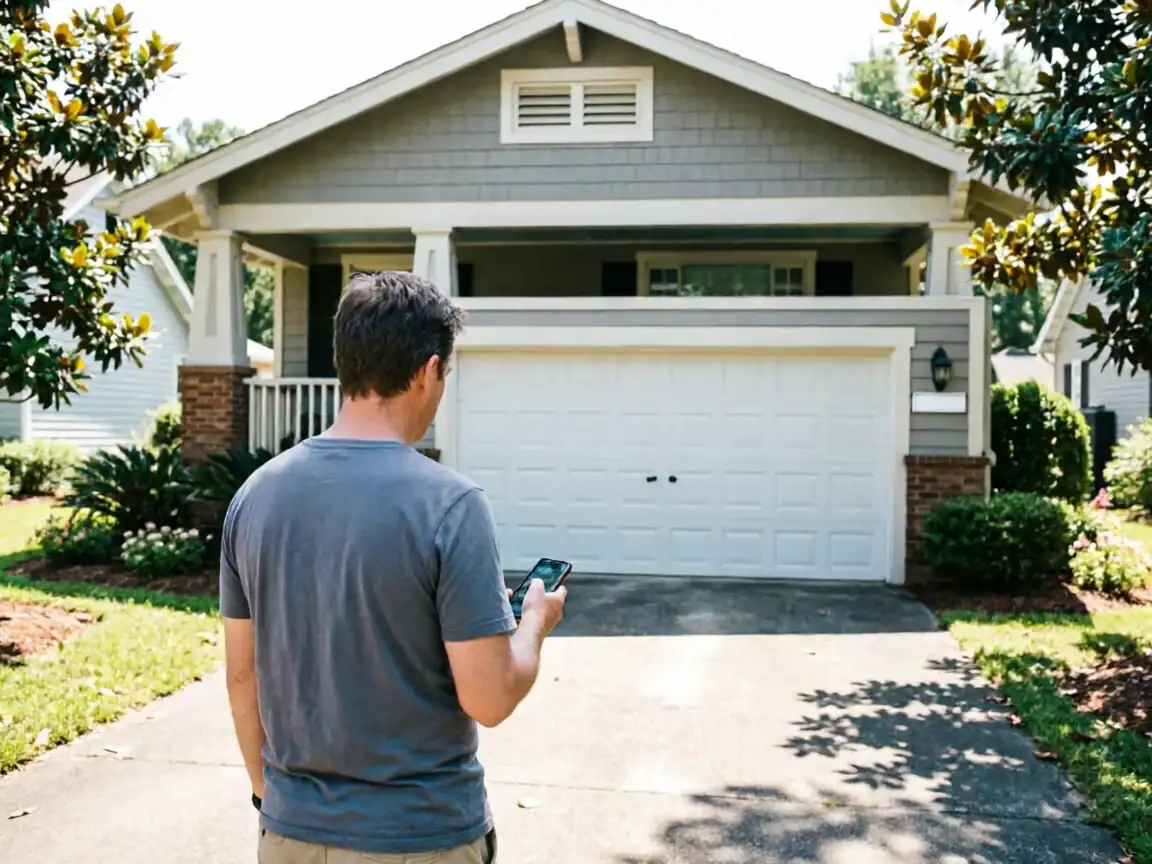
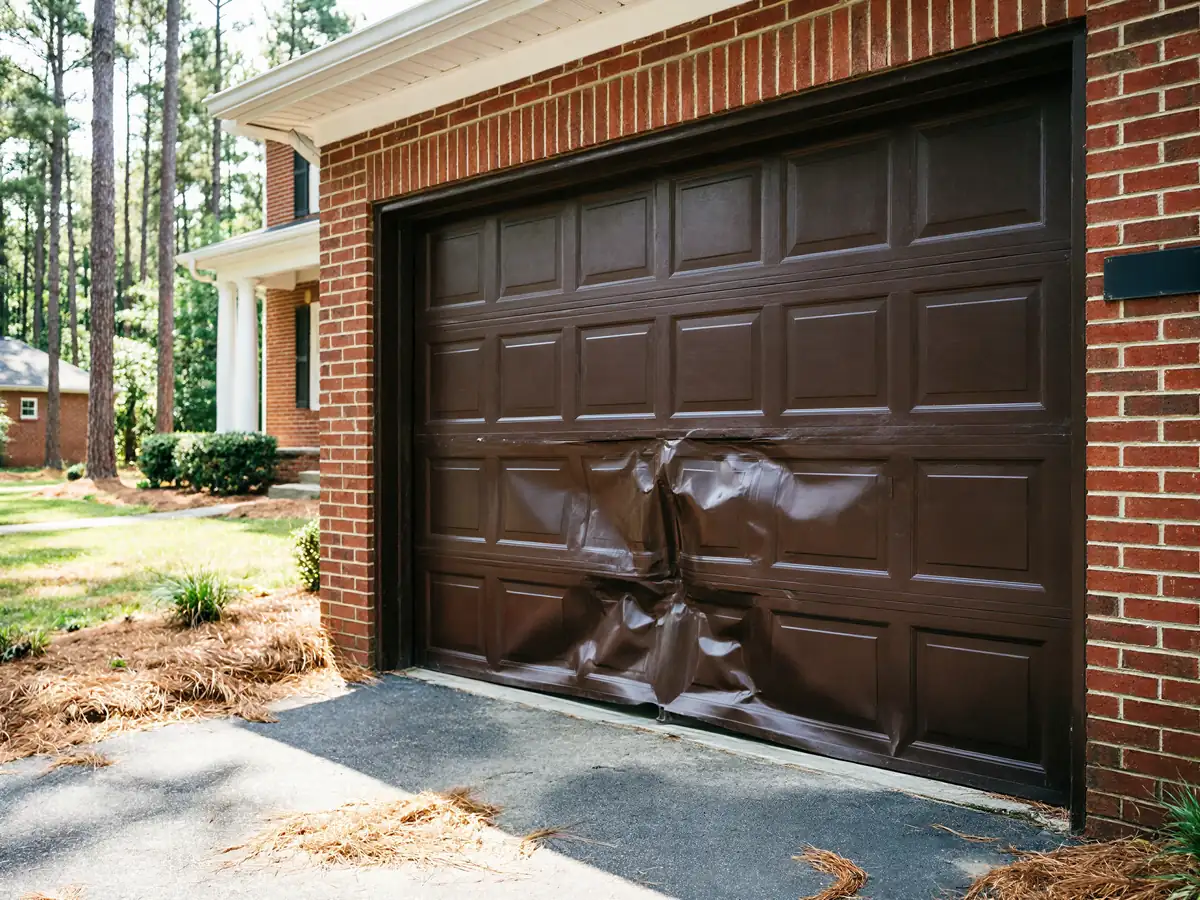
The fault we see most in Dacula isn't a cracked wood panel or a bowed hollow-core section - it's a dented or foam-split panel on a builder-grade insulated steel door, and the trouble is finding the matching panel at all. Most houses in Dacula went up after 2001, two decades newer than the 1978 median that describes the rest of the service area, which is mostly 1960s-70s stock. That later build date means Dacula got steel sectional doors with factory colors and panel profiles tied to whatever builder supplied that subdivision phase, not the simpler wood or single-layer steel doors common in the older pockets.
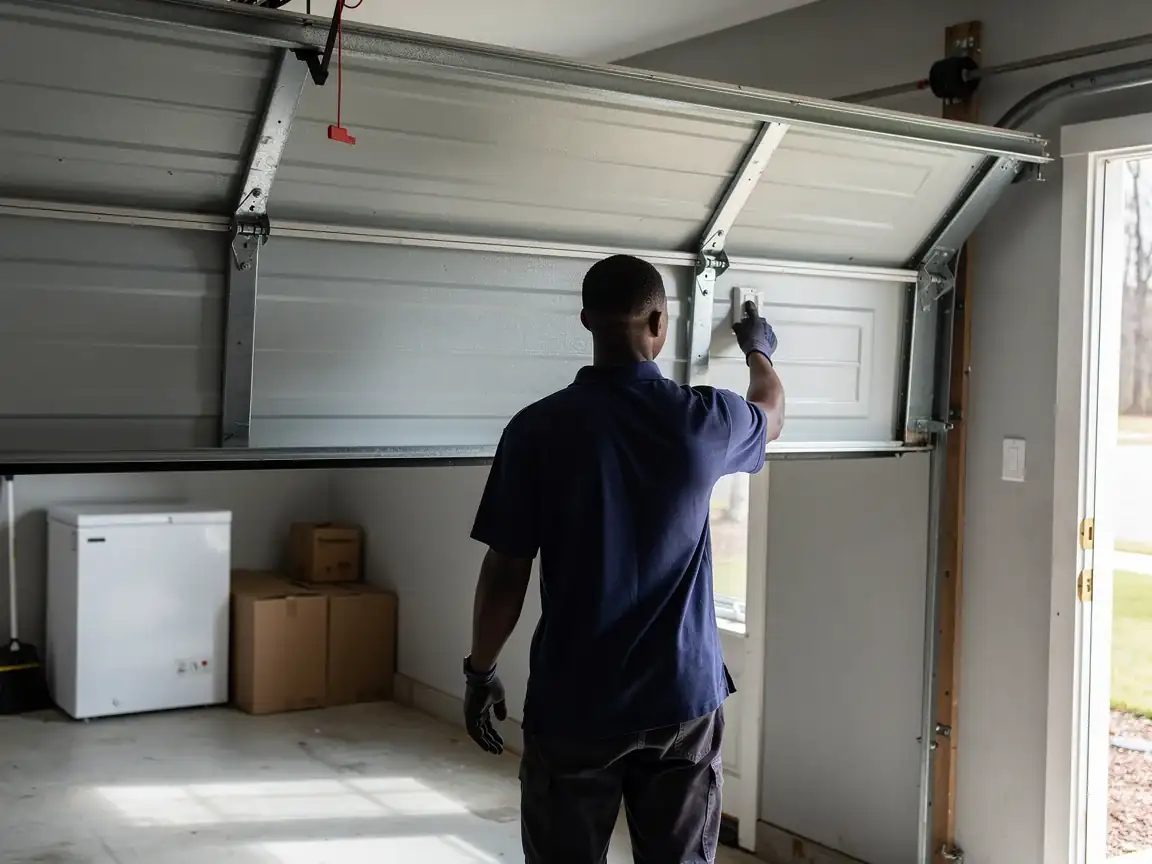
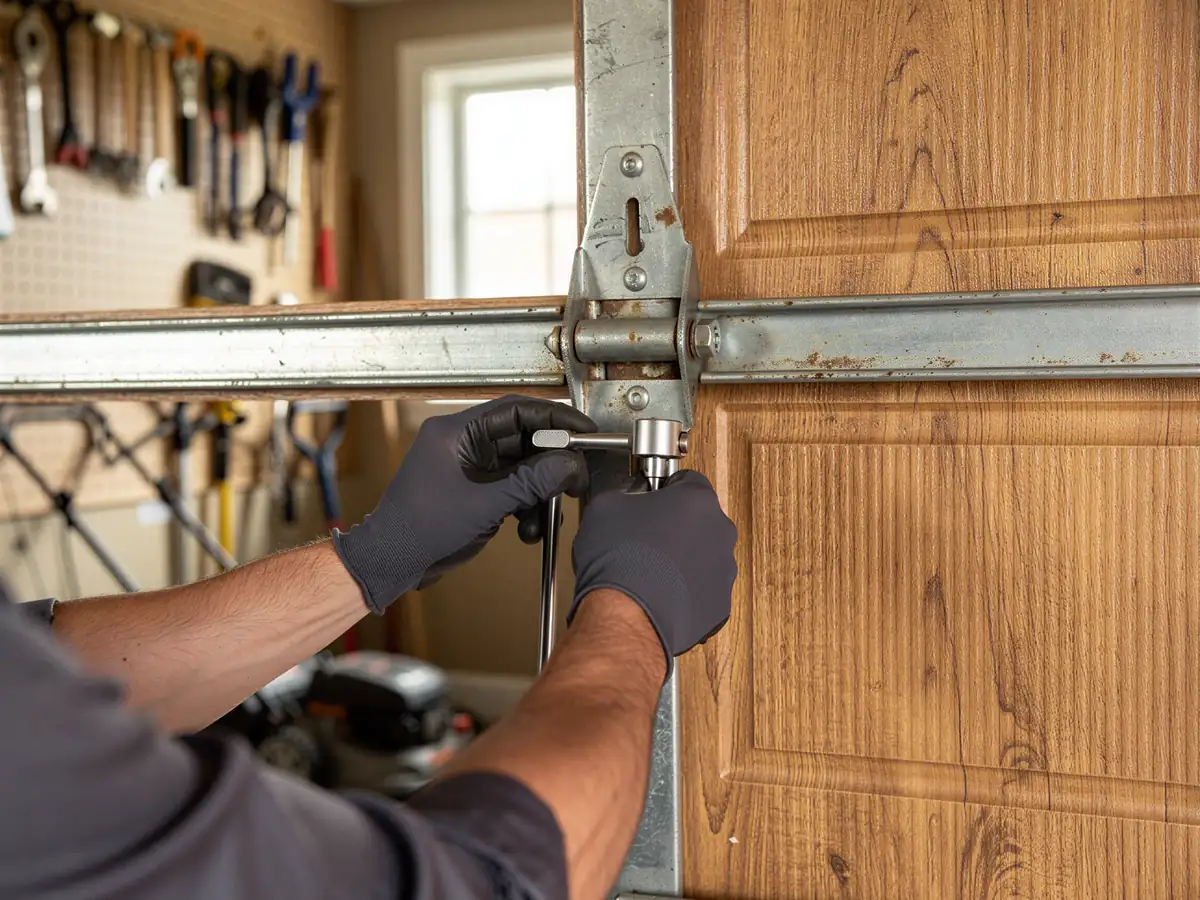
You can swap a single panel yourself if you've got the model number, the hinge spacing matches, and you're comfortable pulling the section without dropping the door off its track. Where DIY falls apart fast is color and profile match - builder-era doors from the early 2000s often used short production runs, and a mismatched panel sticks out on a door that otherwise looks new. If you can't read the model plate on the back of the top section, don't guess and order; that's the step that turns a one-panel job into a full door replacement.
Where This Job Goes Sideways
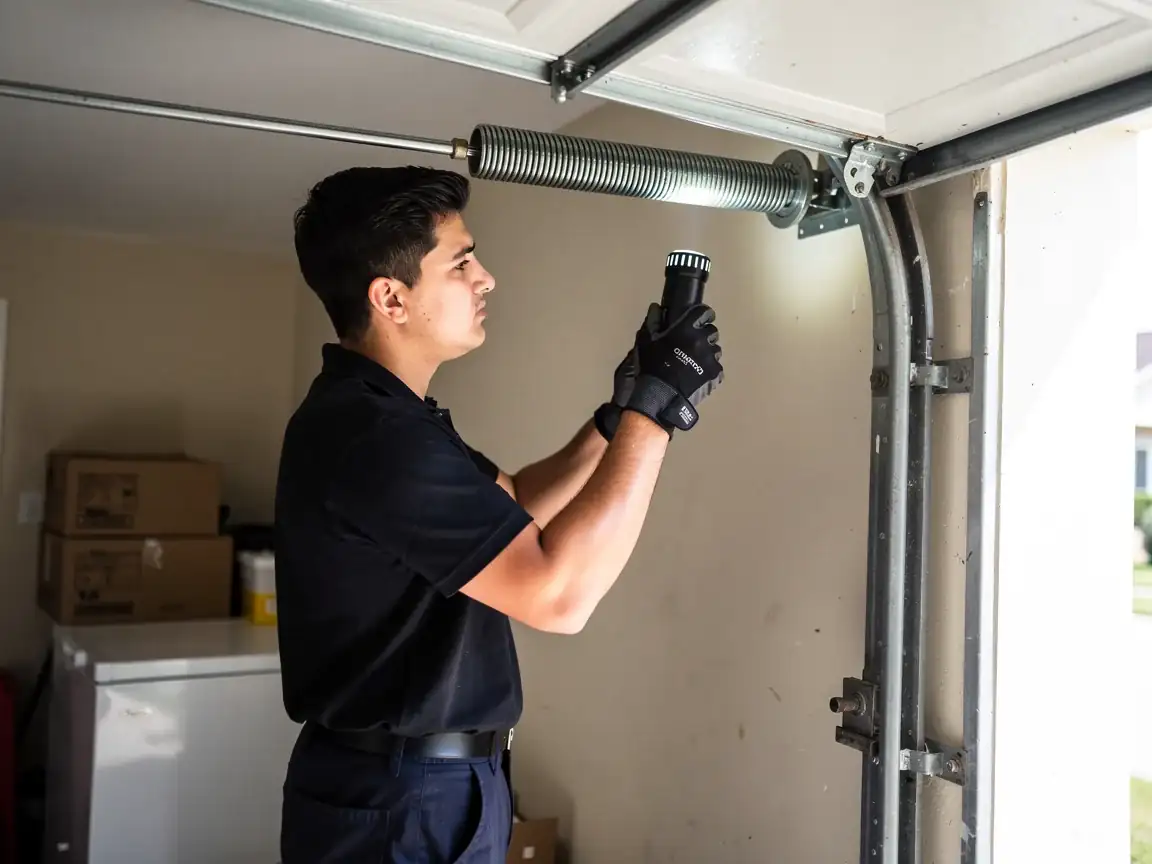
Panel replacement on a cold-climate steel door goes sideways in two places. First, foam-filled panels: once moisture gets behind a dent and the foam core separates from the steel skin, the panel looks fine from six feet away but flexes and whistles in wind. Replacing just that panel is still the right call, but it has to be an exact gauge and foam-density match or the door racks unevenly on the track. Second, the track and hinge alignment - pull one section without supporting the door and the whole assembly can shift, which turns a panel swap into a track realignment too.
We work this area's climate band, cold-moderate, which means panels here deal with freeze-thaw cycling more than heat distortion. That matters for foam-filled sections specifically: a panel that's already delaminating from moisture will crack along the seam the first hard freeze after a sloppy install. One limitation worth saying plainly - if the door is a discontinued builder model and the manufacturer's run is gone, we may not be able to get a true color and texture match on just one panel. In that case a full door replacement often costs less than chasing a panel that doesn't quite fit.
How It Shows Up
The call usually starts with a dent from a car bumper, a basketball, or a ladder leaned wrong
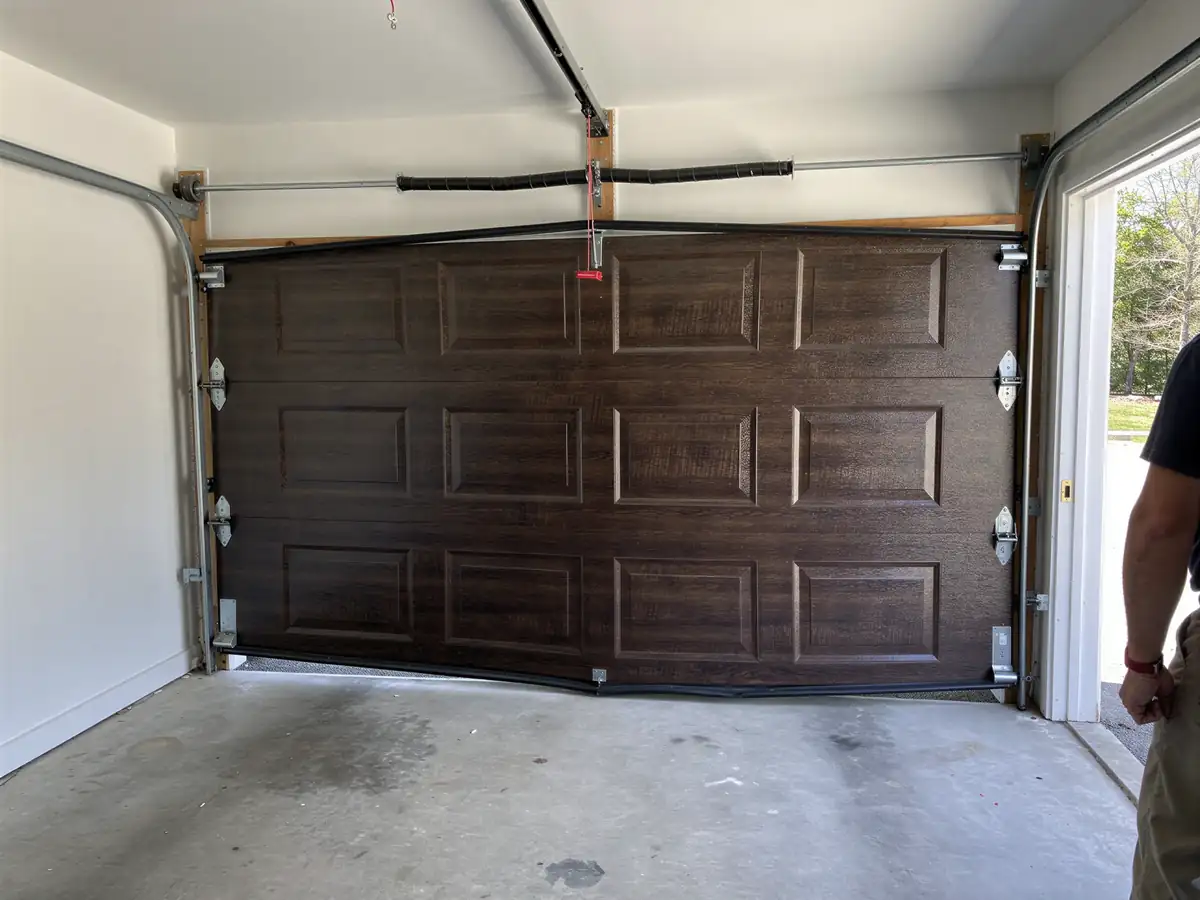
Cosmetic at first, then the owner notices the door doesn't sit flush at that section anymore. On insulated steel doors like the ones common in Dacula's post-2001 builds, a dent that breaks the outer skin lets moisture into the foam core, and within a season or two that panel starts to sag or buckle at the seam.
Another pattern: a panel cracked from an opener forcing the door against an obstruction
A toy, a trash can, ice at the base in a hard freeze. The door still runs, but that bottom panel is visibly bowed and the weatherstrip no longer seals, which lets in draft during the colder months this area sees. Either way, the tell is the same: everything else about the door still works, just one section looks or seals wrong. That's the job worth calling about before it turns into a spring or track problem from the door running out of true.
What It Costs
We don't have a posted price list for panel replacement specific to this job, and giving a number without seeing the door's make, panel style, and whether it's still in production would be a guess, not a quote. What we can say: a single-panel swap on a common builder-grade steel door, where we can source the matching section, runs less than replacing the whole door - but once a model is discontinued or the color run is gone, the math often flips toward full replacement being the better spend.
At a median income of $74,900 in Dacula, a bit above the $70,625 median across the wider service area, we see more owners choose to replace the whole door outright rather than chase a partial match that might look off. That's not a sales pitch, it's just the pattern on these newer builder doors - the parts economics are different than on an older wood door where a single board replacement is cheap and easy to blend in.
Booking a Visit
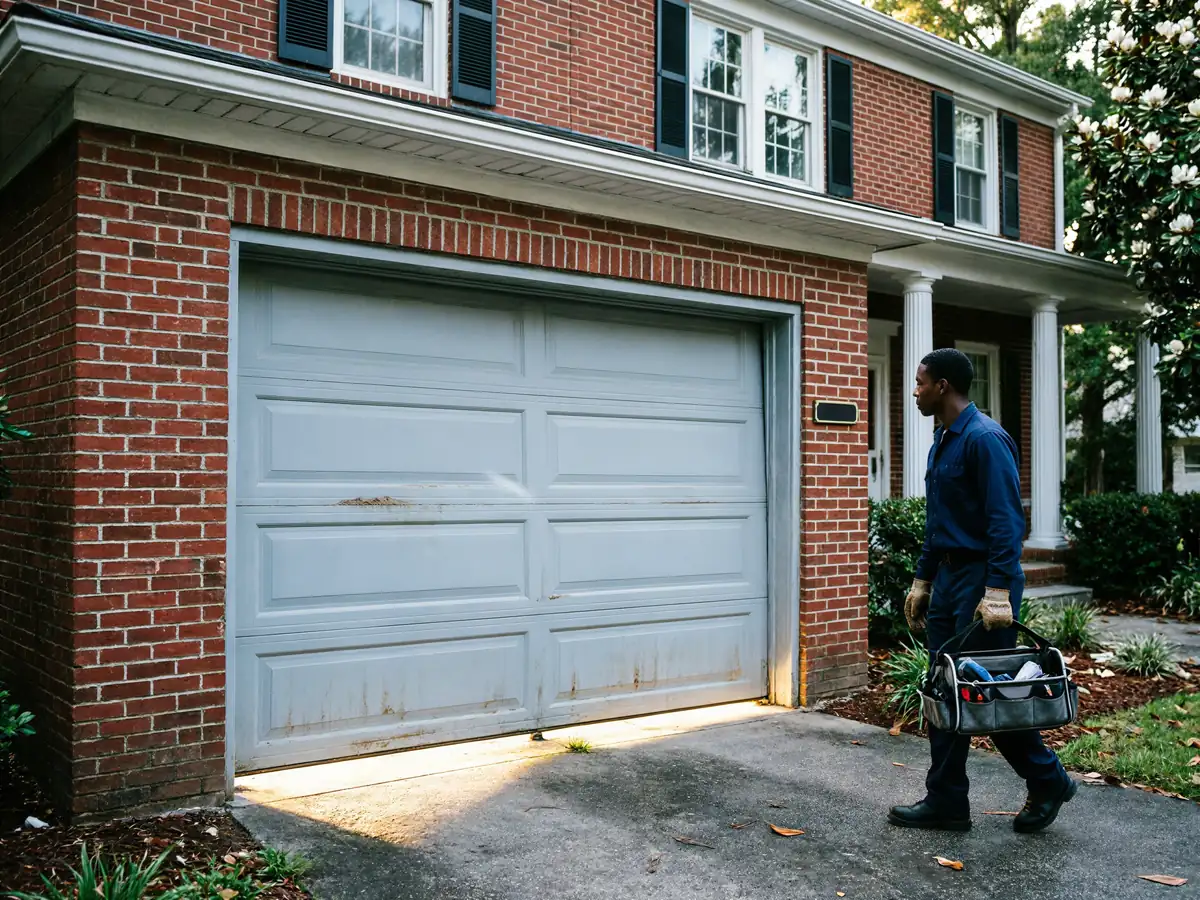
This job comes from our Snellville crew, about 10 miles out to Dacula - no local branch, no separate dispatch, just the same truck making the drive. Have your model plate number ready if you can find it on the inside of the top panel; it saves a trip just to identify the door before we can quote the actual panel work.
With 2,223 households in Dacula, compared to 56,295 across the full service area, this is a smaller slice of our coverage, but it's a route we run regularly for exactly this kind of door - the post-2001 builder-grade steel sectional that makes up most of the housing stock out here. See the Dacula service page for what else we cover on that drive out.
Parts We Carry
We stock common hardware
Hinges, rollers, end caps, weatherstrip - the pieces that fit almost any steel sectional door regardless of model year. Full replacement panels are a different story: those have to be ordered to match the specific door, and on a builder-grade door from the early 2000s that match depends on whether the manufacturer still runs that profile and color.
If your door is a common production model, we can usually get a panel in without much delay
If it's from a short builder run that's since been discontinued, lead time stretches out, and we'll tell you that up front rather than let you wait on a part that isn't coming. That's the honest limit of panel-matching work on newer insulated steel doors - it's not like swapping a board on an old wood door. For the general rundown on panel replacement as a service, that's covered on the Snellville panel replacement page.