How It Shows Up
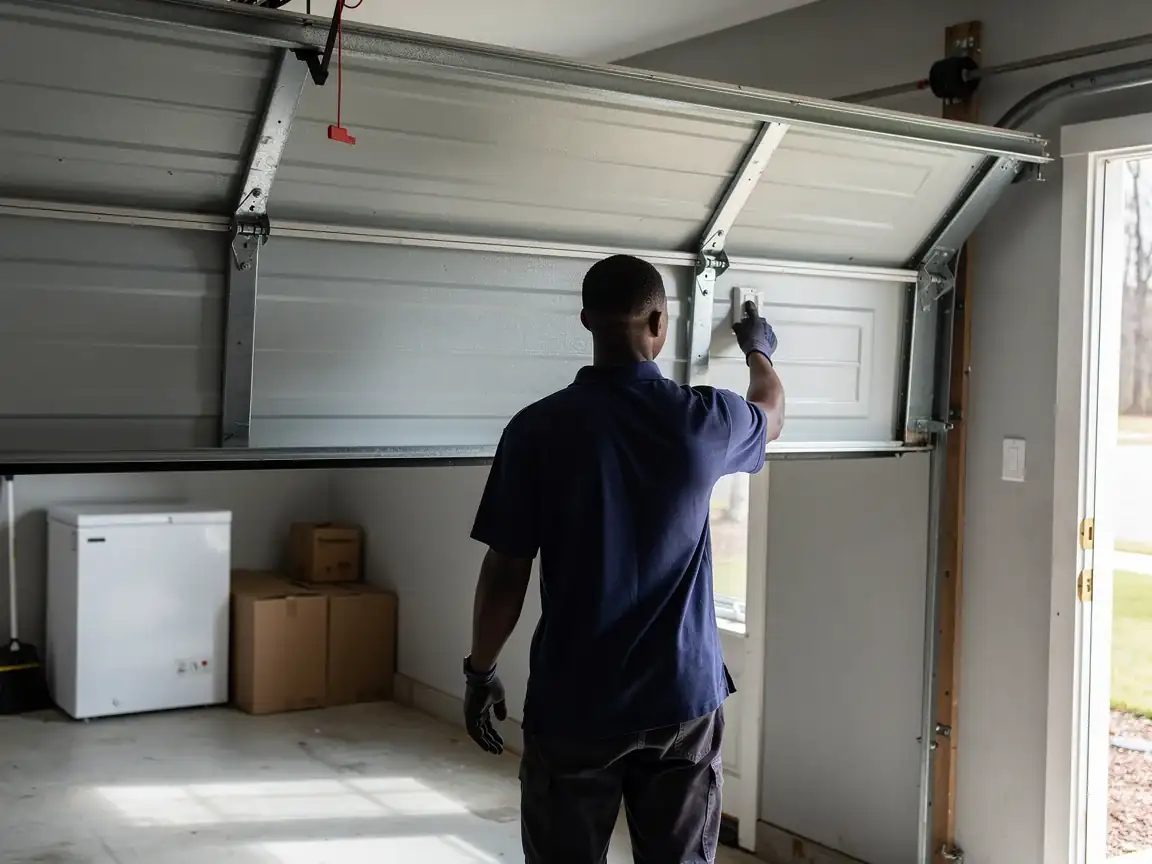
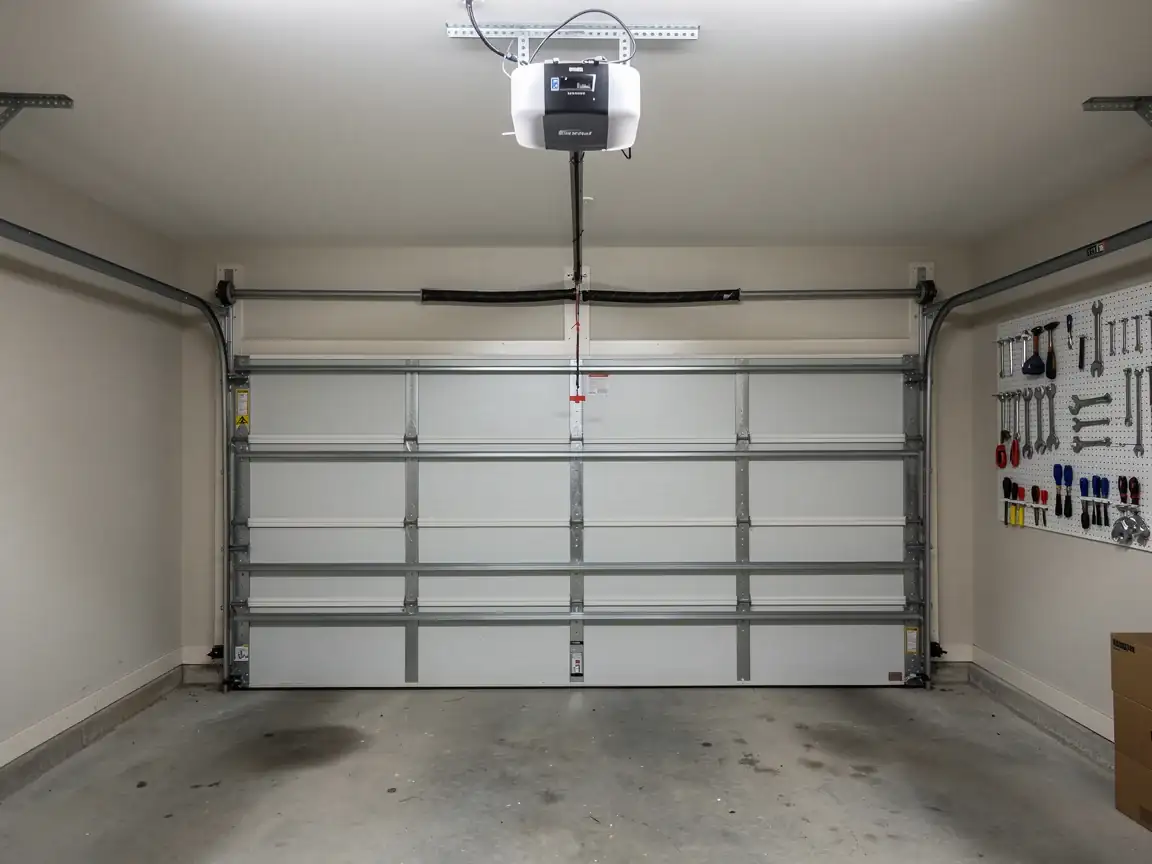
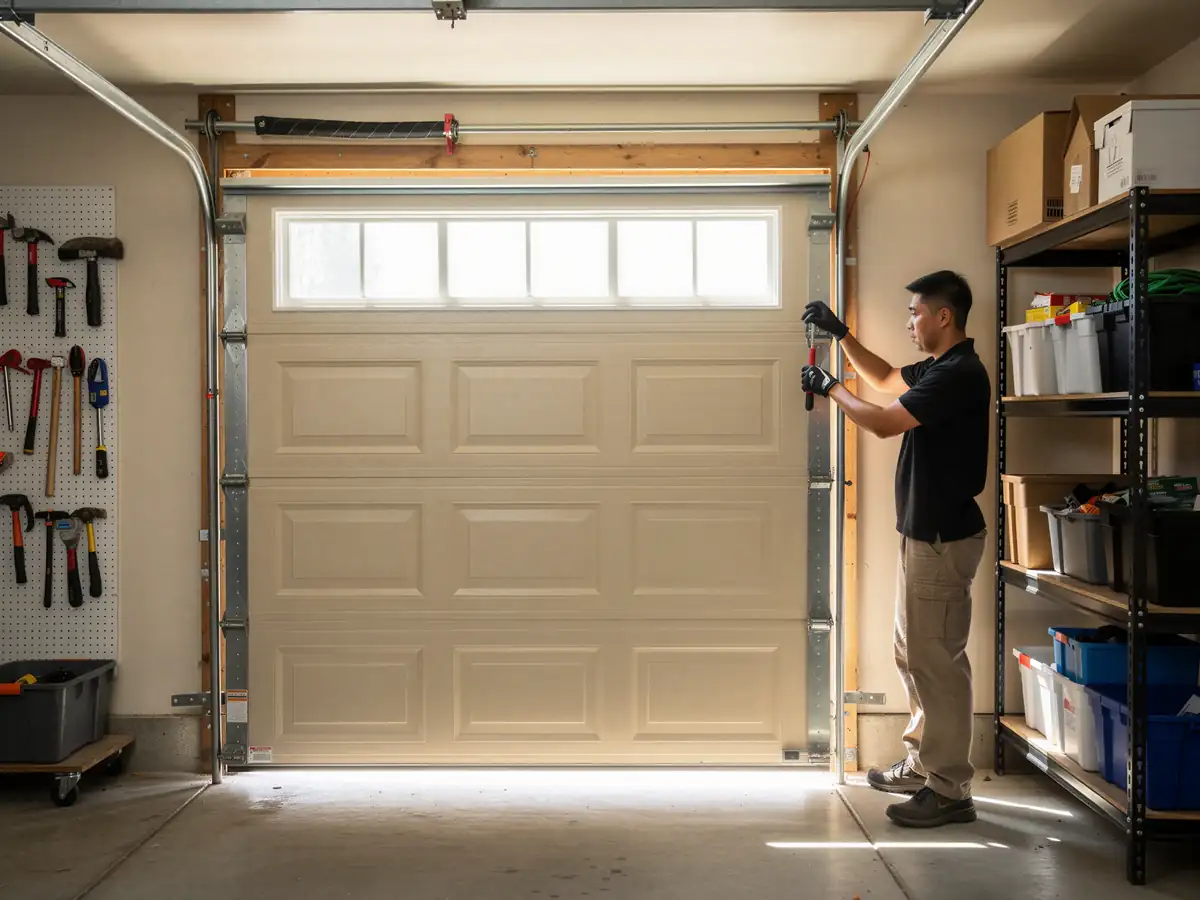
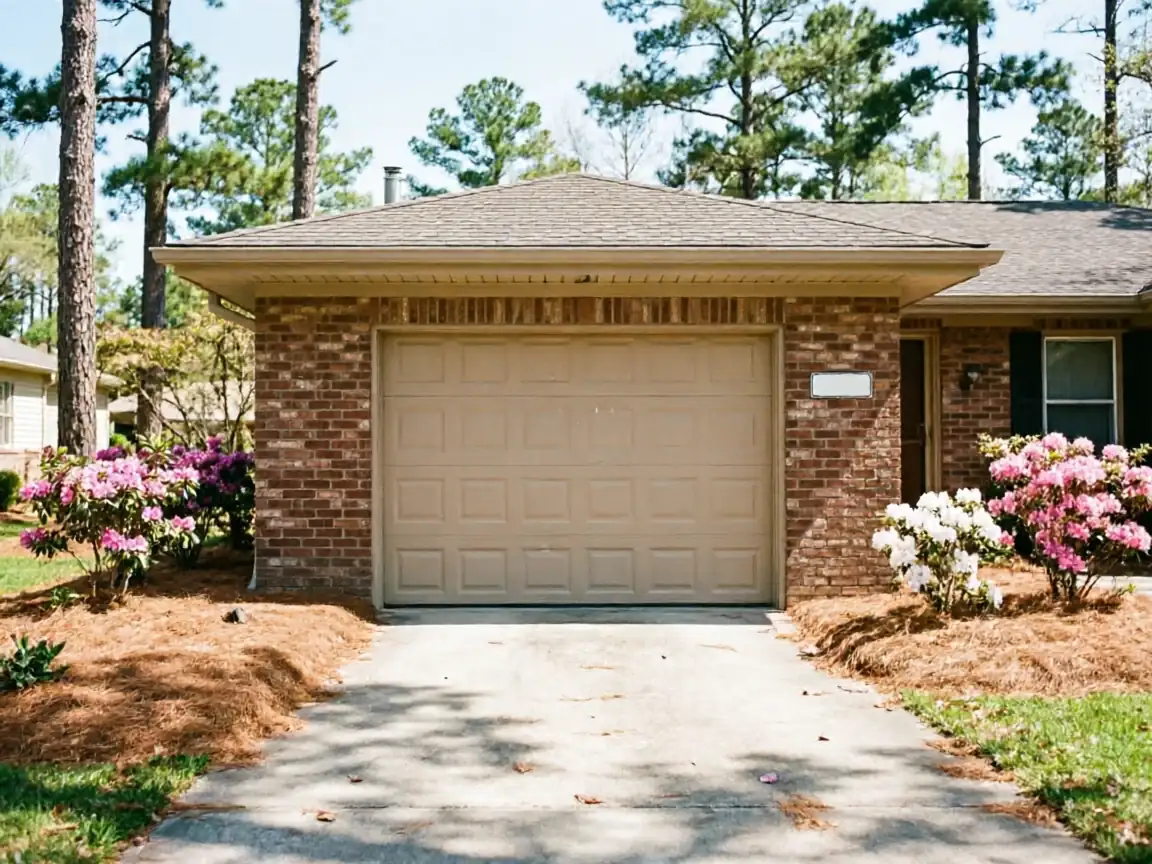
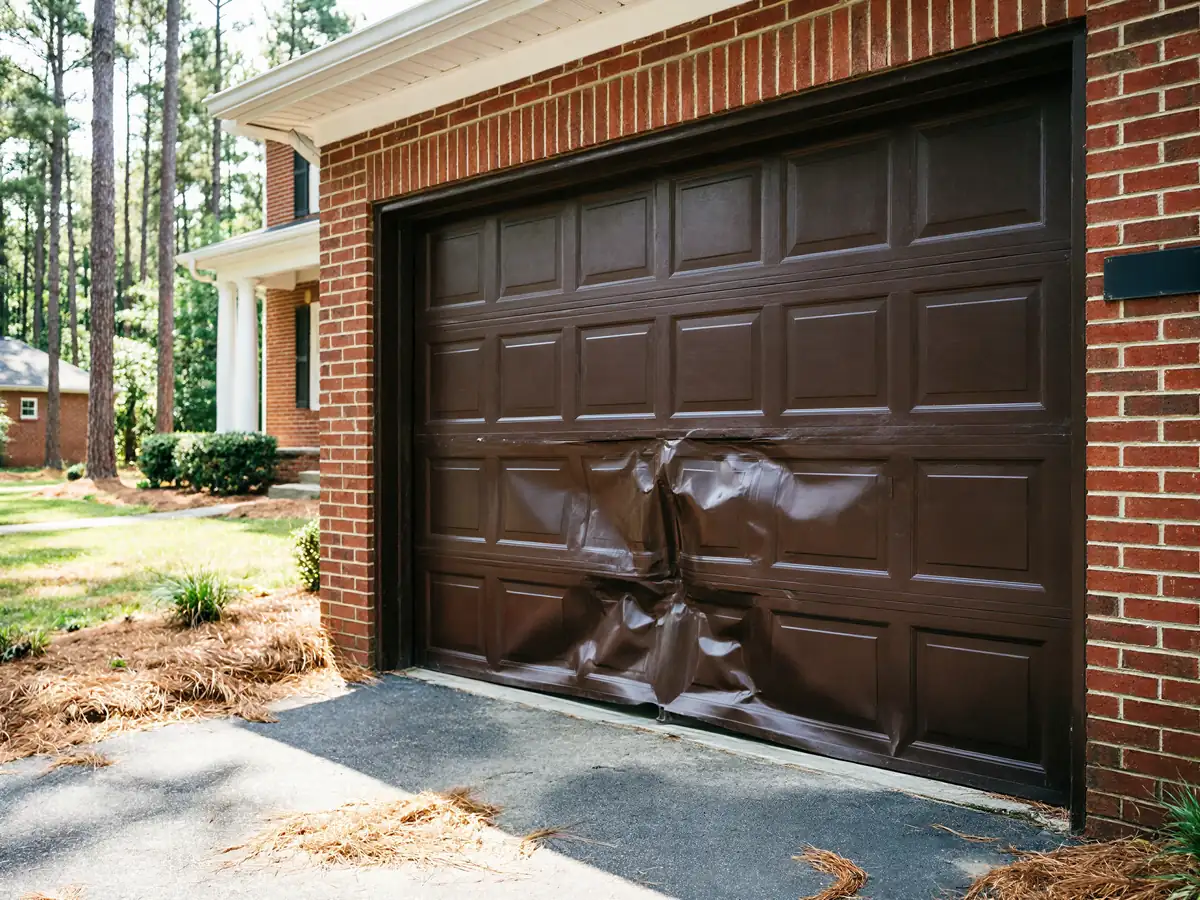
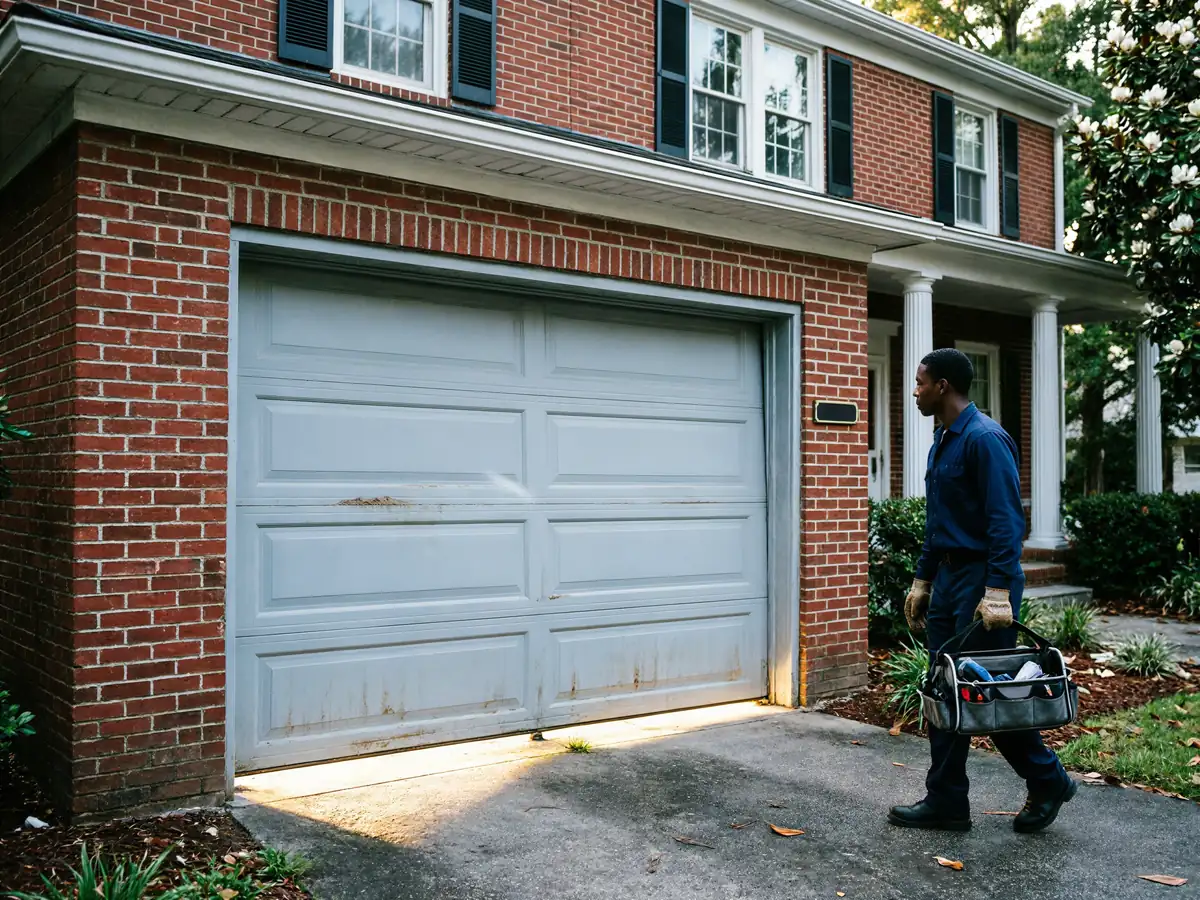
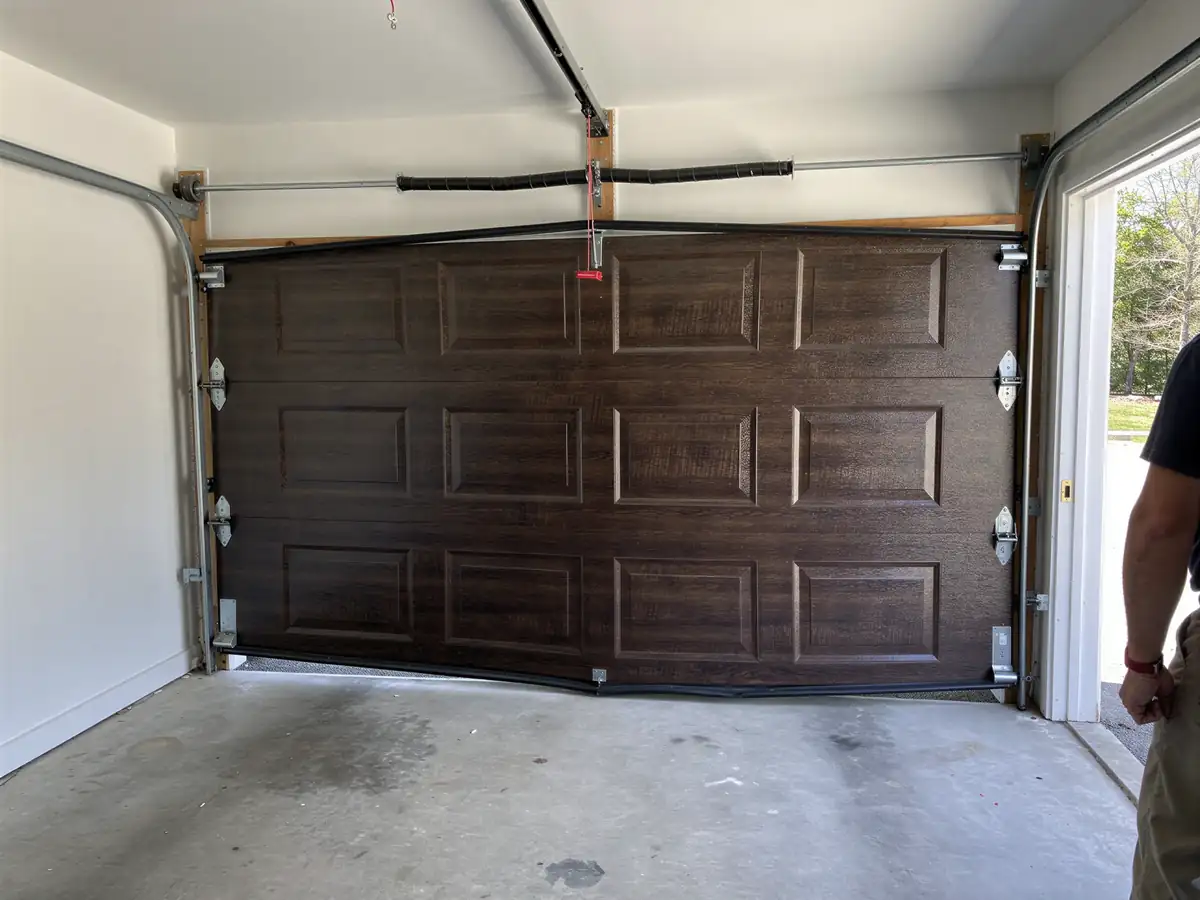
Belvedere Park's houses mostly date to around 1961, which puts this neighborhood ahead of the 1978 median for the areas we cover out of Snellville. That decade matters more than it sounds like it should. A door built in 1961 is more likely to still be running on steel track with narrower flanges and older roller carriages than the doors going up in the 1970s stock that makes up most of the service area. When a door comes off track in a house this age, it's usually not a dramatic bang - it's a slow lean. One side of the door rides low, the bottom panel catches the jamb, and the opener strains instead of lifting smooth. On newer track, you'd more often hear a loud pop when a cable snaps or a hinge gives way. Here, the failure tends to creep: a bent track section from years of a roller riding slightly off-center, then one hard freeze or one too-fast close finishes the job and the door jumps the rail. If you're hearing a scrape on one side before the door fully opens, that's usually the tell - the door hasn't come off track yet, but it's about to.
Why This Fails Locally
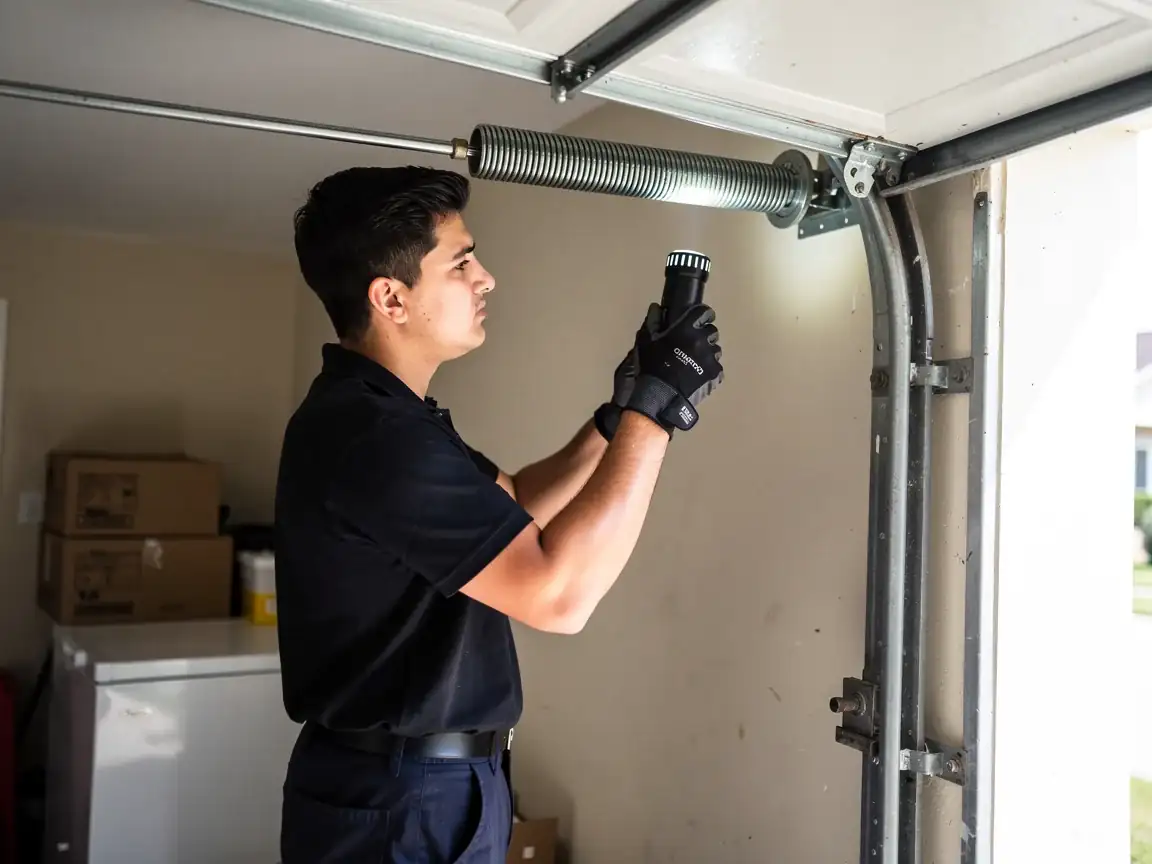
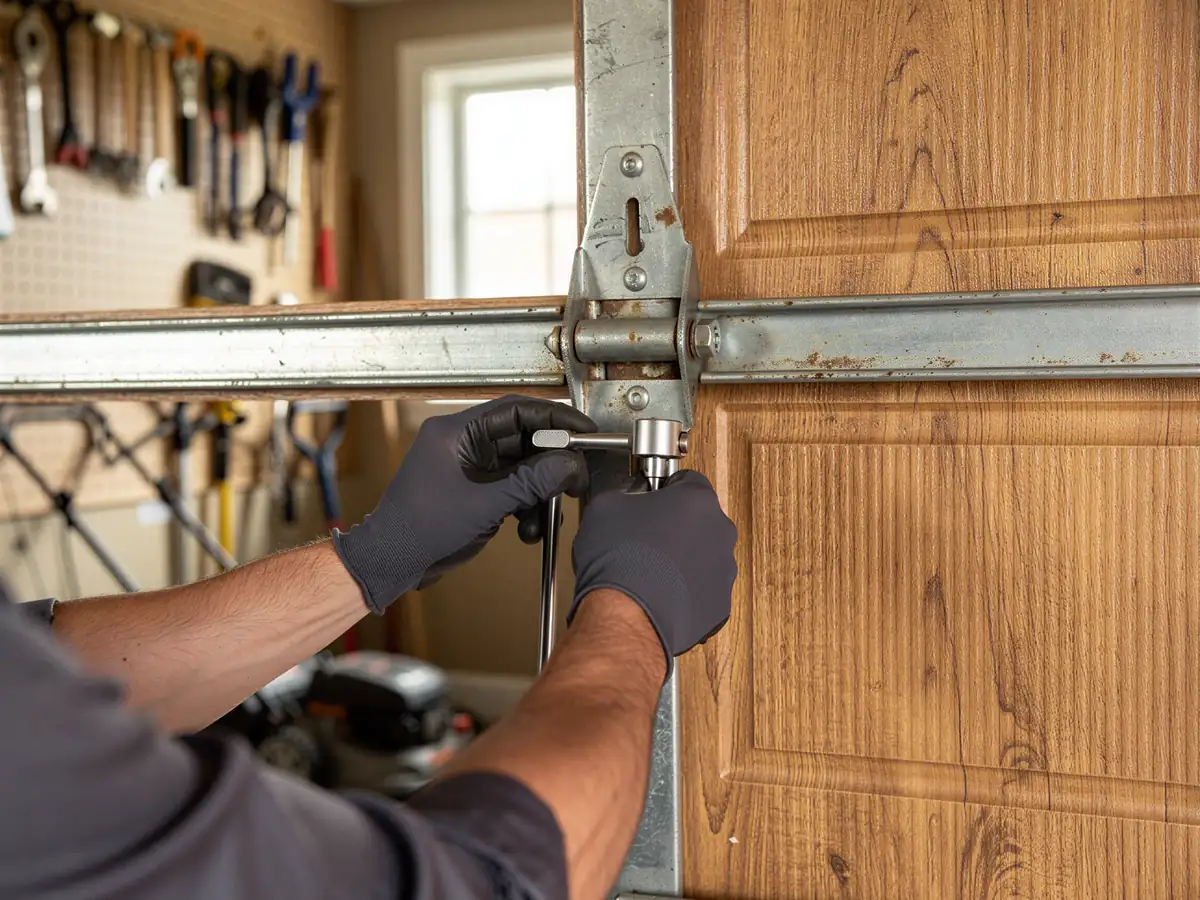
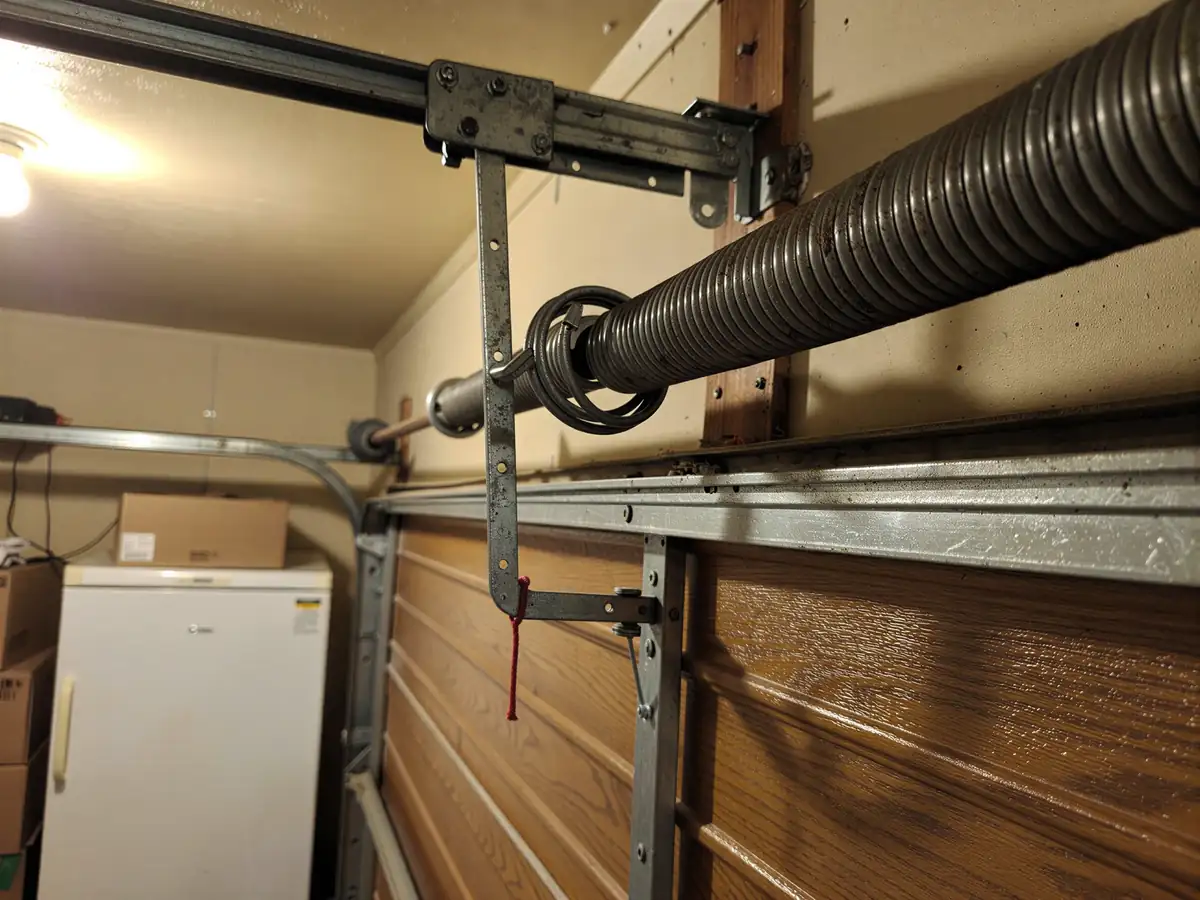
Cold, moderate winters mean steel track contracts in hard freezes, and on track hardware with 60 years of wear, that contraction is enough to open a gap where a roller used to ride tight. Add a bent track section - which is the single most common reason a door jumps rail in this kind of housing stock - and you get the lean-then-jump pattern described above. Original side-mounted track from this era also wasn't built with today's roller tolerances in mind, so even a correctly adjusted door has less margin for error than a door installed in the last fifteen years. We're not going to tell you every off-track call here is a hardware-age issue - sometimes it's just a roller that finally wore through, same as anywhere. But when we get a call from this part of the service area, we expect to find older track, and we bring the right gauge of replacement section instead of assuming a newer standard part will bolt straight in.
What It Costs
We don't publish a flat number for off-track repair here because the fix depends on what's actually bent - a single track section is a different job than a track plus a bent hinge or a cracked roller carriage. What we can tell you is that Belvedere Park's median household income runs close to $68,900, a bit under the roughly $70,600 median across the full service area, and that's part of why we'll tell you straight if a repair isn't worth it. On a door this age, if the track is bent in more than one place or the jamb hardware is rusted through, patching one section just moves the next failure down the road a few months. We'd rather say that up front than sell a repair that doesn't hold.
Parts We Carry
For doors from this era we carry standard steel track sections in the gauges that match 1960s and 70s installs, replacement roller carriages, and hinges sized for older panel thickness. What we don't keep on the truck is obsolete track hardware specific to a handful of original manufacturers from that period - if your door turns out to need an exact match to something no longer made, that's a special-order part, and we'll tell you the lead time before we start instead of after. For the full rundown of what we service in this area beyond off-track repair, see our Belvedere Park service page.