How It Shows Up
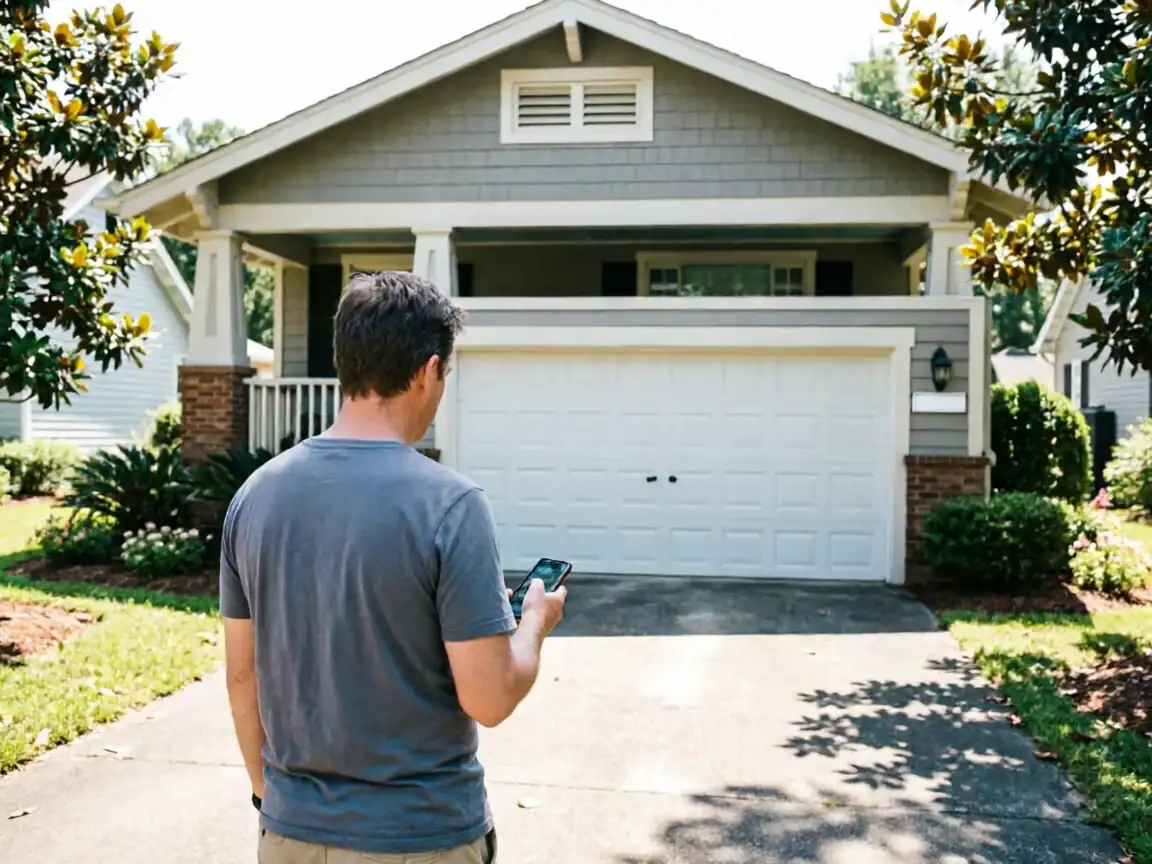
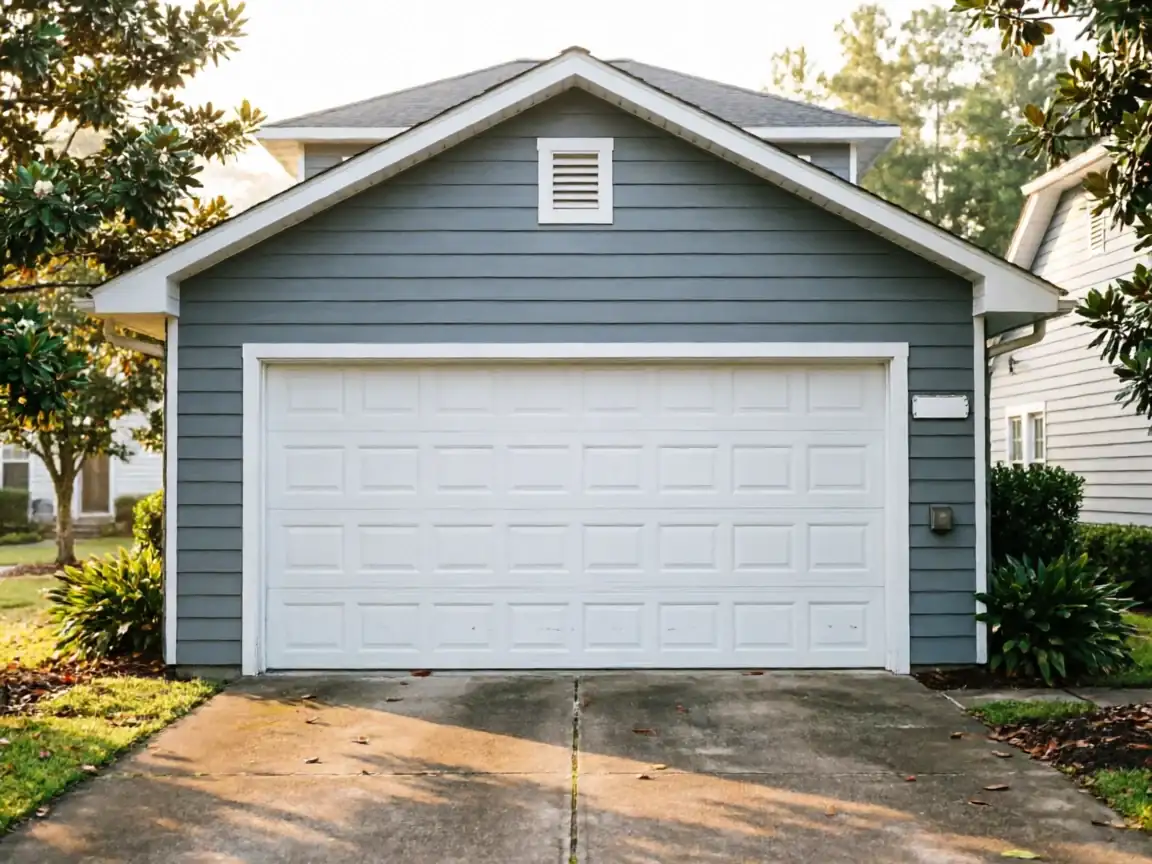
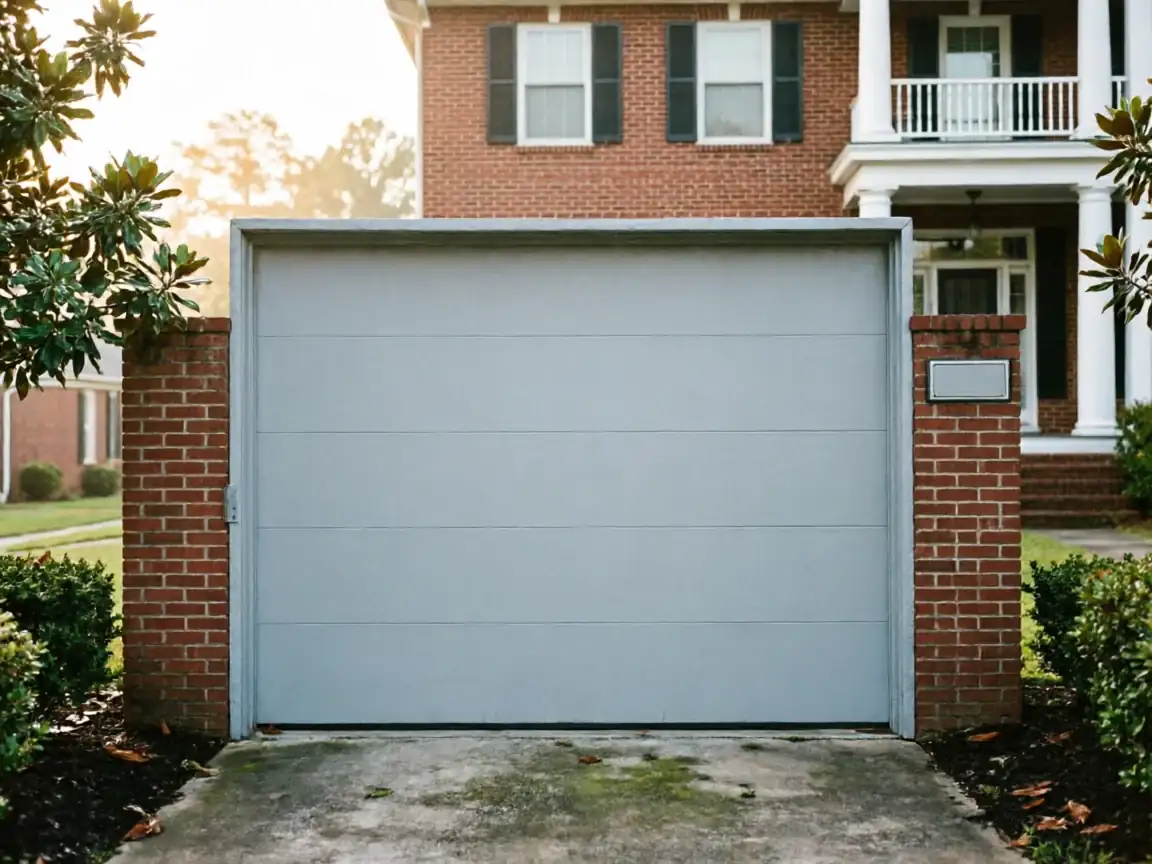
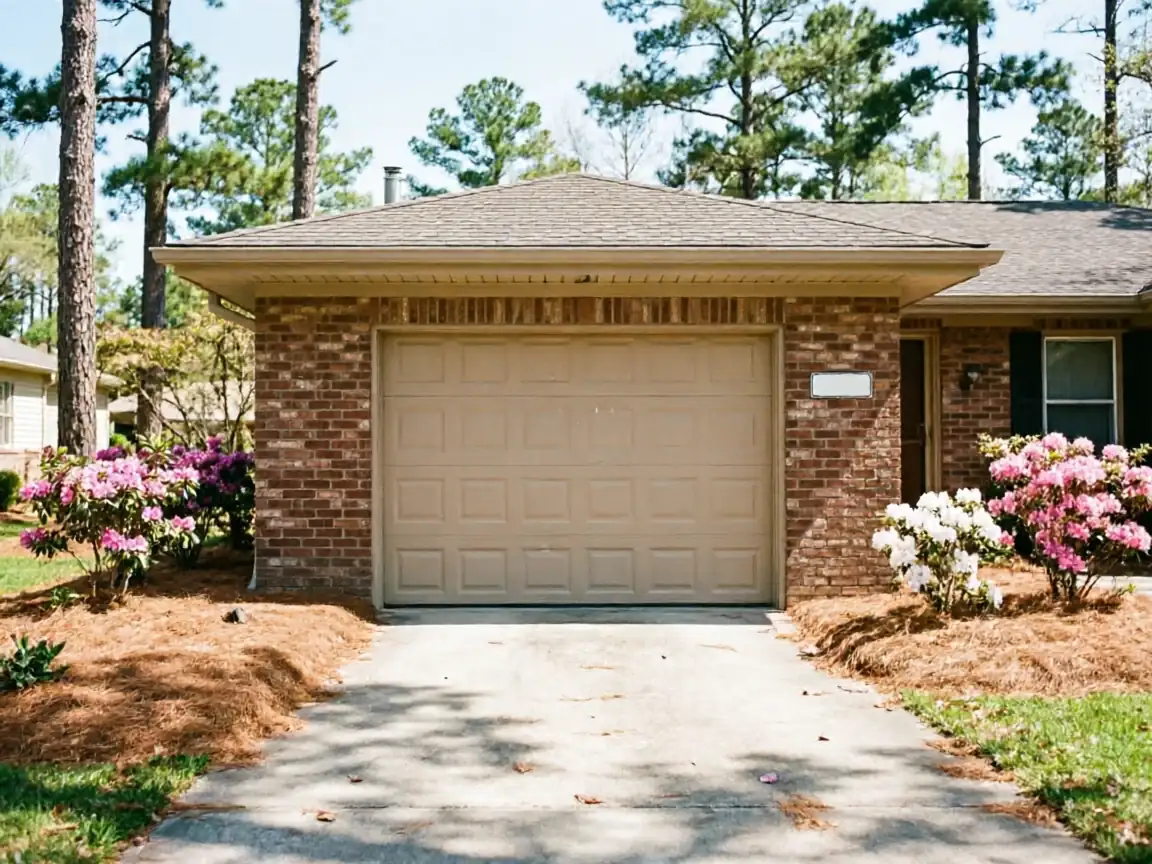
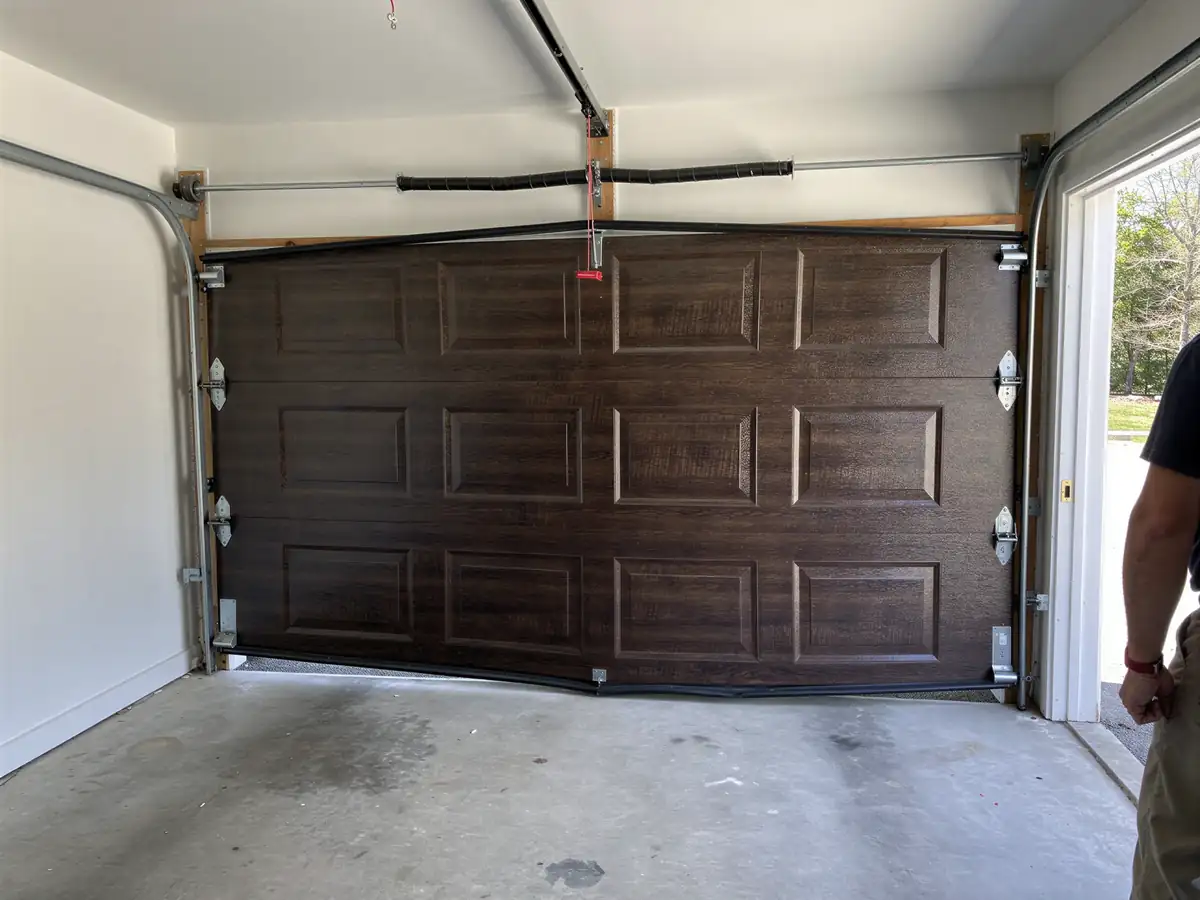
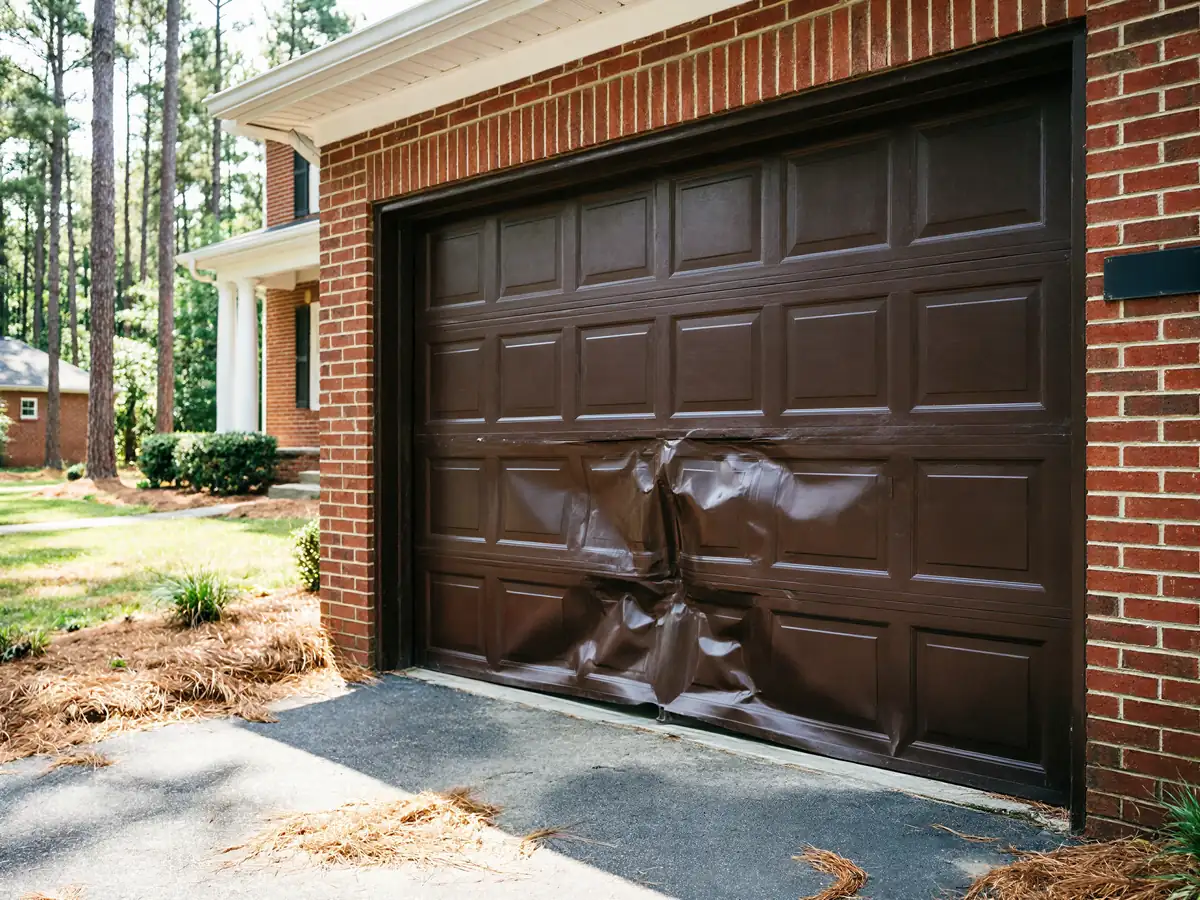
Belvedere Park's housing stock centers on 1961, which means a lot of these garage doors still carry their original sections. Nobody tends to touch a garage door panel until it's dented or rusted through, so what you've got is likely the same steel that went up when the house was built. That matters because the dent you're looking at probably isn't a clean break in one spot - it's a crease running the width of a panel that's been flexing in the same place for six decades.
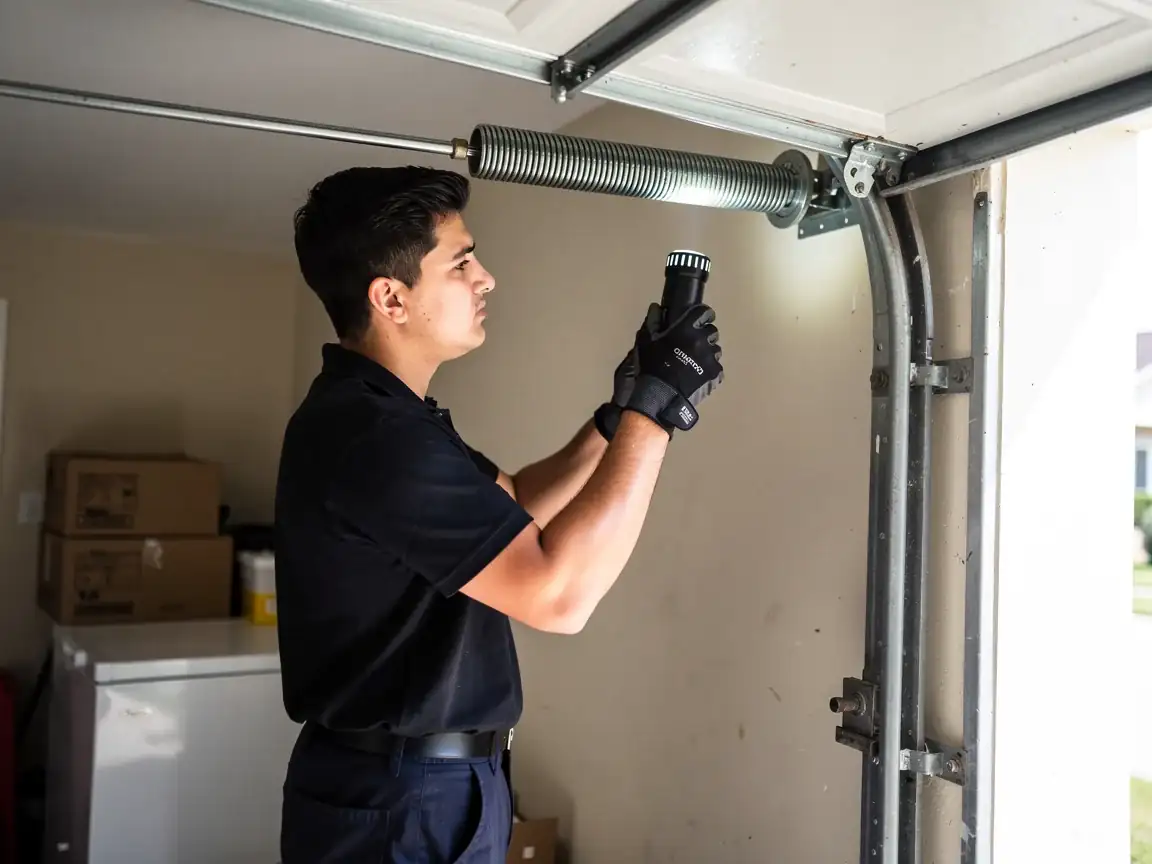
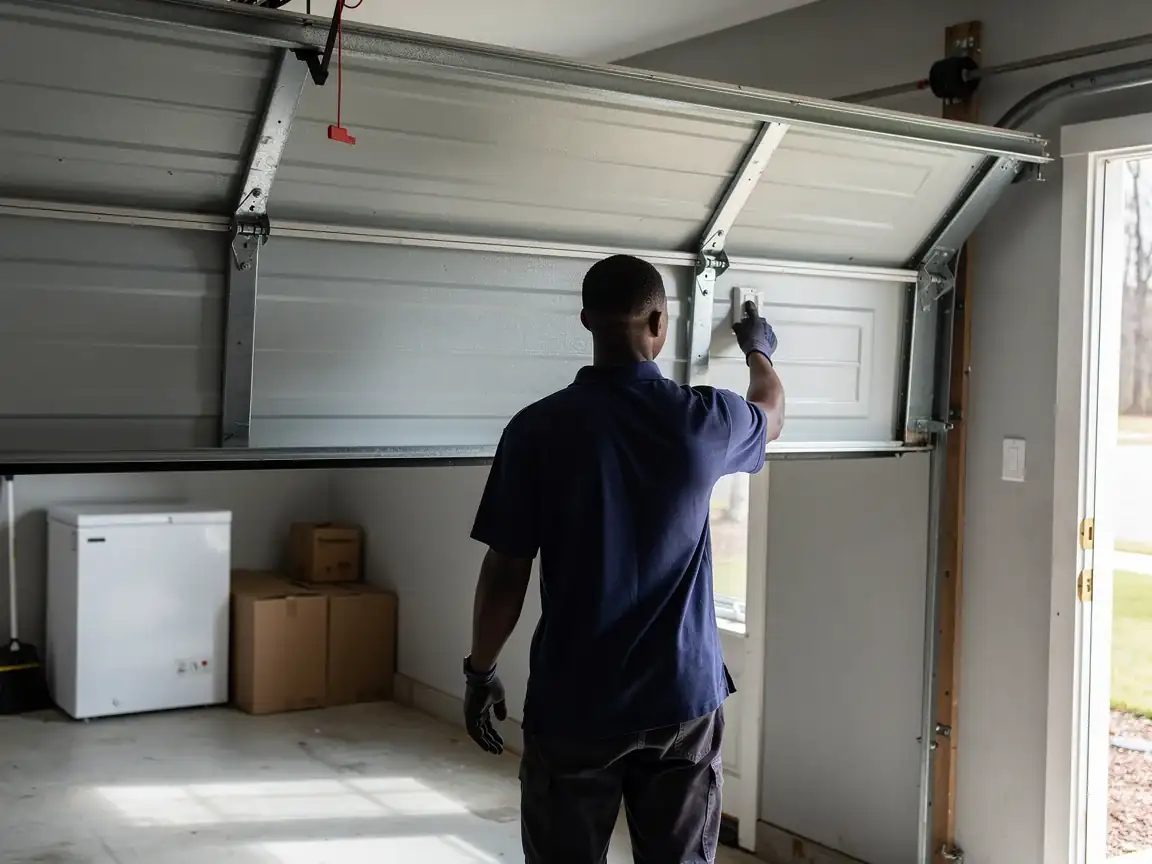
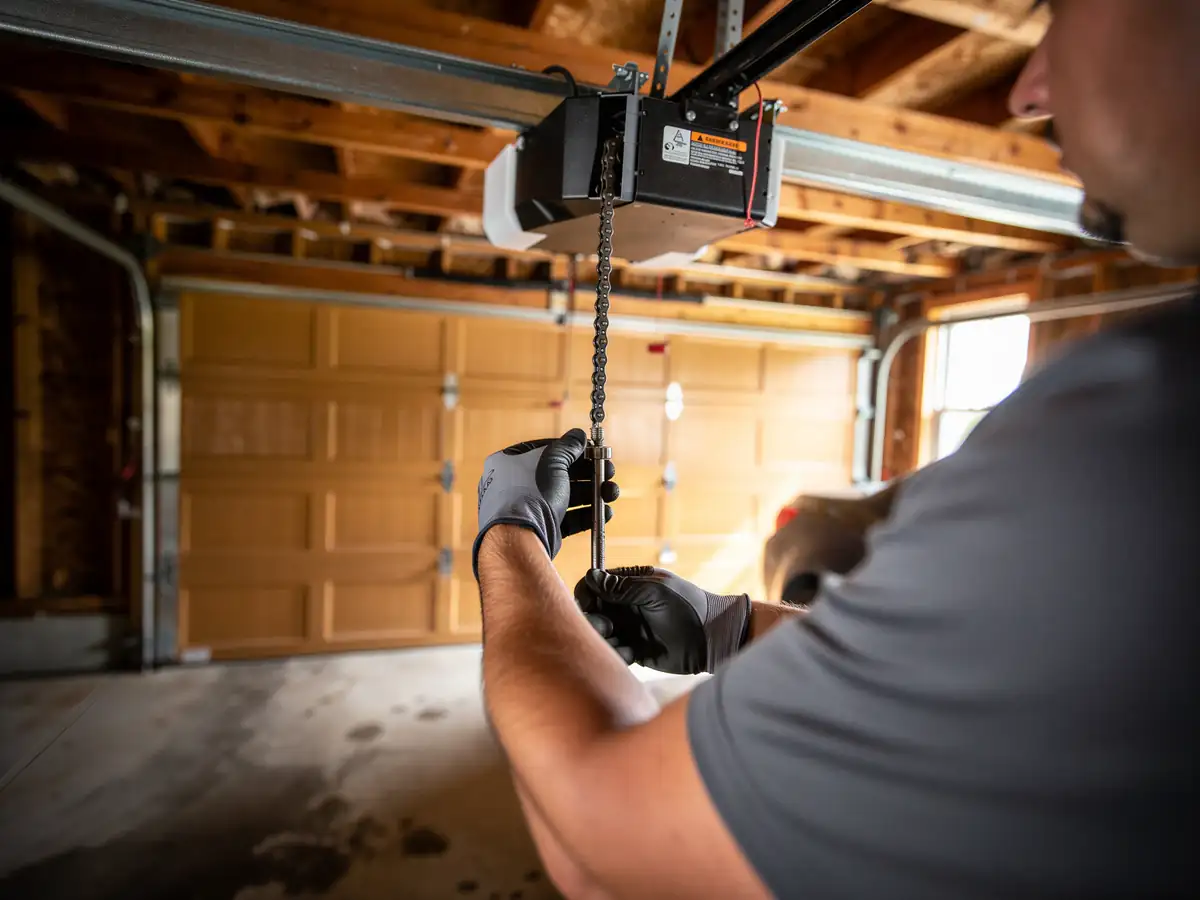
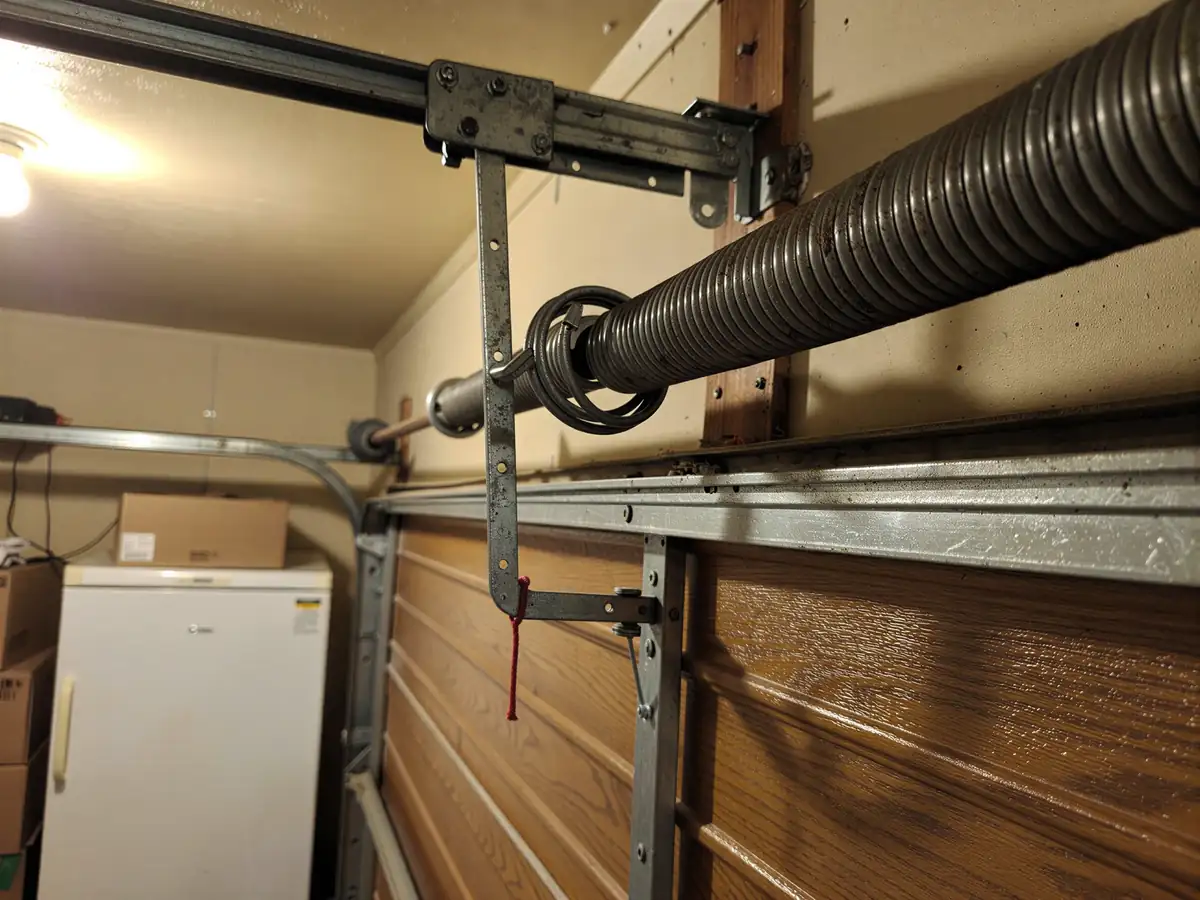
On these older sectional doors, a single bent panel throws off the whole track alignment, not just the look of the door. The rollers ride a hair off-center, the opener strains a little harder every cycle, and eventually you get a door that binds halfway up. If the bottom panel is the one that's gone - usually from a car bumper or a mower - the weight distribution on the springs shifts too, even though the spring itself might be fine.
Rust is the other common failure here. A panel that's held moisture against bare steel for fifty-plus years will bubble from the inside out, so it can look fine from the driveway and still be thin enough to punch through by hand.
Why This Fails Locally
The problem with replacing one panel on a door this old isn't the labor - it's finding a match. A door built around 1961 was never on a parts list anyone kept stocking, and the panel dimensions, rib pattern, and track width from that era don't line up with what's sold off the shelf today. We're not swapping in a modern panel and calling it close enough; a mismatched panel changes the door's balance and can put uneven load on hardware that's already old.
Georgia's cold-moderate winters aren't brutal, but they're enough freeze-thaw cycling over sixty years to work seam rust into panels that were never insulated or treated for it. That's a different failure pattern than you'd see on a door from the 2000s, where the panel foam and galvanizing hold up longer. On a 1961 door, by the time rust shows on the surface, it's usually already eaten through the inner lip where the panel locks to its neighbor - which is why a quick patch rarely holds.
Booking a Visit
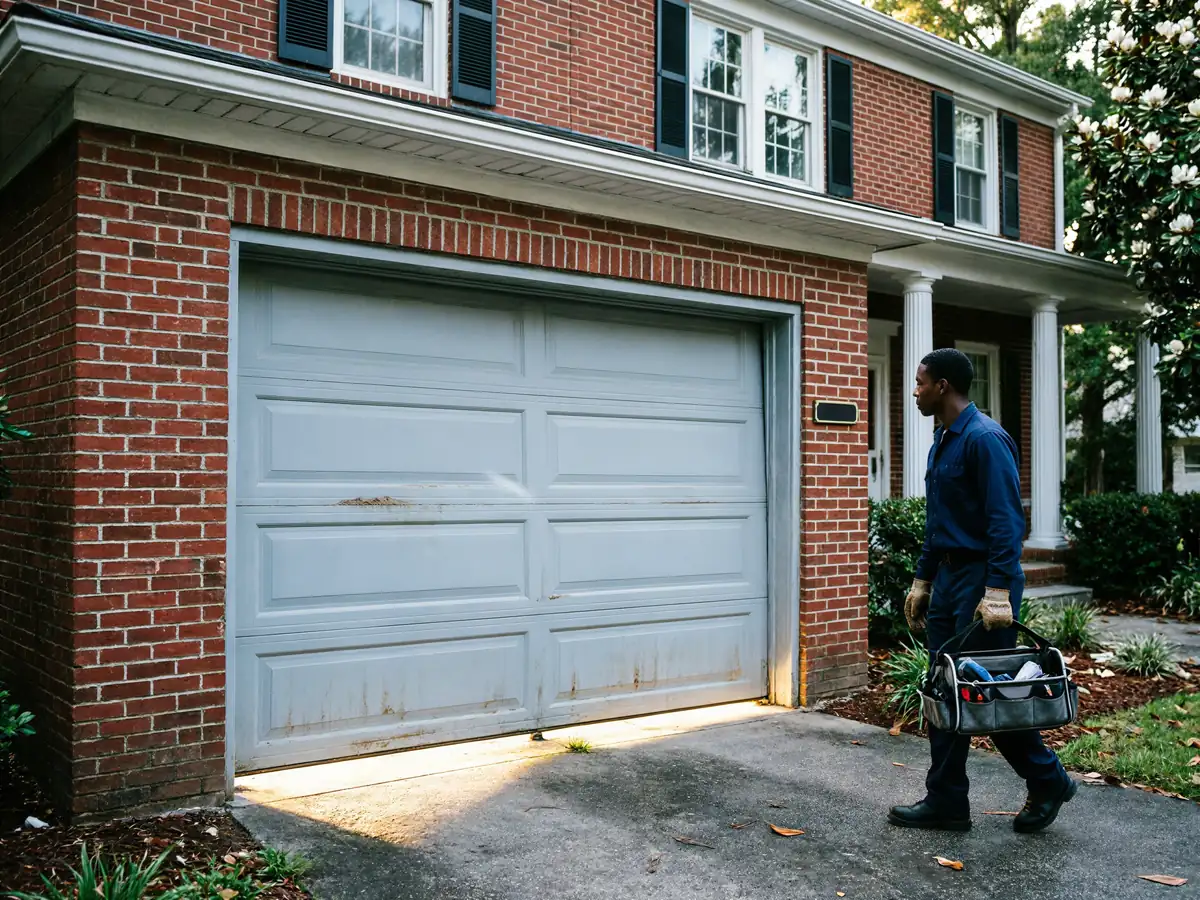
We run this job out of Snellville, about 16 miles out to Belvedere Park
So we schedule panel replacements rather than showing up same-day for a dented panel that isn't blocking the door from closing. If the door still opens and closes and the panel damage is cosmetic, there's no rush - get it on the calendar for a visit where we can also check the track alignment and hardware while we're there.
- 16 miles
When you call, tell us the brand stamped inside the door if you can find it, the approximate age of the house
And whether the door is still opening all the way. That's usually enough for us to bring the right panel stock and avoid a second trip for a part we didn't know we needed.
We don't do this one over the phone with a quote sight-unseen
On doors this old, we need eyes on the panel gauge and the track condition before we commit to a fix versus a full section swap.
See our general service page for Belvedere Park for the rest of what we handle out this way
What It Costs
We don't post panel pricing here because it depends entirely on what we find once the door's open - single-panel swap, full section replacement, and whether the track needs reset are three different jobs with three different costs. What we can tell you is that older doors in this price range of housing stock (Belvedere Park's median household income sits at $68,900) tend to be repaired rather than replaced outright, since the rest of the door is often sound even when one panel isn't.
For full pricing specifics and how we structure estimates, our Snellville panel replacement page covers the breakdown we use across the service area - the numbers there apply here too since we quote from the same price sheet regardless of which town we're driving to.
Parts We Carry
We stock common panel sizes and the hardware that goes with mid-century sectional doors, but we'll be straight with you: an exact factory match for a door built around 1961 isn't something we carry on the truck, and it often isn't something anyone makes anymore. What we can do is source a panel close enough in gauge and rib spacing to seat right in the existing track, or in some cases rebuild the section using salvaged stock if the rest of the door is in good shape.
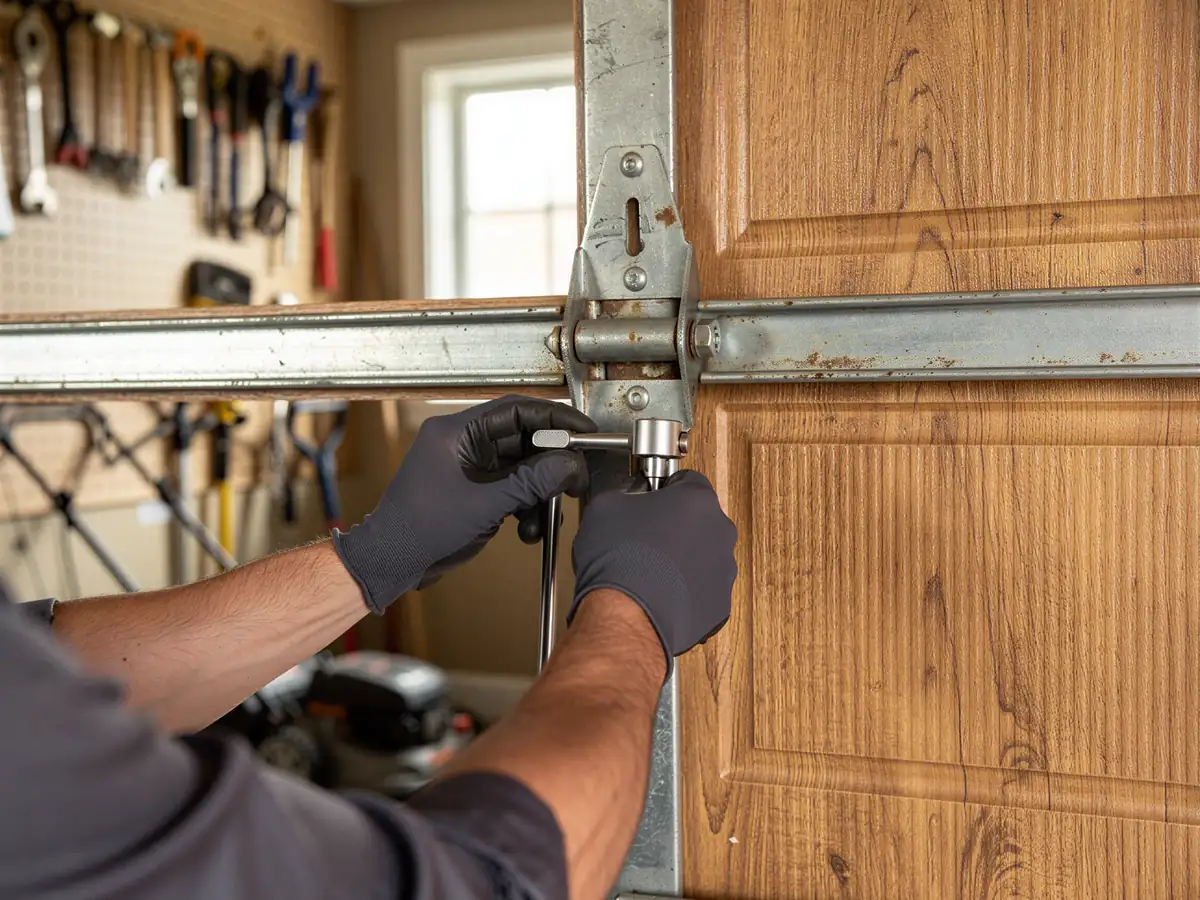
If the door's hardware - hinges, rollers, the end stiles - is also original, we'll flag that during the visit, since replacing one panel on fifty-year-old hinges sometimes just moves the failure point. That's a call we make in person, not over the phone.